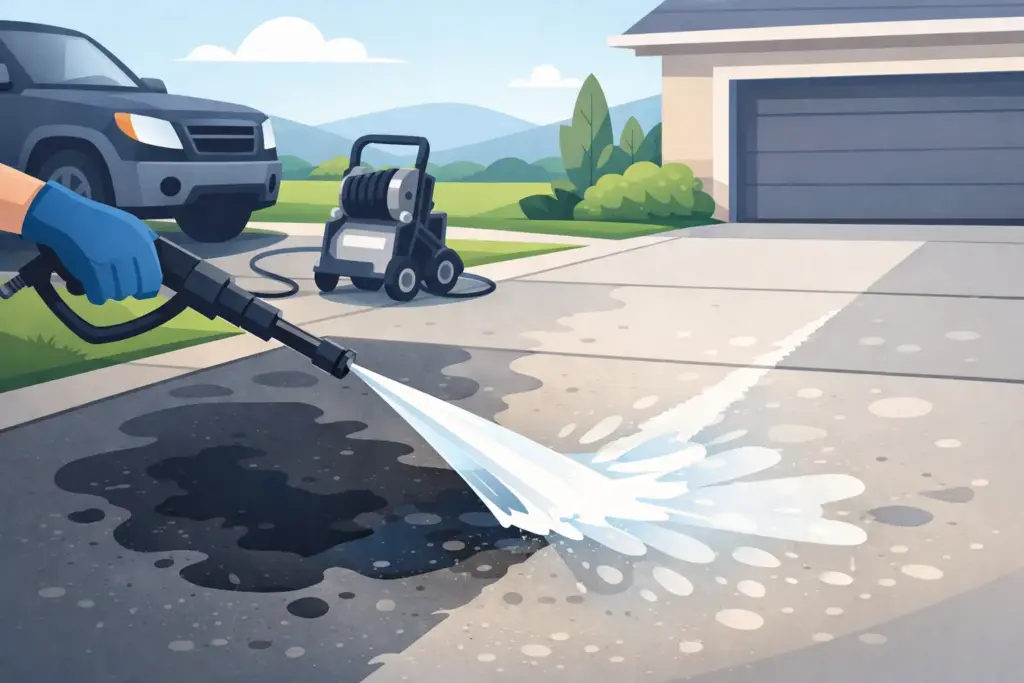

A fresh oil spot can make an otherwise clean driveway look neglected overnight. Left alone, it works its way into the concrete or asphalt, collects dirt, and becomes much harder to remove. Driveway oil stain pressure washing is one of the most effective ways to improve the appearance of the surface, but the best results come from treating the oil correctly before water pressure ever touches it.
For homeowners across Western Maine, Greater Portland, and nearby New Hampshire, the goal is simple: get rid of the ugly stain without damaging the driveway. That takes the right cleaning products, the right pressure, and a realistic understanding of what the surface will allow.
Why Oil Stains Are So Hard on Driveways
Motor oil, transmission fluid, and other vehicle fluids are designed to resist water. When they leak onto a driveway, they do not simply sit on top like mud or road salt. They soak into the pores of concrete and settle into the texture of asphalt.
A recent spill is usually easier to address because more of the oil remains close to the surface. An older stain may have gone through heat, rain, snow, tire traffic, and repeated freeze-thaw cycles. By that point, the visible mark is often only part of the problem. Oil can remain below the surface and gradually wick back up after cleaning.
That does not mean an old stain cannot look much better. It does mean no honest contractor should promise that every years-old oil mark will disappear completely on the first visit. The age of the spill, the amount of oil, the driveway material, and prior attempts to clean it all affect the final result.
How Driveway Oil Stain Pressure Washing Works
Pressure washing provides the rinsing force, but it is not the whole process. Blasting an oily spot with plain water can spread the contamination across the driveway, push it deeper into porous concrete, or leave a lighter-looking ring around the original stain.
Professional cleaning starts by assessing the surface and identifying the type and severity of the staining. A suitable degreaser is applied to break down and lift the petroleum residue. The cleaner needs time to work, and the affected area may be gently agitated when needed. Only then is the driveway rinsed with controlled pressure.
The process is adjusted to the material. Concrete can typically handle more cleaning force than asphalt, but even concrete can be etched if the pressure is too high or the nozzle is held too close. Asphalt requires extra care because aggressive pressure can loosen aggregate, disturb the surface, and shorten the life of an already worn driveway.
A professional also pays attention to runoff. Oil, detergent, and dirty wash water should not be sent carelessly toward storm drains, lawns, flower beds, or nearby waterways. Proper preparation and controlled rinsing protect more than the driveway.
Why Surface Cleaning Matters
A pressure washer wand can leave uneven lines, especially on a large concrete pad. Professional surface-cleaning equipment helps provide a more even finish across open areas while reducing striping. It is especially useful when the oil stain is surrounded by years of tire marks, dirt buildup, or general discoloration.
The stain may be treated as a focused problem area first, then the wider driveway can be cleaned to help the finished surface look consistent. Cleaning only one small spot sometimes makes the rest of the driveway look darker by comparison.
What Results Should You Expect?
The right expectation is improvement, not a miracle promise. Fresh spills on sound concrete often respond very well. Dark surface residue can be lifted, and the driveway can regain a cleaner, more uniform color.
Deep, old stains may fade significantly but still leave a shadow. That is particularly common on unsealed concrete, which readily absorbs oil. In some cases, more than one treatment is worthwhile. In others, the stain is permanently embedded enough that cleaning improves it without fully erasing it.
Asphalt is a separate case. Because it is dark by nature and held together with petroleum-based binders, oil staining can be less visually obvious but still harmful over time. Oil may soften the asphalt around a leak area, so the objective is careful cleaning without creating surface damage. If the asphalt is cracked, brittle, or failing, repair or sealing may need to be part of the long-term plan.
When DIY Cleaning Makes Sense and When It Does Not
A small, fresh drip can often be addressed by a homeowner before it spreads. Absorbent material can help pull up excess oil, followed by a driveway-safe degreaser and a controlled rinse. The sooner this happens, the better the odds of avoiding a permanent mark.
DIY pressure washing becomes less appealing when the stain is large, old, or located near a garage, retaining wall, landscaped bed, drain, or water source. Rental machines can be powerful enough to scar concrete, strip loose material, or make the cleanup worse when used with the wrong tip or technique.
Avoid using gasoline, brake cleaner, or other harsh solvents on a driveway. They create fire, fume, surface-damage, and runoff concerns without offering a dependable cleaning solution. Bleach is also not a degreaser. It may brighten surrounding organic discoloration, but it does not properly break down motor oil.
If you have tried household cleaners repeatedly with little change, it is usually time to stop adding products and have the area evaluated. A professional approach is more controlled and can save you from turning a stain into a larger patchy area.
Protecting the Driveway After Cleaning
Removing the stain is helpful, but preventing the next one matters too. Check the vehicle responsible for the leak, especially if you notice a recurring spot in the same parking position. A repair now can prevent a new stain from appearing weeks after the driveway has been cleaned.
For concrete driveways, a quality sealer can reduce future absorption after the surface is clean and fully dry. Sealing is not a guarantee against stains, but it gives oil less opportunity to soak deeply into the pores. The right product and timing depend on the condition and age of the concrete.
Regular exterior cleaning also helps homeowners notice leaks early. When a driveway is covered with winter grime, road sand, algae, and tire residue, a new oil spot can go unnoticed. A clean surface makes maintenance problems easier to see and keeps the front of the property looking cared for.
A Better-Looking Driveway Starts With the Right Method
Your driveway works hard through Maine winters, muddy springs, and daily vehicle traffic. It deserves more than a quick blast from a pressure washer. Western Maine Pressure Washing treats oil-stain removal as part of protecting the appearance and condition of your property, using the cleaning method that fits the surface in front of us.
If an oil leak is taking attention away from your home or business, a free estimate can give you a clear path forward. Addressing the stain while it is still manageable is a practical way to protect curb appeal and make pulling into the driveway feel good again.