
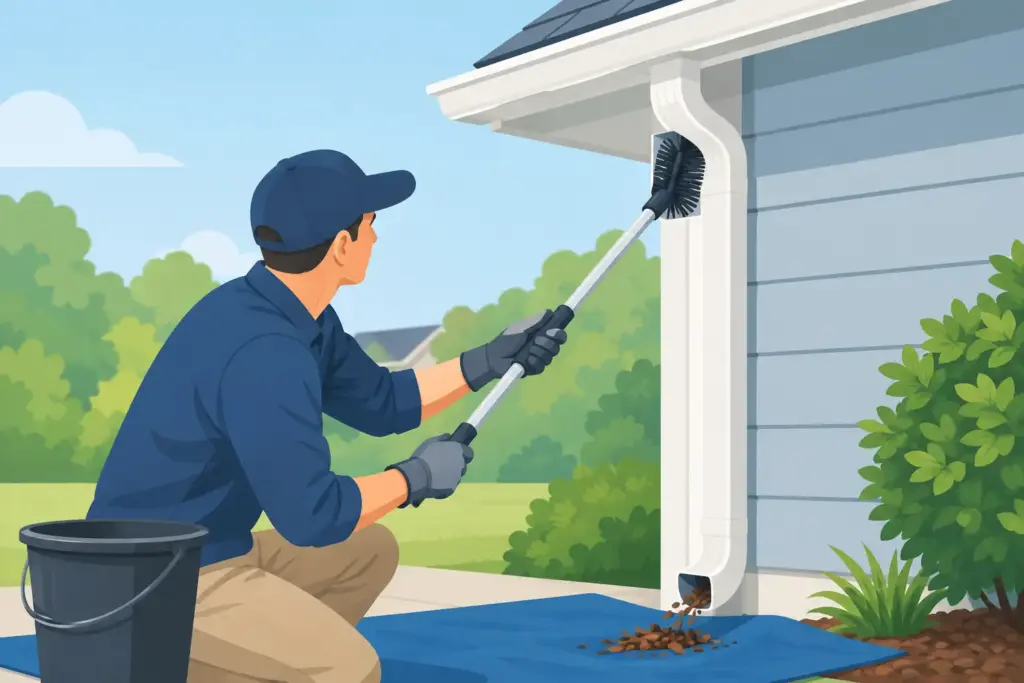

A gutter can look clear from the ground while the downspout is packed tight with wet leaves, pine needles, shingle grit, and roof debris. The first hard rain makes the problem obvious: water spills over the gutter edge, runs down siding, and collects where it should not. Knowing how to clean gutter downspouts helps protect the parts of your home that are expensive to repair, including the foundation, landscaping, fascia, and basement.
For homes across Western Maine and nearby New Hampshire, downspout clogs are common after fall leaf drop, spring storms, and heavy winter weather. The job is usually manageable when the clog is minor, but it does require the right approach. Forcing debris farther into a buried drain or working from an unstable ladder can turn a simple maintenance task into a bigger problem.
Start by Finding the Clog
Before taking a downspout apart, look for clues that tell you where water is stopping. During a light rain, watch whether water exits at the bottom of the downspout. If it trickles out slowly or not at all while the gutter is overflowing, the downspout is likely blocked.
Check the gutter opening at the top of the downspout first. This is where leaves often form a soggy plug. Also inspect the elbow sections, especially the first elbow below the gutter and the elbow near the ground. Debris tends to settle at these turns rather than in a straight section of pipe.
If your downspout disappears into an underground drain, the blockage may be below grade. A downspout that is clear above ground but still backs up may have a clogged extension, crushed pipe, or packed underground drainage line. That calls for a different solution than routine gutter cleaning.
What You Need to Clean Gutter Downspouts
Most light clogs do not require specialized equipment. Gather a sturdy extension ladder, work gloves, a garden hose with a spray nozzle, a small plastic scoop or gutter tool, a bucket, and safety glasses. A plumber’s drain snake can help with a stubborn clog in an accessible downspout, but use it carefully so it does not puncture thin metal or damage seams.
Avoid using a pressure washer inside a downspout. High pressure can force water behind siding, separate joints, damage older components, or push compacted debris into a buried drain where it is harder to reach. A steady garden-hose flow is usually the better choice for flushing ordinary buildup.
If you are using a ladder, place it on firm, level ground and keep it away from power lines. Have another adult nearby to steady the ladder and help with tools. Do not overreach from the ladder or try to clean gutters during rain, high winds, icy conditions, or when the ground is soft.
How to Clean Gutter Downspouts Step by Step
Start at the top. Remove leaves, sticks, roof grit, and other material from the gutter channel, working toward the downspout opening. If the gutter is full, clearing only the opening will not solve the issue for long. Put debris into a bucket rather than dropping it onto walkways, decks, or planting beds.
Once the gutter is clear, reach into the downspout opening with a gloved hand or plastic tool and remove any material you can safely access. Do not compact the debris by pushing hard. The goal is to pull the plug out, not force it farther down.
Next, feed water from a garden hose into the top of the downspout. Use a moderate, steady stream and have someone watch the bottom outlet. If water flows freely, let it run for another minute to carry away smaller particles. Then check that the water discharges several feet away from the foundation.
If the hose backs up, stop before the gutter fills and spills. Disconnect the lowest elbow or removable section of downspout if your setup allows it. Many clogs collect in this lower bend, where you may be able to pull out a compacted mass of leaves and dirt by hand. Reattach the section securely before testing with water again.
For a clog that remains in a straight, above-ground section, carefully use a drain snake from the bottom upward. Move slowly and do not force the cable through resistance. Once you loosen the blockage, flush the downspout from the top with the garden hose. If the clog will not move, or if you suspect the issue is in an underground pipe, it is time to call a professional rather than risk damaging the drainage system.
Pay Attention to the Bottom of the Downspout
Cleaning the vertical pipe is only part of the job. Water needs a clear path away from the house after it exits. Make sure the splash block, extension, or drain connection is positioned correctly and not buried under mulch, leaves, or snow-season debris.
A downspout that releases water beside the foundation can contribute to damp basement walls, erosion, and winter ice near entryways. As a general rule, direct water well away from the home. The exact setup depends on your lot’s slope, soil, landscaping, and whether you have an underground drainage system.
If an extension is crushed, disconnected, or repeatedly clogs, replacing or rerouting it may be more useful than cleaning it again and again. Persistent drainage trouble is often a setup issue, not just a leaf issue.
When a Downspout Clog Needs Professional Help
Some signs point to more than routine debris. Water stains on siding, loose gutter sections, rotted fascia boards, sagging gutters, and recurring overflow can mean the entire system needs attention. A downspout may also be clogged with roofing granules, nests, or material packed into an underground line.
Professional gutter cleaning is a sensible choice when your home has a steep roofline, multiple stories, difficult ladder access, or heavy seasonal buildup. It is also worthwhile if you would rather avoid the safety risk and have the gutters, downspouts, and exterior checked as one maintenance task.
Western Maine Pressure Washing provides dependable gutter cleaning for homeowners who want clear drainage without spending a weekend on a ladder. As a local, family-owned exterior cleaning company, the team can help remove buildup that affects your home’s appearance and its ability to handle Maine weather.
Keep Downspouts Clear Between Cleanings
For most homes, clean and test gutters and downspouts at least twice a year: once after leaves fall and again in spring. Properties surrounded by pines, maples, or other heavy-shedding trees may need more frequent attention. A quick hose test after a major storm can catch a developing clog before the next rainfall sends water over the gutter edge.
Gutter guards can reduce large leaf buildup, but they are not maintenance-free. Fine needles, roof grit, and seeds can still collect on top of guards or at the downspout opening. Whether guards make sense depends on the surrounding trees and the design of your existing gutters.
A clear downspout is a small detail that does a big job. When rainwater has a clean route from the roof to a safe discharge point, your home is better prepared for the next storm, thaw, or heavy spring rain.