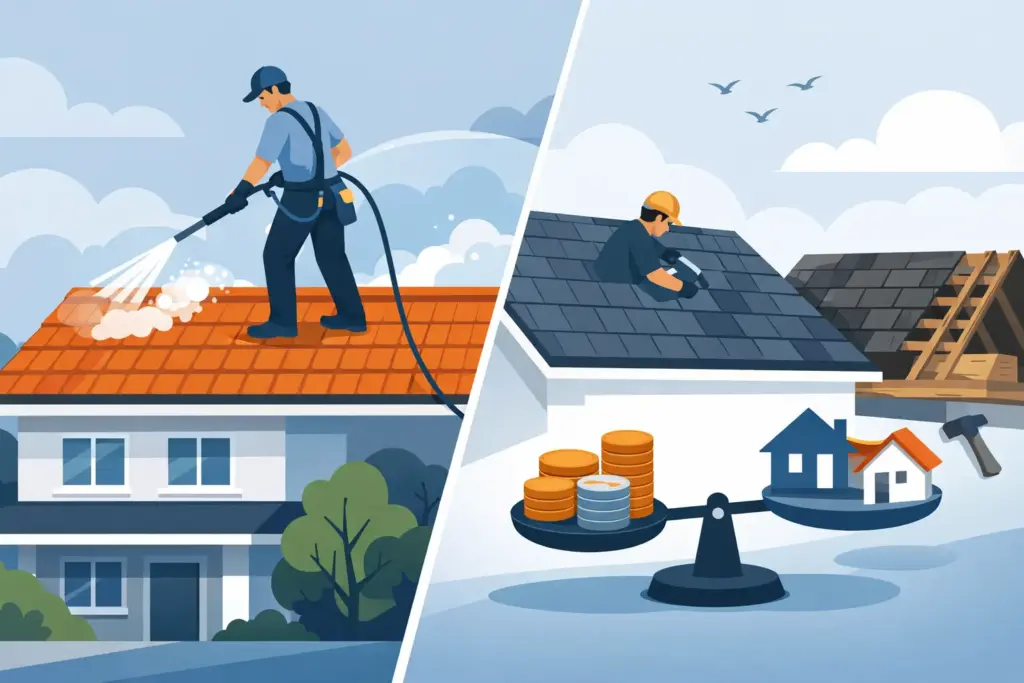

A black-streaked roof can make an otherwise well-kept Maine home look tired fast. It can also lead homeowners to assume the shingles are finished when they may only be covered in algae, moss, or years of grime. When weighing roof cleaning versus replacement, the right call comes down to the condition beneath the stains, not just what you can see from the driveway.
A professional assessment can help separate a roof that needs careful cleaning from one that has reached the end of its useful life. Cleaning is often a practical, cost-effective way to restore appearance and address roof growth. Replacement is the better investment when the roof has real material failure, active leaks, or widespread damage.
Roof Cleaning Versus Replacement Starts With Roof Condition
A roof does not need to look new to be in good working shape. Asphalt shingles naturally weather over time, and shaded roofs in Western Maine, Greater Portland, and nearby New Hampshire communities often develop dark streaks or green growth. Moisture, tree cover, and seasonal debris create the conditions algae and moss like best.
Those stains may be ugly, but they do not automatically mean the shingles need to be torn off. In many cases, the roof still has years of service left. A low-pressure roof cleaning can remove organic growth and discoloration without the damaging force of traditional high-pressure washing.
Replacement becomes more likely when the problem goes beyond the surface. Look for missing shingles, widespread curling or cracking, exposed nail heads, sagging areas, granules collecting heavily in gutters, or water stains inside the attic or on ceilings. These are signs that the roof system may no longer be protecting the home as it should.
Surface Growth Is Different From Shingle Failure
Algae commonly causes the familiar dark streaks on asphalt shingles. Moss can appear thicker and greener, especially on roof sections that stay damp and receive limited sun. Lichen may look like flat, crusty patches attached to the shingle surface.
All three can affect curb appeal, and moss in particular can hold moisture against shingles and lift their edges as it grows. That is a reason to address it, not a reason to grab a pressure washer or assume replacement is the only answer. The cleaning method matters. High pressure can strip protective granules, loosen shingles, and create a much bigger repair bill.
Professional low-pressure roof cleaning is designed to treat the growth while protecting the roofing material. It is a different service from blasting a driveway or washing a deck. The goal is to clean the roof safely and preserve what is still in good condition.
When Cleaning Is Usually the Better Choice
Roof cleaning makes sense when the shingles are intact and the main issue is staining, algae, moss, lichen, or accumulated debris. It is especially worthwhile for a roof that is aging cosmetically but has not developed leaks or structural concerns.
Cleaning can improve the appearance of the whole property. A roof covers a large visual area, so dark streaks can make clean siding, trimmed landscaping, and fresh paint feel less effective. For homeowners preparing to sell, a cleaner roof can help the property show better without taking on the cost and disruption of an unnecessary replacement.
It can also be a smart maintenance decision for property owners who want to stay ahead of buildup. Leaves, pine needles, and roof growth trap moisture. Keeping roof surfaces and gutters clear supports better drainage and reduces the conditions that allow growth to return quickly.
Cleaning is not permanent, particularly on heavily shaded properties. Nearby trees, humidity, and the direction a roof faces all affect how fast algae or moss comes back. Still, periodic service is generally far less expensive than replacing a roof that remains structurally sound.
A Cleaning Can Reveal the Real Condition
One benefit of cleaning is that it makes the roof easier to inspect. Thick debris and dark staining can hide cracked shingles, damaged flashing, or areas where repairs are needed. Once the buildup is removed, homeowners can see what they actually have.
That does not mean cleaning repairs a worn-out roof. It simply prevents surface discoloration from being mistaken for damage and helps avoid replacing materials before their time.
When Roof Replacement Is the Right Investment
Sometimes replacement is the clear answer. If shingles are brittle, curling across large sections, missing in multiple areas, or losing granules heavily, cleaning will not restore their protective function. The same is true if there are recurring leaks, rotted roof decking, major flashing problems, or visible sagging.
Age matters, but it is not the only factor. Many asphalt shingle roofs last roughly 20 to 30 years, depending on installation quality, ventilation, weather exposure, and shingle type. A 22-year-old roof with isolated algae growth may still be a candidate for cleaning. A 12-year-old roof with storm damage and chronic leaks may need replacement sooner.
Replacement is also worth considering if repair needs are widespread. Patching a few damaged shingles can be sensible. Repeated repairs across multiple slopes, on the other hand, can become a temporary fix that costs more over time. A qualified roofing contractor should evaluate structural and installation concerns before any replacement decision is made.
For commercial buildings and multi-unit properties, the decision has another layer. Water intrusion can affect tenants, inventory, common areas, and operating costs. If the roof is failing, prompt replacement planning may protect the property better than repeated cleaning or minor repairs. If the roof is sound but stained, cleaning can improve the building’s presentation for customers and tenants at a much lower cost.
Cost Is Important, but So Is Timing
The price difference between cleaning and replacement is substantial. Roof cleaning is a maintenance service. Replacement is a major construction project involving materials, labor, disposal, and often repairs to underlying decking or flashing.
That difference makes it tempting to clean every roof, but the lowest immediate cost is not always the best value. Cleaning a roof with active leaks or widespread shingle failure can delay a necessary repair and leave the property exposed. On the other hand, replacing a roof solely because it has black streaks can mean throwing away years of useful service life.
The best value comes from matching the work to the actual problem. If the roof is sound, clean it correctly and maintain it. If it is failing, direct your budget toward replacement rather than cosmetic improvement.
Do Not Let Roof Appearance Be the Only Test
A roof can look rough and still be functional. It can also look fairly clean while hiding trouble underneath. Check the attic after heavy rain, watch for ceiling spots, inspect gutters for excessive granules, and pay attention to shingles that lift in the wind.
From the ground, use binoculars if needed rather than walking on the roof. Walking on shingles can cause damage, especially in cold weather or on older roofs. It is also a safety risk that is not worth taking for a quick look.
Protect a Good Roof With the Right Maintenance
Regular exterior maintenance helps prevent minor buildup from becoming a bigger headache. Keep gutters clear so water can move away from the roofline. Trim back branches that rub against shingles or keep sections of the roof in constant shade. Remove loose debris before it has time to hold moisture in place.
If moss, algae, or staining is already present, avoid using harsh pressure or trying to scrape it away. A roof needs a method suited to its material and condition. Low-pressure cleaning is the safer approach for many asphalt shingle roofs because it treats the growth without aggressively stripping the surface.
Western Maine Pressure Washing provides low-pressure roof cleaning for homeowners and property managers who want a cleaner roof without treating it like a concrete surface. A clear estimate and an honest look at the condition can help you decide whether cleaning is a sensible next step or whether it is time to speak with a roofing professional.
Before committing to a replacement, ask one simple question: are the shingles truly failing, or are they simply dirty? Getting that answer right can protect your home, your curb appeal, and your budget.