
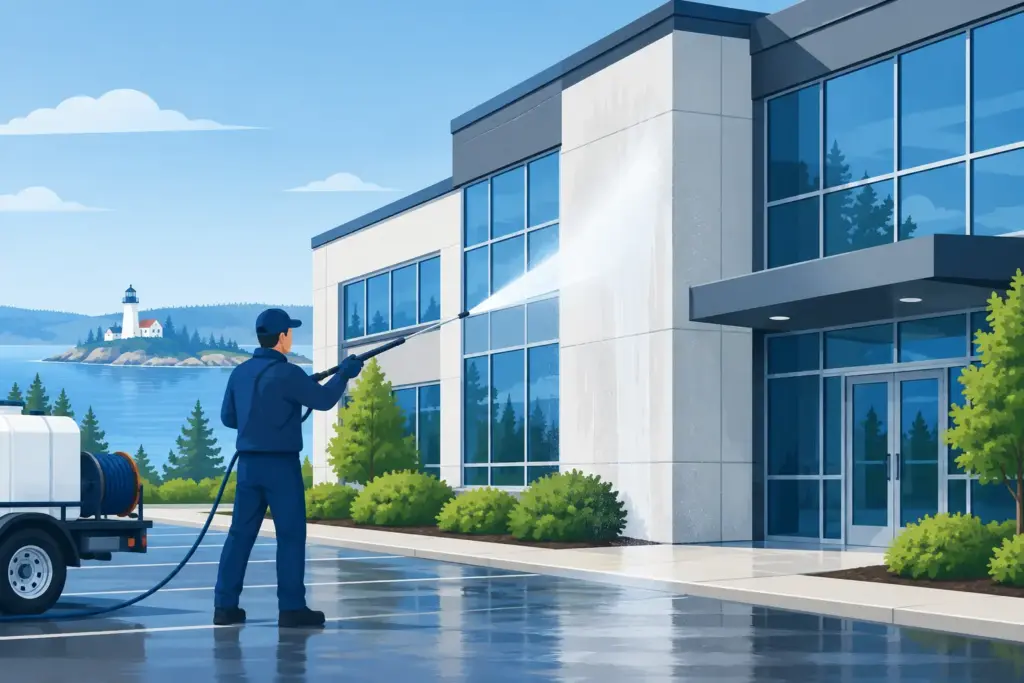

A storefront can be well run, fully staffed, and ready for customers, but stained siding, green growth, and grimy entryways tell a different story before anyone walks through the door. This commercial building washing guide helps Maine business owners, property managers, and multi-unit operators plan exterior cleaning that protects their property and keeps it looking cared for.
Commercial washing is not just about making a building look brighter for a day. Dirt, algae, mildew, road film, salt, and organic buildup can hold moisture against exterior materials and create slippery walking areas. A regular cleaning plan gives you a clearer view of the condition of your building while helping tenants, customers, and visitors feel confident arriving at the property.
Start With the Building’s Real Problem Areas
Every commercial property collects dirt differently. A restaurant near a busy road may deal with exhaust residue and road film. An office building surrounded by trees may develop algae on shaded siding and walkways. Apartment buildings often have high-touch entrance areas, gutters, breezeways, and common spaces that need attention before buildup becomes an ongoing complaint.
Walk the property from the street, then take a closer look around entrances, loading areas, sidewalks, downspouts, and the shaded sides of the building. Look for discoloration, black streaks, green algae, mold, cobwebs, peeling paint, clogged gutters, and areas where water sits after rain.
Pay special attention to these four areas:
- Building entrances, where customers and tenants form a first impression and wet buildup can create a slip concern.
- North-facing walls and shaded sections, where moisture stays longer and algae growth is common.
- Gutters and downspouts, where blockages can send water toward siding, foundations, and walkways.
- Concrete walks, curbs, and stairs, where dirt, algae, salt residue, and chewing gum can make a property look neglected.
This assessment also helps you avoid treating every surface the same way. Brick, vinyl, painted wood, stucco, composite trim, concrete, awnings, and roofing materials each need an approach that fits the material and its condition.
Pressure Is Not the Answer to Every Surface
The name pressure washing can make people think more pressure always means a better clean. On a commercial property, that is rarely the right approach. The best result comes from using the appropriate cleaning solution, water flow, pressure level, and technique for the surface being cleaned.
Concrete can often handle a stronger cleaning method than painted siding or older wood. Vinyl siding with algae usually responds well to a controlled low-pressure wash that removes growth without forcing water behind the panels. Delicate surfaces, window frames, signage, and painted trim require added care.
Roofs are a separate category. Moss, algae, and dark roof stains should not be blasted away with high pressure. Low-pressure roof cleaning is designed to treat and remove growth while protecting shingles and other roofing materials. If a building has visible roof streaks or moss along shaded edges, address it before the problem spreads and affects the property’s appearance from the road.
A professional cleaner should explain the planned method in plain language. You should know what areas will be cleaned, how nearby landscaping and entrances will be protected, and whether any stains may need special treatment. Some stains, especially rust, oil, paint, or long-set efflorescence on masonry, may require a different process or may not disappear completely. Honest expectations matter.
Plan Commercial Building Washing Around Operations
A clean building should not come at the expense of a disrupted business day. Before scheduling service, consider customer traffic, delivery windows, tenant access, parking, and any areas that need to remain open.
For many businesses, early morning, slower weekday periods, or scheduled work around tenant hours make the most sense. Retail properties may need entrances and sidewalks completed before opening. Multi-unit buildings may need advance notice so residents can move vehicles, close windows, and keep pets inside. A medical office, school, or hospitality property may need a more detailed plan to keep walkways accessible.
Water management is part of the job as well. Cleaning should account for drainage patterns, storm drains, landscaping, electrical fixtures, exterior outlets, and outdoor equipment. Entry mats, patio furniture, dumpster areas, and movable signs may need to be relocated or protected before work begins.
A good commercial cleaning plan is practical, not complicated. It identifies where the crew will work first, how the public will move around the site, and what needs to be cleared before cleaning starts. This preparation helps the work move efficiently and reduces surprises for staff, customers, and tenants.
Build a Maintenance Schedule That Fits Maine Weather
In Western Maine and the Greater Portland area, exterior surfaces take a beating. Snow, spring thaw, pollen, humidity, shade, falling leaves, and winter road salt all leave their mark. The right washing schedule depends on the building’s location, materials, tree cover, and amount of foot traffic.
Many commercial buildings benefit from a full exterior wash once a year, often in spring or early summer after winter grime has passed. High-traffic entrances, sidewalks, storefronts, and dumpster areas may need cleaning more often. A property under heavy tree cover may also need a midseason touch-up for algae, pollen, or leaf debris.
Gutters deserve their own schedule. Clogged gutters can overflow during heavy rain and snowmelt, leaving streaks on siding and putting extra water near the building. For properties with nearby trees, cleaning gutters after leaf drop and checking them again in spring is a sensible starting point.
Do not wait until the building looks severely stained. By that point, growth may be more established, surfaces may need more treatment, and the property has already been making a poor impression. Routine cleaning is usually easier to manage than a large catch-up project.
Include Windows, Gutters, and Common Areas
Commercial curb appeal is built from details. Fresh siding will still look unfinished if windows are cloudy, gutters are overflowing, or the front walk is streaked with grime. Combining exterior services can make maintenance easier and give the property a more consistent result.
Window washing improves natural light and makes a storefront or office look more welcoming. Gutter cleaning helps protect drainage and keeps water from spilling over the edges. Decks, patios, and shared outdoor areas need periodic cleaning to remove slippery growth and seasonal buildup.
For multi-unit properties, common areas are especially important. Residents notice dirty stairs, breezeways, walkways, railings, and entry doors every day. Keeping those spaces clean supports tenant satisfaction and helps property managers stay ahead of maintenance concerns.
Choose a Contractor Who Understands Property Care
Price matters, but the lowest quote is not always the lowest cost. Improper pressure, harsh treatment on the wrong material, or missed drainage issues can leave a property with damage or an incomplete result. Look for a company that can assess the surfaces, explain its process, and provide a clear quote before work begins.
Local experience matters in Maine because the conditions are local too. A contractor should understand how shade, moisture, winter debris, and seasonal weather affect siding, roofs, gutters, and concrete. They should also be prepared to work around your hours and treat your property with care.
Western Maine Pressure Washing provides commercial exterior cleaning for businesses, multi-unit properties, and property managers who want one dependable team for washing, gutters, windows, roofs, and more. A free estimate gives you a practical starting point, whether the property needs a full exterior refresh or attention to a few problem areas.
When you look at your building this week, start at the entrance and work outward. The stains, streaks, and slippery spots you notice now are often the easiest maintenance problems to solve before they become a bigger distraction.