
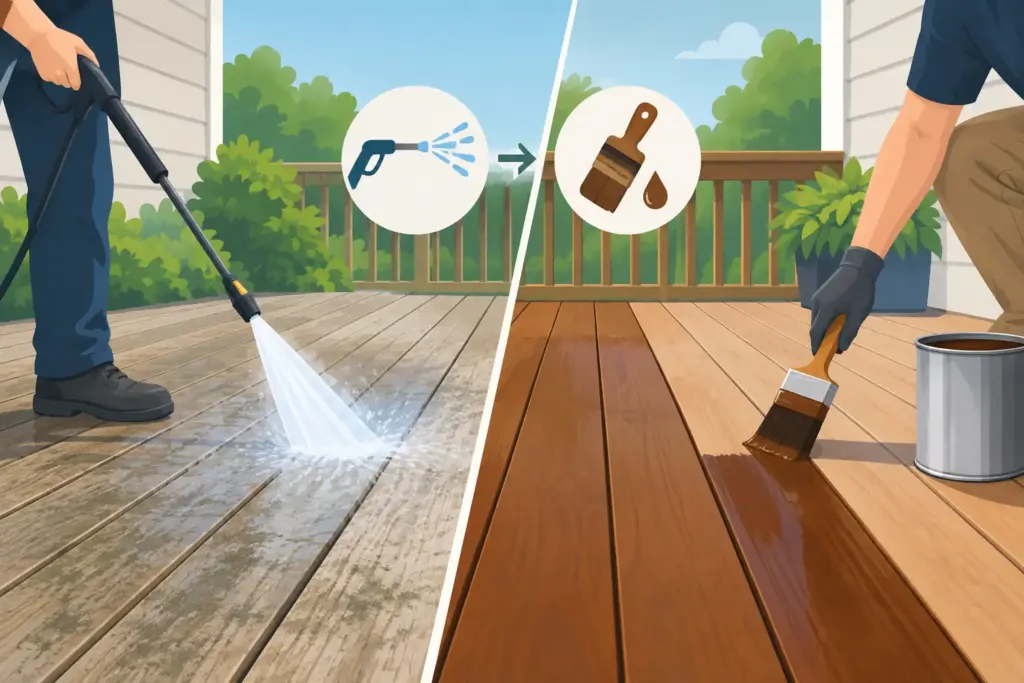

A deck can look tired for two very different reasons: it is dirty, or its protective finish has worn away. Deck washing versus staining is not an either-or choice in most cases. Washing removes the grime, algae, mildew, and weather stains sitting on the surface. Staining protects clean, dry wood from sun, rain, and foot traffic. Knowing which problem you have helps you spend money in the right place and avoid doing damage with a rushed DIY project.
For homeowners across Western Maine, Greater Portland, and nearby Conway, New Hampshire, deck care also has to account for long winters, wet springs, pollen, tree cover, and humid summer weather. A deck that looked fine last fall can come out of winter with slick green growth, dark staining, and boards that need attention before the first cookout.
What Deck Washing Actually Does
Deck washing is about cleaning the wood or composite surface. Over time, decks collect dirt, pollen, leaves, muddy footprints, food spills, and airborne pollution. In shaded areas, moisture can feed algae and mildew growth. The result is a deck that looks darker, duller, or green around the railings and lower-traffic areas.
Professional deck cleaning removes that buildup so the deck looks cleaner and is safer to walk on. Algae is more than an appearance issue. When a deck stays damp and slick, it can create a slip hazard for family members, guests, tenants, or customers.
Cleaning can also reveal the deck’s real condition. Dirt often hides splintering boards, loose fasteners, peeling stain, soft spots, and areas where the wood has started to gray. Once the surface is clean, it is much easier to decide whether the deck simply needs regular maintenance or is ready for a new stain.
The method matters. Too much pressure can scar wood, raise the grain, leave visible wand marks, and force water deep into the boards. A dependable exterior-cleaning professional adjusts the cleaning approach for the deck material and the level of buildup instead of treating every surface like a concrete driveway.
What Staining Does That Washing Cannot
Stain is a protective finish, not a cleaner. It adds color or restores a more even wood tone, but its bigger job is helping the boards handle moisture and sun exposure. Depending on the product, stain may soak into the wood, form a light protective layer, or provide a more solid color finish.
A properly applied stain can help reduce water absorption, slow down weathering, and make the deck easier to maintain. It will not repair rotten wood, erase deep damage, or perform well over algae, dirt, and loose old finish. If stain goes on over a dirty surface, it may look uneven and fail sooner than it should.
That is why washing often comes first. Cleaning gives stain a sound surface to bond with. It also keeps trapped organic growth from continuing beneath the new coating.
Deck Washing Versus Staining: The Right Order
If your deck is due for a new finish, the usual order is straightforward: inspect the deck, clean it, allow it to dry fully, make needed repairs, then stain it. Skipping the drying time is one of the most common mistakes. Wood that still holds moisture may not absorb stain evenly, and the finish can peel or wear prematurely.
How long drying takes depends on the wood, weather, shade, airflow, and how thoroughly the deck was washed. Warm, dry conditions help, while a damp Maine spring week can extend the wait. A contractor applying stain should follow the product’s moisture and temperature requirements rather than relying on the calendar alone.
There are exceptions. If a deck was stained recently and only has light surface dirt, a gentle cleaning may be all it needs. If the finish is still protecting the wood and water beads on the surface, restaining may be premature. On the other hand, if water soaks in quickly, the color has faded badly, or stain is peeling, cleaning and refinishing may be the better plan.
Signs You May Need Washing Only
A deck does not need stain every time it starts looking dirty. Washing may be the right service when the boards are structurally sound and the existing finish still has life left in it.
Look for surface-level issues such as pollen, dirt tracked in from the yard, green algae near shaded steps, leaf stains, or mildew around rail posts. If the color still looks mostly consistent after cleaning and water continues to bead on the boards, the deck may only need routine exterior maintenance.
Composite decking is another reason not to assume staining is needed. Many composite products are made to be cleaned rather than stained. They can still develop algae, mildew, and grime, especially in damp or wooded areas, but the maintenance plan is different from natural wood. Always follow the manufacturer’s guidance for the specific decking material.
Signs It Is Time to Plan for Stain
Cleaning alone will not bring back protection that has worn away. Consider staining after washing if bare wood is exposed, the color is faded unevenly, or the old finish is flaking off in high-traffic areas. Wood that absorbs water rather than shedding it is also asking for attention.
Watch the horizontal surfaces closely. Deck floors, stair treads, and top rails usually weather faster than vertical posts and balusters because they take more direct sun and rain. A deck can look acceptable from a distance while its walking surface is already losing protection.
Before staining, check for loose boards, popped nails, cracked boards, and soft areas near posts or stairs. Stain can improve appearance, but it is not a substitute for repairs. Addressing these issues first gives you a safer deck and a cleaner-looking final result.
Why Maine Weather Changes the Schedule
Timing is a practical part of deck maintenance in Maine and New Hampshire. Early spring is often a good time to assess winter buildup, but it may not be the best moment to apply stain if cool temperatures and frequent rain are still in the forecast. Washing in spring can make the deck safer and help you see what needs to be done. Staining may need to wait for a stable stretch of dry weather.
Summer offers better drying conditions, although direct heat and intense sun can make stain application more difficult if the product dries too fast. Fall can work well too, provided there is enough dry weather and temperatures remain within the stain manufacturer’s recommended range.
Tree cover matters as much as the season. A deck under pines or hardwoods may need more frequent cleaning because needles, leaves, sap, and shade hold moisture against the surface. A sunny, open deck may need stain maintenance sooner because ultraviolet exposure fades and dries the wood.
Avoid the Costly Shortcuts
The goal is not to blast a deck until it looks pale or to cover every problem with a darker stain. Both shortcuts can create more work later. High pressure can damage wood fibers, while stain applied over moisture or contamination can leave blotches, peeling, and a shorter service life.
Be cautious with harsh cleaners as well. The wrong product can discolor the surface, harm surrounding plants, or affect nearby siding and landscaping. A careful cleaning process protects the deck while accounting for the rest of the property.
For a deck that is heavily grayed, coated with failing finish, or showing stubborn organic staining, the preparation may be more involved than a basic wash. That is the point where an honest evaluation pays off. The right answer may be cleaning, stripping and refinishing, board replacement, or a combination of services.
Start With a Clear Look at the Deck
A clean deck gives you the information needed to make a good decision. If the wood is still protected, regular washing may be enough to restore the appearance and reduce slippery buildup. If the finish is worn out, washing is the first step toward a stain job that has a real chance to last.
Western Maine Pressure Washing can help homeowners and property managers get the cleaning step done right, with a free quote and a practical recommendation based on the deck in front of you. A little timely care now can keep your outdoor space safer, better looking, and ready to enjoy when the weather turns warm.