
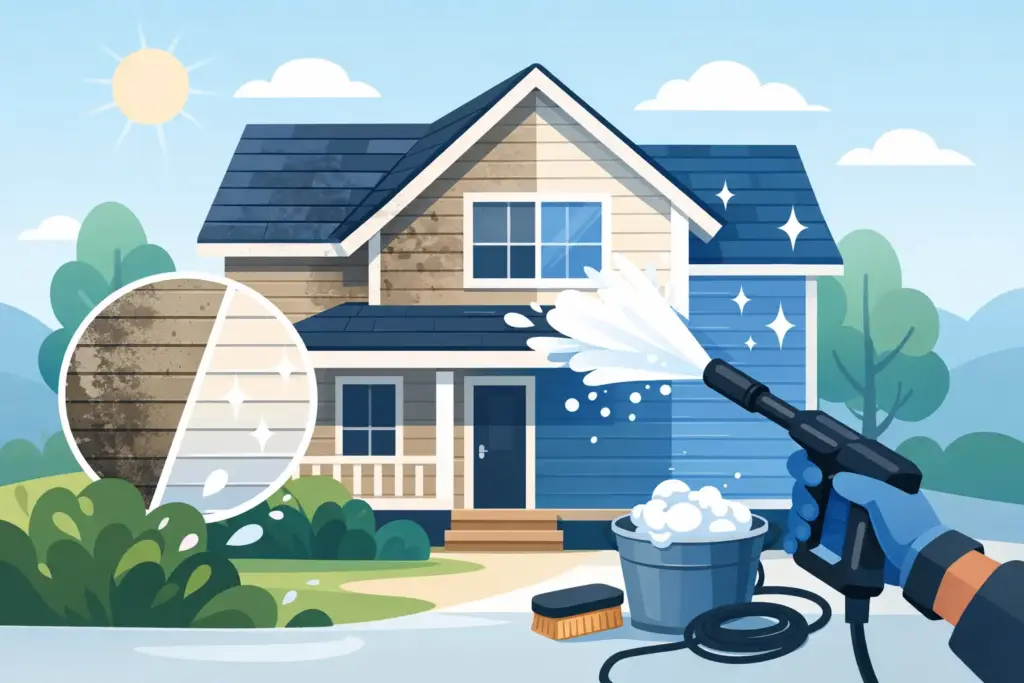

A green film on siding is not just a cosmetic problem. In Maine and nearby New Hampshire, damp seasons, tree cover, pollen, road grime, and winter weather can leave a home looking older than it is. Professional house washing removes that buildup safely, restoring a cleaner appearance while helping homeowners stay ahead of stains that can become harder to remove over time.
For many properties, the difference is visible before the crew has finished one side of the house. Vinyl brightens up, painted trim looks sharper, and the true color of the exterior comes back into view. More importantly, the right cleaning method treats the material with care instead of simply blasting away at it.
What House Washing Removes From Your Exterior
Siding collects more than dust. Algae often appears as green streaks or patches, especially on the shaded sides of a home. Mold and mildew can leave dark spotting around trim, under gutters, and near areas that stay damp. Pollen, cobwebs, insect residue, and airborne dirt add a dull layer that makes even a well-kept property look neglected.
Homes near wooded lots, lakes, busy roads, or areas with limited sun exposure may need cleaning more often. The north-facing wall is usually the first place homeowners notice green growth, but buildup can also gather behind shutters, around light fixtures, along soffits, and under eaves.
A proper cleaning according to industry guidelines addresses the source of the discoloration, not only the surface appearance. That matters because rinsing alone may make algae look lighter for a short time without fully removing it. When the cleaning solution and water pressure are matched to the surface, the result is a more complete, longer-lasting clean.
Why the Right House Washing Method Matters
The word pressure washing can make people picture high-pressure water hitting every surface. That approach has its place for concrete, certain masonry, and other durable materials. It is not automatically the right choice for siding, painted wood, trim, or delicate exterior details.
Most siding benefits from a controlled, low-pressure cleaning approach. The cleaning solution does the work of loosening organic growth and grime, while a gentle rinse carries it away. This helps protect vinyl, painted surfaces, window seals, and other areas that could be damaged by excessive pressure.
The best method depends on the home. Vinyl siding, fiber cement, painted wood, stucco, brick, and composite materials all have different needs. Age and condition matter too. Loose siding, failing paint, open caulking, or damaged trim should be identified before cleaning begins. A dependable exterior cleaning professional adjusts the process to the property rather than using one setting for every job.
This is where professional experience pays off. Strong pressure can force water behind siding, scar wood, strip paint, or damage screens and window seals. Too little attention to the cleaning solution can leave growth behind. our process done right is a balance of effective treatment, proper dwell time, careful rinsing, and protection for the surrounding property.
When Should You Schedule House Washing?
Many homeowners schedule exterior cleaning once a year, often in spring after the snow is gone or before putting a home on the market. Annual service is a practical baseline for properties with average exposure. It keeps dirt and organic growth from building up year after year and makes routine maintenance easier.
Some homes need more frequent attention. If your siding develops visible green or black growth within a season, your property sits under heavy tree cover, or your exterior is close to a damp area, a shorter schedule may make sense. There is no need to clean on a rigid calendar if the house still looks good. The better rule is to watch for visible buildup and address it before stains become established.
House washing is also worth planning before other exterior work. Cleaning prior to painting, staining, listing a home for sale, hosting a major event, or opening a seasonal business gives the property a clean foundation. For commercial buildings and multi-unit properties, a fresh exterior helps make a stronger first impression on customers, tenants, and visitors.
Signs Your Home Is Ready for Cleaning
You do not need to wait until the whole exterior looks dirty. Small warning signs are often enough to schedule service. Watch for green, black, or brown streaks; a chalky-looking layer on siding; dark marks under gutters; spiderwebs and grime around entryways; or a noticeable color difference between protected and exposed areas.
Pay close attention to siding near landscaping. Sprinklers, shrubs, and mulch beds can keep lower walls damp and encourage growth. Gutters that overflow can also leave streaks and discoloration below the roofline. In those cases, pairing house washing with gutter debris removal can help address both the visible result and the drainage issue behind it.
Cleaning is not a substitute for repairs. If there is peeling paint, cracked siding, rotted trim, or a leak, those issues need their own solution. Still, a clean exterior makes problems easier to see and gives homeowners a clearer picture of what their property needs.
What a Professional Cleaning Visit Should Include
A quality service begins with a look at the property. The crew should identify the siding material, inspect for delicate areas, note stubborn stains, and protect nearby plants and exterior features. Windows, doors, outdoor outlets, landscaping, and fixtures all deserve attention before cleaning starts.
The exterior is then treated with an appropriate cleaning solution to break down algae, mildew, and grime. After the solution has time to work, the home is rinsed carefully from top to bottom. The goal is an even finish without streaking, residue, or missed sections around trim and architectural details.
A thorough job also considers the areas people notice most: front entries, porches, garage doors, shutters, eaves, and visible foundation sections. These details make a significant difference in curb appeal. If windows, decks, gutters, or the roof also need attention, coordinating services can save time and give the whole property a more consistent result.
Western Maine Pressure Washing provides this kind of all-in-one exterior care for homeowners, businesses, and property managers throughout Western Maine, Greater Portland, and nearby Conway, New Hampshire communities.
Is DIY House Washing Worth It?
For a small, easy-to-reach section of siding, a homeowner may be able to handle light cleaning with the right supplies and care. But whole-house cleaning brings challenges that are easy to underestimate. Ladders, uneven ground, high peaks, landscaping, chemical handling, and unknown siding condition all raise the risk.
Rental pressure washers can be especially unforgiving. A tip that is too narrow or a setting that is too strong can leave permanent marks in seconds. Cleaning products also need to be mixed and applied properly. Too weak, and growth remains. Too strong, and plants, paint, or nearby surfaces can be affected.
Hiring a professional is often the better value when the property is large, the staining is heavy, or access is difficult. The work is completed with equipment suited to the job, and homeowners avoid spending a weekend moving ladders, troubleshooting equipment, and hoping they have not caused damage.
Keep the Clean Look Going Longer
A few simple habits can slow the return of exterior buildup. Trim branches back where possible to improve sunlight and airflow around the house. Keep gutters flowing so water does not spill down the siding. Avoid aiming sprinklers at exterior walls, and clear wet leaves away from the foundation and lower siding.
These steps will not eliminate algae in a damp climate, but they can reduce the conditions that help it grow. Regular exterior checks are useful too. A quick walk around the house each season can reveal staining, drainage issues, and small maintenance needs before they turn into bigger projects.
Your home works hard through every Maine season. Keeping its exterior clean is a straightforward way to protect the appearance you take pride in and spot trouble early. When buildup starts to take over, request a free quote and let a local, trusted, family-owned team take care of the work.