
Those black streaks on a roof are not just a cosmetic problem. In Maine and nearby New Hampshire communities, damp weather, shade, pine trees, and seasonal debris create the right conditions for algae, moss, mold, and lichen to take hold. Low pressure roof cleaning is the right way to remove that growth without using the kind of force that can damage shingles, strip protective granules, or push water where it does not belong.
A clean roof changes the look of the whole property, but the bigger benefit is protection. When growth and debris are left in place year after year, they can hold moisture against roofing materials and make small maintenance issues harder to spot. For homeowners, landlords, and commercial property managers, professional roof cleaning is a practical part of caring for the building from the top down.
Why Roof Streaks and Growth Need Attention
The dark marks that commonly appear on asphalt roofs are often algae. They may start as light discoloration and become darker, more noticeable streaks over time. Moss and lichen can also develop, especially on roof sections that stay shaded or collect leaves and needles.
These growths do more than make a home look neglected. Moss can trap moisture, while accumulated debris can slow drainage and keep roof areas damp longer than they should be. A dirty roof can also hide damaged shingles, loose flashing, or other conditions that deserve attention before they become costly repairs.
Not every stained roof needs immediate cleaning. A newer roof with minor discoloration may be more of an appearance concern than a performance issue. But if the growth is spreading, moss is visible along shingle edges, or debris has built up in valleys and around roof penetrations, waiting usually does not make the job easier.
What Low Pressure Roof Cleaning Means
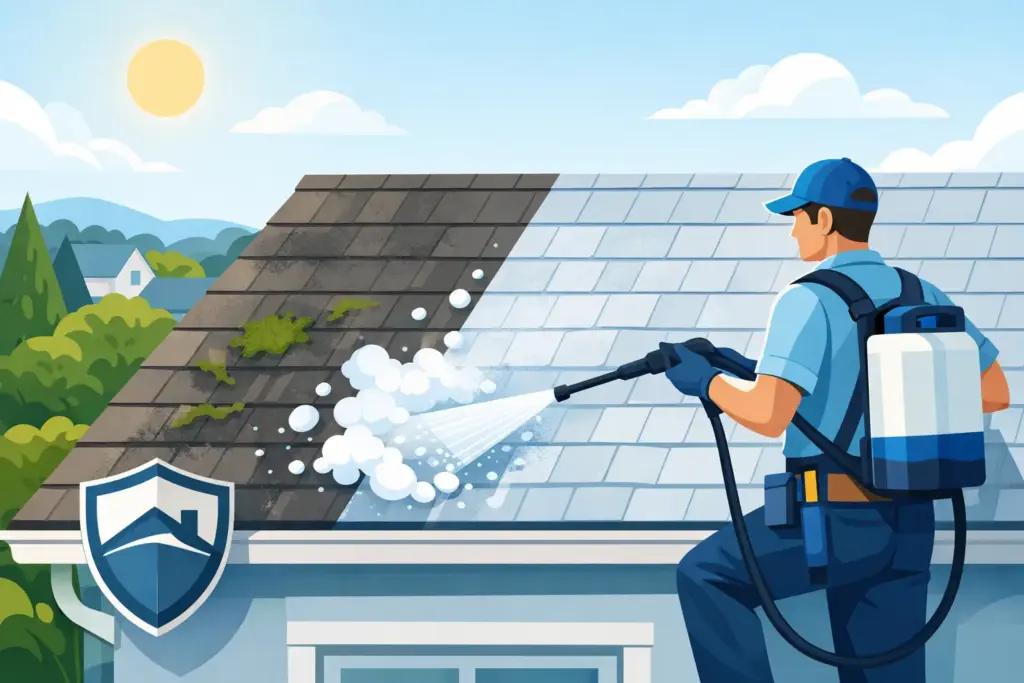
Low pressure roof cleaning uses a carefully controlled cleaning solution and gentle application method to treat organic growth. The solution does the cleaning work. Water pressure is kept low so the roof is not blasted like a driveway, sidewalk, or concrete patio.
That difference matters. High pressure can lift shingles, remove protective granules, damage flashing, and force water under roofing materials. A roof is not designed to be cleaned with aggressive pressure. It needs a method that respects the material while addressing the algae, moss, mold, and staining on the surface.
After treatment, many roof stains begin to break down quickly. Heavier growth may take additional time to release naturally, particularly where moss or lichen has been established for a long period. The right expectation is a cleaner, healthier-looking roof without unnecessary force – not a rushed process that puts the roofing system at risk.
The Cleaning Process Should Fit the Roof
A professional approach starts with the roof itself. Asphalt shingles, metal roofing, older materials, steep pitches, nearby landscaping, and the amount of growth all affect how the job should be handled. A roof with light algae staining needs a different approach than a heavily shaded roof with thick moss and packed debris in the valleys.
Before cleaning begins, surrounding plants and outdoor areas should be protected and thoroughly rinsed as needed. The roof treatment is then applied at low pressure to target the organic buildup. Gutters, downspouts, and drainage areas should also be considered, because runoff and roof debris often travel through the same system.
This is one reason professional service is worth considering. The goal is not simply to make the roof look better for a few days. The goal is to clean it carefully, manage runoff responsibly, and leave the property looking cared for.
Why High Pressure Is the Wrong Tool for Most Roofs
Pressure washing has its place. Concrete, pavers, some siding surfaces, decks, and commercial walkways may benefit from the right level of pressure and the right technique. Roofs are different.
High pressure can create damage that is not always obvious from the ground. Granule loss on asphalt shingles can shorten the useful life of the roof. Lifted or broken shingles can allow water intrusion. Strong spray can also disturb caulking, flashing, and other sensitive roof details.
There is also the safety issue. Walking on a wet roof and handling equipment at height requires experience, proper planning, and attention to the property below. Homeowners should not have to risk a fall or guess which cleaner is safe for their roofing material just to remove stains.
Low pressure roof cleaning is not about taking the easy route. It is the more careful route. It addresses the source of common roof discoloration while avoiding the unnecessary force that can turn a cleaning project into a repair project.
When to Schedule Roof Cleaning
For many properties in Western Maine, the Greater Portland area, and nearby Conway, New Hampshire, spring through fall can be a good time to evaluate the roof. After winter, homeowners often notice new streaking, debris, or moss that was hidden by snow and ice. Fall is also a smart time to remove leaves, needles, and growth before another wet season.
The best schedule depends on the property. Homes under heavy tree cover or on shaded lots may need more frequent attention than homes with open exposure and good airflow. Buildings near lakes, wooded areas, or humid locations often see algae return sooner as well.
Look up from the ground after major seasonal changes. Visible black streaks, green patches, mossy shingle edges, debris-filled roof valleys, and clogged gutters are all signs that it may be time for an inspection and a cleaning estimate. Early service is usually simpler than waiting until the growth becomes thick and established.
Roof Cleaning and Gutter Cleaning Work Better Together
A roof does not work alone. Water needs a clear path off the roof, into the gutters, through the downspouts, and away from the foundation. When gutters are full of leaves, pine needles, roof grit, or organic buildup, water can back up at the roofline and spill where it should not.
Pairing roof cleaning with gutter cleaning can make sense when both areas show buildup. It gives the property a more complete reset and helps keep drainage moving in the right direction. The same goes for house washing when algae or mold is visible on siding, trim, or shaded exterior surfaces.
For commercial properties and multi-unit buildings, coordinated exterior cleaning can also help maintain a more professional appearance. A stained roof, dirty siding, and overflowing gutters are noticeable to tenants, customers, and visitors. Regular care supports curb appeal while helping property operators stay ahead of avoidable buildup.
What a Good Roof Cleaning Result Looks Like
A properly cleaned roof should look noticeably better without showing signs of aggressive treatment. The goal is reduced staining, removed organic growth, cleaner roof lines, and a more maintained appearance from the street. Some stubborn growth may continue to fade after treatment rather than disappearing all at once, which is normal for a careful low-pressure process.
It is also fair to be realistic about roof condition. Cleaning can remove growth and discoloration, but it cannot repair worn shingles, fix leaks, replace missing materials, or reverse age-related roof wear. If a roof is already near the end of its service life, a qualified roofer may need to assess it before any cleaning work is planned.
Western Maine Pressure Washing takes a straightforward approach: match the cleaning method to the surface, protect the property, and focus on results that make sense for the condition of the roof. Local. Trusted. Family Owned.
A cleaner roof is one of the simplest ways to improve how a property looks and help prevent moisture-holding growth from being ignored. If dark streaks, moss, or roof debris are starting to stand out, a free professional estimate can give you a clear path forward without putting your roof at risk.