
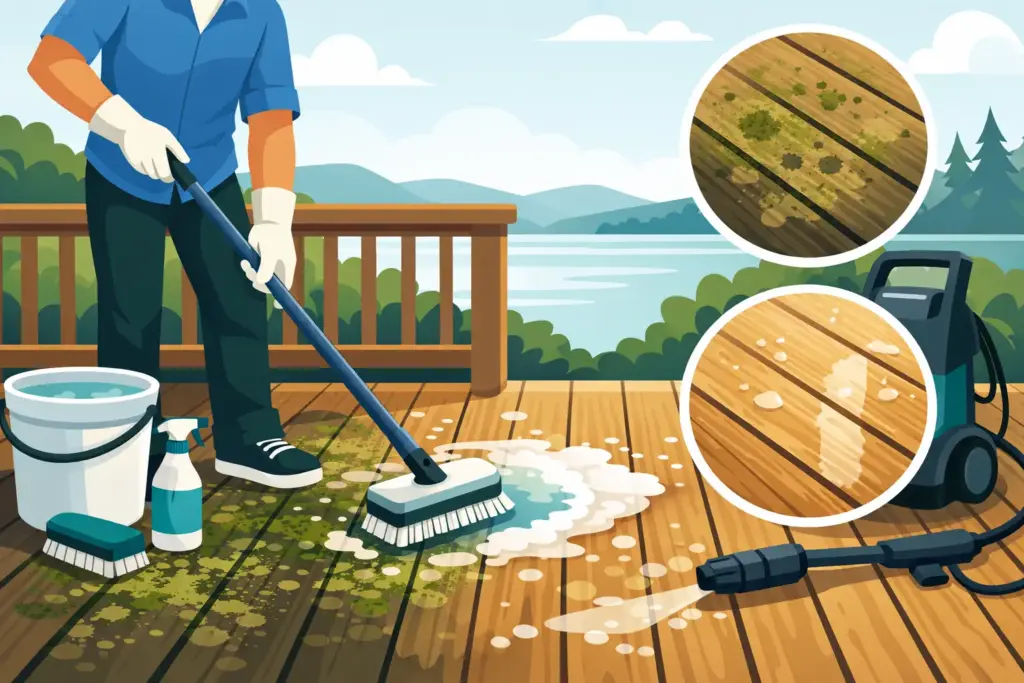

A deck can go from a favorite place to sit to a slippery, gray-green eyesore in one damp Maine season. Knowing how to clean a moldy deck the right way helps restore its appearance, improve footing, and protect the boards from unnecessary damage. The goal is not just to blast away the visible growth. It is to remove it thoroughly without roughing up wood fibers, stripping finish, or forcing water where it does not belong.
Mold, mildew, algae, and moss all thrive where moisture lingers. Shaded decks, areas beneath trees, spots near downspouts, and boards with poor drainage are especially likely to develop growth. While homeowners often call all of it mold, the cleaning approach is similar: use the right cleaner, give it time to work, scrub where needed, and rinse with control.
Start by Identifying Your Deck Material
The safest cleaning method depends on whether your deck is natural wood, pressure-treated lumber, cedar, composite, or PVC. Wood is durable, but it can be scarred by overly strong chemicals or excessive pressure. Composite boards do not splinter like wood, but they can be discolored or damaged by harsh cleaners and aggressive pressure washing.
Before applying anything across the full deck, test a small, out-of-the-way section. Check the manufacturer guidance if you have composite decking, especially if the boards have a protective cap. A cleaner that works well on an older pressure-treated deck may not be the best choice for a newer composite surface.
Also take a close look at the deck’s condition before cleaning. Loose boards, popped fasteners, soft spots, peeling stain, and failing railings should be addressed before anyone starts moving furniture or working with water. Cleaning reveals problems, but it should not make existing damage worse.
What You Need to Clean a Moldy Deck
For a typical light-to-moderate buildup, you do not need a complicated setup. Use a deck-safe cleaning solution suited to your surface, a garden hose with a spray nozzle, a stiff synthetic-bristle brush, a bucket, gloves, eye protection, and a broom. If you use a pressure washer, use it carefully and only after the cleaning solution has done most of the work.
Avoid wire brushes on wood or composite boards. They can leave scratches, tear wood fibers, and create places for moisture and grime to collect later. A synthetic deck brush has enough firmness to lift growth without chewing up the surface.
Bleach is often the first product people reach for, but it is not always the best first choice. It can lighten wood unevenly, harm nearby plants, affect fasteners, and leave the deck looking cleaner without fully addressing the organic material embedded in the surface. Oxygen-based deck cleaners and purpose-made exterior cleaners are often a better fit for routine mold and mildew removal. If you choose any chemical cleaner, follow its label exactly and protect surrounding landscaping.
How to Clean a Moldy Deck Step by Step
Begin by clearing the deck completely. Move furniture, rugs, planters, grills, and storage items so you can clean the entire surface. Sweep away leaves, dirt, pine needles, and loose debris. This matters because damp debris holds moisture against the boards and feeds future growth.
Wet nearby plants and grass with plain water before applying cleaner. Cover delicate plants if needed, but do not seal them under plastic in direct sun for long periods. Keep pets and children away from the work area until the deck has been fully rinsed and dried.
Apply the cleaner in manageable sections, working from one end of the deck toward the exit. Do not let the solution dry on the boards. Let it sit for the amount of time recommended by the product, then scrub the surface along the direction of the wood grain. Pay extra attention to shaded areas, stair treads, railings, and the spaces around posts where moisture tends to collect.
Rinse thoroughly with a garden hose. A controlled rinse is often enough after proper cleaning and brushing. If the deck still has stubborn staining or heavy growth, a low-pressure wash may help, but only when handled correctly.
Use Pressure Washing Carefully
Pressure washing can make a dramatic difference on a dirty deck, but more pressure is not better. On wood, too much force can carve lines into the boards, raise the grain, and leave a fuzzy surface that holds dirt even faster. It can also strip stain unevenly and drive water into vulnerable joints.
If you use a pressure washer, start with the lowest effective setting and a wider fan tip. Keep the wand moving, maintain a consistent distance from the boards, and follow the grain. Never hold the spray in one place to chase a dark spot. Let cleaner and brushing handle the growth first, then use water pressure only for a final controlled rinse.
Composite decks require the same restraint. High pressure can leave permanent marks, especially on older boards or seams. For many composite surfaces, a soft wash approach with the manufacturer-approved cleaner, light brushing, and a thorough rinse is the safer choice.
This is one area where professional service can save a deck from expensive damage. An experienced exterior cleaner can match the method to the material, level of buildup, and condition of the surface instead of treating every deck like concrete.
Do Not Forget Railings, Stairs, and the Underside
The flat deck boards get the most attention, but the slippery areas are often on stairs and around railings. Clean stair treads carefully, including their front edges, where grime collects. Wash rail caps, balusters, and posts as well, since growth on vertical surfaces can spread back onto the deck after rain.
If the underside of the deck is accessible, remove leaves and built-up debris from below. You may not need to wash every hidden board, but improving airflow below the deck helps it dry out. Check that the ground beneath it drains away from the house and that downspouts are not dumping water against the framing.
Let the Deck Dry Before Staining or Sealing
A freshly cleaned deck can look ready for stain the same day, but wet wood needs time. Applying stain or sealer before the boards are dry can trap moisture and lead to peeling, blotchy color, or poor adhesion. Drying time depends on the weather, wood type, shade, and how much water the deck absorbed during cleaning.
As a general rule, give wood several dry days before applying a finish. If the deck feels damp, the boards are darker in spots, or the weather forecast calls for rain, wait. Composite decking does not need staining, but it should still dry before furniture and outdoor rugs go back in place.
Keep Mold From Coming Back So Quickly
No outdoor deck stays spotless forever, especially in Western Maine and nearby New Hampshire communities where trees, snow, rain, and shade create ideal conditions for growth. The best defense is reducing the moisture and debris that allow mold and algae to return.
Trim back branches that keep the deck shaded or drop heavy leaf litter. Sweep regularly, particularly in fall and spring. Move planters occasionally so water does not sit beneath them, and use risers under outdoor rugs or furniture where possible. Make sure gutters and downspouts are directing water away from the deck instead of creating a constant wet zone nearby.
A yearly professional cleaning is often enough for many homes, while heavily shaded properties may need attention more often. Regular care is easier on the deck than waiting until the surface is blackened, slippery, and deeply stained.
When It Is Time to Call a Professional
Consider professional deck cleaning when the growth covers a large area, the deck is elevated or difficult to access, the boards are older and fragile, or previous pressure washing has left visible marks. It is also a smart choice when you are preparing to stain the deck and want a clean, even surface without damaging the wood.
Western Maine Pressure Washing provides deck cleaning with an approach based on the material and the condition of the surface. A free estimate gives you a clear path forward without guessing at cleaners, pressure settings, or whether a stubborn stain needs more than a quick rinse.
A clean deck is more than better curb appeal. It is a safer surface for family, guests, and everyday use. Address the growth before it becomes a slippery problem, then keep moisture and debris under control so your deck stays ready for the next good day outside.