
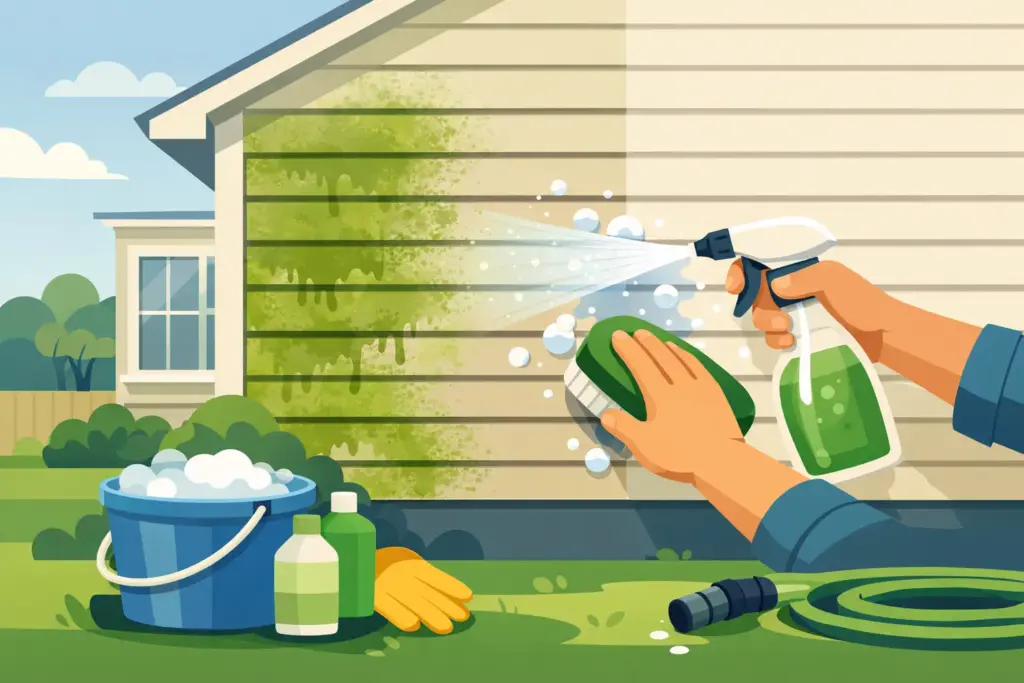

Those green streaks on vinyl siding are more than a cosmetic nuisance. In Maine and nearby New Hampshire, shaded walls, damp weather, tree cover, and pollen give algae a place to hold on. Vinyl siding algae removal safely means clearing the growth without forcing water behind the panels, damaging landscaping, or leaving chemical residue where it does not belong.
The good news is that most algae on vinyl can be removed effectively with a low-pressure approach. The key is using the right cleaner, giving it time to work, and rinsing carefully. A hard blast from a pressure washer may look fast, but it can create a much bigger problem than the algae ever did.
Why Algae Shows Up on Vinyl Siding
Algae needs moisture, and exterior walls can stay damp longer than homeowners realize. The north side of a house is a common trouble spot because it gets less direct sun. Areas beneath gutters, near downspouts, behind shrubs, and under overhanging branches are also likely to develop green staining.
Pollen, dust, and airborne dirt give algae something to cling to. Once the film takes hold, rainwater can spread it down the siding in streaks. It may look like a simple surface stain at first, but ignoring it allows the discoloration to become more noticeable and harder to clean.
Not every dark mark is algae. Green growth is often algae, while black spotting may be mildew, mold, dirt, or a combination of several things. The cleaning approach can be similar, but it is worth looking closely before choosing a product. If the siding has chalky oxidation, cracking, loose panels, or signs of water damage, handle that concern before washing.
Vinyl Siding Algae Removal Safely Starts With Low Pressure
Vinyl siding is designed to shed rainwater from top to bottom. Water sprayed upward or forced into seams can get behind the panels, where it may wet the wall system and create hidden problems. That is why high-pressure washing is not the right default for house siding.
A professional house wash typically uses a low-pressure application method. The cleaning solution does the heavy lifting, not the force of the water. After the algae has been treated, the siding is rinsed from above, following the direction the panels are designed to shed water.
Low pressure also protects more than the siding. It reduces the risk of blasting off oxidation, disturbing window seals, stripping paint from trim, or damaging screens and exterior fixtures. Older siding and homes with loose or improperly installed panels deserve extra caution.
If you are using a pressure washer yourself, do not assume the machine’s lowest setting is automatically safe. The nozzle type, distance from the siding, water volume, and angle all matter. For many homeowners, a garden hose with a gentle spray nozzle is the safer choice for rinsing.
Prepare the Area Before You Apply Cleaner
Good preparation prevents most cleaning mistakes. Start by checking the weather. Choose a mild, overcast day when the siding will not dry too quickly. Avoid cleaning in direct hot sun, during high winds, or when rain is expected to wash away the product before it has time to work.
Close windows and doors. Cover or move delicate outdoor furniture, and keep children and pets away from the work area until everything has been thoroughly rinsed. Turn off exterior electrical fixtures if needed, and do not spray directly into vents, outlets, light fixtures, or gaps around utility lines.
Plants deserve special attention. Thoroughly wet nearby grass, flowers, shrubs, and foundation plantings before applying any cleaner. Water helps dilute runoff and reduces the chance of leaf damage. Keep plants wet during the job, then rinse them again when the siding is clean.
If your siding is near a deck, painted railing, natural stone, or unfinished wood, test the cleaning product in a small hidden area first. What works well on vinyl may not be suitable for every surface around it.
Choose a Cleaner That Fits the Job
For light algae staining, a manufacturer-approved house wash or an exterior cleaner labeled for vinyl siding is often enough. Follow the label directions exactly. More cleaner is not always better, and overly strong mixtures can dull the finish, harm plants, or leave uneven results.
Some homeowners use a diluted bleach-based exterior cleaner for stubborn organic growth. This can work, but it requires care. Never mix bleach with ammonia, acids, vinegar, or other household cleaners. Dangerous fumes can result. Wear eye protection and gloves, work in open air, and use only a product and dilution appropriate for exterior siding.
Harsh solvents, abrasive powders, and stiff wire brushes do not belong on vinyl siding. They can scratch the surface, leave permanent marks, or strip the protective finish. A soft-bristle brush can help with stubborn spots, but use light pressure. The goal is to loosen algae after the cleaner has done its work, not scrub the siding aggressively.
A Safe Process for Cleaning Algae From Vinyl
Work in manageable sections, usually a few panels wide. Start near the bottom of the wall when applying cleaner and work upward. This helps prevent dirty runoff from creating streaks on dry siding below. Let the cleaner sit only as long as its instructions allow, and do not let it dry on the wall.
For heavier growth, gently agitate the surface with a soft brush or soft wash pad. Pay attention to seams, trim edges, and the bottoms of panels where moisture and debris collect. If the algae does not release after one careful application, repeat the treatment rather than increasing pressure.
Rinse from the top down with a gentle, steady flow of water. Keep the spray directed downward and away from panel seams. Take your time around windows, doors, soffits, and vent openings. A proper rinse matters because leftover cleaner can attract dirt, affect nearby plants, or leave a visible film.
Step back as the wall dries. Wet vinyl can hide remaining algae, oxidation, or uneven rinsing. If a few spots remain, spot-treat them after the siding has dried rather than repeatedly washing the entire wall.
When DIY Cleaning Is Not the Best Choice
A do-it-yourself wash can be reasonable for a small, easy-to-reach area with light staining. It becomes less practical when algae covers multiple sides of the home, reaches upper stories, or sits near delicate landscaping and electrical fixtures. Ladders, slippery cleaning solutions, and hoses are not a good combination.
Professional help is also the better call when the siding has heavy buildup, black staining that may not be simple algae, or signs that gutters and drainage are contributing to the problem. A trained exterior cleaner can select the right solution, use low pressure, and clean the home without turning a maintenance project into a repair bill.
Western Maine Pressure Washing provides house washing built around the surface being cleaned, not a one-size-fits-all blast of water. For homeowners and property managers, that means a cleaner exterior without taking unnecessary risks with siding, windows, landscaping, or nearby surfaces.
Keep Green Stains From Returning So Quickly
Algae will eventually return if the conditions that feed it stay the same, but a few property-care habits can slow it down. Trim back branches that keep walls shaded and hold moisture near the house. Keep shrubs from pressing against the siding, and clear leaves or debris from behind outdoor fixtures and around the foundation.
Gutters and downspouts matter, too. Overflowing gutters can send water down exterior walls, while a downspout that drains too close to the home can keep the lower siding and foundation area wet. Correcting those issues supports a cleaner exterior and better drainage at the same time.
A regular house wash is easier on the siding than waiting until the green staining is heavy. It also gives you a chance to spot loose caulk, damaged trim, gutter issues, and other exterior maintenance needs before they become harder to ignore.
A clean wall should look like a fresh part of your home, not a weekend battle. If the algae is widespread, high up, or simply more than you want to handle safely, a free quote from a local exterior-cleaning professional can make the next step straightforward.