
Those dark streaks spreading down an otherwise sound-looking roof are usually algae, not dirt. Knowing how to remove roof algae the right way matters because an aggressive cleaning method can do more harm to shingles than the algae itself. The goal is not simply to make the roof look cleaner for a week. It is to remove the growth while protecting the roofing materials that protect your home.
In Maine and nearby New Hampshire, damp weather, tree cover, and seasonal debris give roof algae a place to grow. A professional low-pressure roof cleaning can restore the roof’s appearance without the damage associated with high-pressure washing. In todays world learning how to remove roof algae is not rocket science but it does take experience and the right tools.
What Roof Algae Looks Like
Roof algae commonly appears as black, dark brown, or greenish streaks on asphalt shingles. It often starts near the upper roof areas or beneath overhanging branches, then spreads downward as rain carries it across the shingles. The organism is frequently called Gloeocapsa magma, but homeowners do not need to identify it by name to recognize the problem.
Algae feeds on moisture and can also take advantage of the limestone filler found in many asphalt shingles. It is especially common on north-facing roof slopes, shaded areas, and homes surrounded by trees. Pine needles, leaves, and mossy debris hold moisture against the roof and make the conditions even better for growth.
Not every dark roof mark is algae. Tree sap, dirt, and old stains can look similar from the ground. Moss is different too. Moss is thicker, green, and often grows in visible clumps that can lift shingle edges as it expands. Lichen may look crusty or pale green and tends to attach more firmly. Each condition calls for a careful approach, but none should be blasted away with a pressure washer.
How to Remove Roof Algae Safely
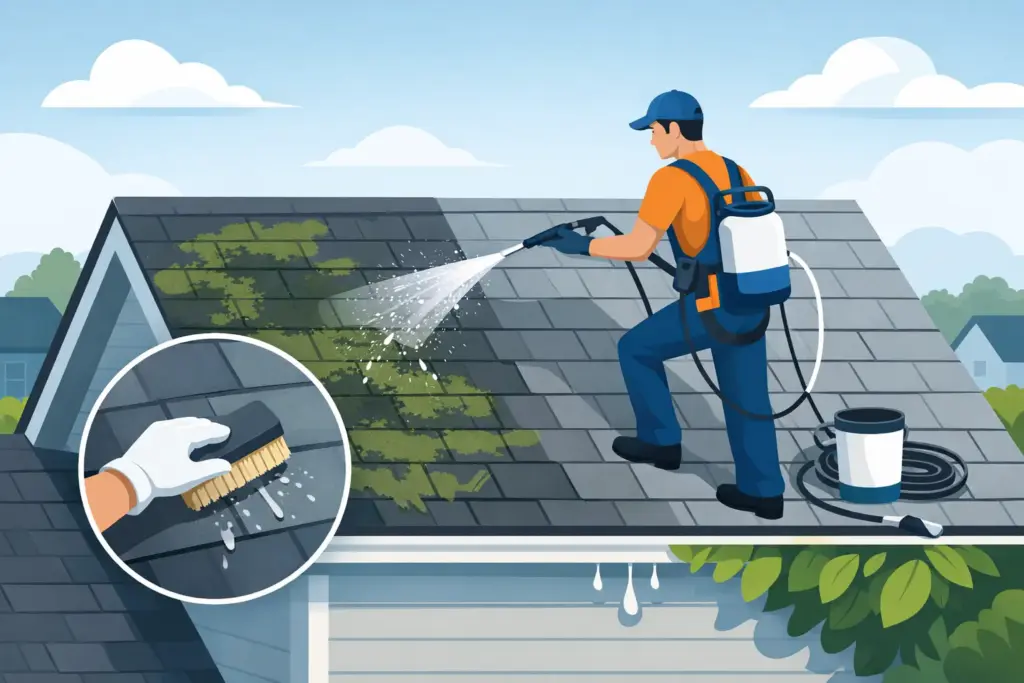
The safest method for most shingle roofs is a low-pressure chemical treatment designed for roof algae. see here The cleaning solution does the work, not forceful water pressure. A trained technician applies the proper mixture carefully, gives it time to break down the growth, and rinses or allows weather to complete the process as appropriate for the roof and the product used.
This is often called soft washing or low-pressure roof cleaning. The application pressure is gentle enough for shingles, while the treatment targets the algae causing the dark streaks. Some staining can begin to lighten quickly. Heavier growth may continue to fade over the following days or weeks as the treatment works and rain helps rinse away the remaining residue.
A proper roof cleaning also includes protecting the rest of the property. Landscaping, shrubs, siding, windows, decks, and other surfaces below the roof need to be thoroughly wetted before, during, and after treatment. Gutters and downspouts should be considered as well, since runoff needs to be managed responsibly.
The exact process depends on the roof’s age, pitch, material, algae buildup, nearby landscaping, and access. A newer roof with light streaking may need a different treatment plan than an older roof with moss, lichen, and years of accumulated debris. That is why a one-size-fits-all cleaning approach is rarely the right answer.
Why High Pressure Is the Wrong Choice for Shingles
Pressure washing is useful for many exterior surfaces, but asphalt shingles are not one of them. High-pressure water can strip away the protective granules on shingles, loosen edges, force water beneath the roofing system, and shorten the roof’s service life. It may make dark streaks disappear quickly, but the damage can be permanent.
Scrubbing is another risky shortcut. Stiff brushes can loosen granules and tear at shingles, particularly on an older roof. Walking on a roof also carries risk for both the person doing the work and the shingles beneath their feet. Foot traffic can scuff materials, break brittle shingles, and create a dangerous fall hazard.
For these reasons, roof algae removal is not the same as washing a driveway or deck. The right cleaning is controlled, low-pressure, and based on the needs of the roof.
Can You Remove Roof Algae Yourself?
Some homeowners choose to treat light algae staining themselves, but the trade-offs are real. You need the correct roof-safe solution, a safe way to apply it, protection for plants and exterior surfaces, and a plan for working near a steep roof edge. If you are unsure about the roof material, do not have proper fall protection, or see moss and lichen in addition to algae, calling a professional is usually the smarter move.
If you decide to handle a small, accessible area yourself, follow the cleaner manufacturer’s instructions exactly. Never mix cleaning products, especially products containing bleach and ammonia. Apply only as directed, keep runoff away from plants as much as possible, and avoid working in windy conditions. Do not use a pressure washer, wire brush, or abrasive cleaning pad on shingles.
It is also worth checking the roof condition first. Missing shingles, loose flashing, exposed nails, curling edges, or a roof nearing replacement age are maintenance issues that cleaning cannot fix. In some cases, a roof inspection or repair should come before any algae treatment.
Steps That Help Keep Algae From Coming Back
Roof algae can return over time, particularly in shady, humid locations. Cleaning removes the current growth, but prevention is about reducing the moisture and debris that allow it to return.
Start by keeping gutters clear. Clogged gutters can overflow and keep roof edges wet, while trapped leaves and needles hold moisture in place. Trim back branches that hang over the roof where practical. This lets more sunlight reach the shingles and reduces the steady drop of leaves, pine needles, and small branches.
Attic ventilation matters too. Good ventilation helps manage heat and moisture beneath the roof, which supports the overall health of the roofing system. It will not eliminate exterior algae by itself, but it is part of responsible home maintenance.
Some homeowners consider zinc or copper strips near the roof ridge. As rainwater runs over these metals, it can help discourage future algae growth. These strips can be effective in the right situation, but installation needs to be done carefully so the roof is not damaged or compromised. They also work best as a preventive measure after the roof has been cleaned, not as a quick fix for heavy staining.
When Professional Roof Cleaning Makes Sense
Professional service is a strong choice when staining covers a large area, the roof is steep, the home has extensive landscaping, or the roof shows moss and lichen along with algae. It also makes sense for property owners who want the work done without risking shingle damage, plant damage, or a dangerous climb.
For commercial properties and multi-unit buildings, roof appearance affects more than curb appeal. Dark staining can make an otherwise maintained property look neglected to customers, tenants, and visitors. Scheduling regular exterior maintenance helps keep the entire property looking cared for, from the roofline and gutters to siding, walkways, and windows.
Western Maine Pressure Washing uses low-pressure roof cleaning methods designed to address algae growth without treating your shingles like a concrete surface. As a local, family-owned exterior cleaning company, the focus is straightforward: protect the property, improve the appearance, and use the right method for the job.
A Cleaner Roof Starts With the Right Method
Roof algae is easy to ignore when it begins as a few faint streaks. Over time, though, it can take away from the look of your home and leave you wondering whether the roof is aging faster than it really is. Addressing it early with a roof-safe cleaning method is usually easier than waiting until moss, lichen, and heavy debris join the problem.
If dark streaks are showing up on your roof, skip the high-pressure shortcut. A careful low-pressure treatment and a practical plan for keeping the roof clear can help your home look well cared for season after season.