
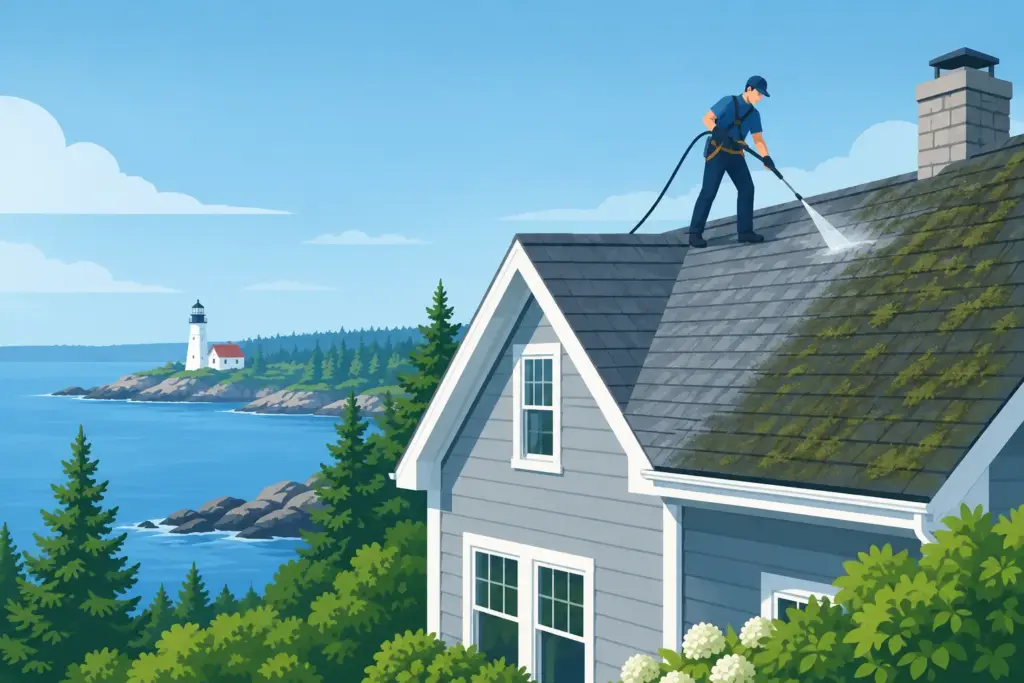

A roof can look “dirty” long before it looks damaged. Those dark streaks, green patches, and clumps of moss are common sights on homes across Western Maine and the Greater Portland area, especially where trees hold moisture over the roof. So, is roof cleaning necessary? In many cases, yes. Cleaning is not just about making the house look better. It can help stop roof growth from holding moisture against the surface and give you a clearer view of the roof’s actual condition.
Is Roof Cleaning Necessary? It Depends on What Is Growing
Not every roof needs to be cleaned on a fixed schedule. A newer roof with no visible staining, moss, or debris may only need regular gutter service and a quick visual check from the ground. But when organic growth is present, waiting too long can turn a simple maintenance job into a bigger concern.
The most common roof issues in Maine are algae, moss, lichen, leaves, pine needles, and general dirt buildup. Each one affects a roof differently.
Dark, streaky stains are often algae. On asphalt shingles, algae can make an otherwise sound roof look old and neglected. While algae is usually more of an appearance issue at first, it can spread across the roof and retain moisture in shaded areas.
Moss is a bigger concern. It grows in damp conditions and can work its way beneath shingle edges as it thickens. That may interfere with proper drainage, hold water on the roof longer, and contribute to premature shingle wear. Lichen is also stubborn. It attaches firmly to roofing materials and should be treated carefully rather than scraped away.
A roof covered in leaves, needles, and branches has another problem: trapped moisture. Debris settles in valleys, behind chimneys, and along roof edges, where water needs a clear path to move toward the gutters. Keeping those areas clean helps the roof dry properly after rain, snow, and spring thaw.
Why Maine Roofs Often Need More Attention
Maine weather gives roof growth plenty of opportunities to take hold. Long winters, wet springs, humid summer days, and heavy tree cover can create the cool, damp conditions algae and moss prefer. Homes near lakes, wooded lots, and north-facing slopes are especially likely to develop visible growth.
Shade is often the deciding factor. A roof section that gets strong afternoon sun may stay relatively clear, while the north side develops dark staining or moss. Overhanging branches can make the issue worse by dropping debris and limiting airflow. If the roof stays damp for hours after the rest of the property has dried, it is worth keeping a close eye on it.
Roof cleaning can also make routine maintenance easier. When stains and debris are removed, it is easier to spot cracked shingles, lifted flashing, worn sealant, or areas where a roofer should take a closer look. Cleaning does not fix roof damage, but it can help prevent buildup from hiding it.
The Right Cleaning Method Matters
Roof cleaning should never mean blasting shingles with high pressure. Standard pressure washing can remove protective granules from asphalt shingles, loosen materials, and force water where it does not belong. A roof needs a different approach than a driveway, patio, or vinyl-sided home.
Professional low-pressure roof cleaning uses a roof-safe method designed to treat algae, moss, and staining without aggressive force. The cleaning solution does the work, allowing growth to be treated and rinsed away carefully. The goal is a cleaner roof without unnecessary wear on the shingles or surrounding property.
The right process also accounts for the rest of the home. Landscaping, siding, gutters, and exterior surfaces should be protected during the job. An experienced exterior cleaning crew knows that a clean roof is only a good result if the property below it is cared for, too.
For homeowners who are unsure whether their roof needs service, the safest first step is an assessment. A professional can look at the type of growth, the roof material, the amount of buildup, and access conditions before recommending a cleaning plan.
When Should You Schedule Roof Cleaning?
There is no single calendar date that works for every property. A roof surrounded by tall pines may need attention more often than a home in an open, sunny location. Many homeowners schedule service when they first notice dark streaks, green growth, debris collecting in valleys, or moss around shingle edges.
Spring and fall are practical times to inspect the roof. Spring reveals what winter left behind, while fall is a good opportunity to clear leaves and needles before snow arrives. That said, visible moss or algae does not need to wait for a seasonal cleaning checklist. Addressing it early is usually easier than allowing it to spread.
It also makes sense to coordinate roof cleaning with gutter cleaning. Clean gutters and clear roof drainage areas work together to move water away from the house. If gutters are clogged with roof debris, even a clean roof may not drain as it should.
What Roof Cleaning Cannot Do
Roof cleaning is maintenance, not a substitute for repair or replacement. If shingles are curling, missing, cracked, or nearing the end of their useful life, cleaning will not restore them. The same is true for leaks, failing flashing, damaged vents, and structural concerns.
In some cases, a very old roof may be too fragile for cleaning. That is why the condition of the roof should always guide the decision. A dependable cleaning company will not recommend a service that is not appropriate for the material or its current state.
Homeowners should also be realistic about heavy moss. A safe treatment may kill and release growth over time rather than removing every trace in one aggressive visit. Trying to scrape or pressure wash moss off quickly can cause more harm than good.
Is DIY Roof Cleaning Worth the Risk?
For most homeowners, roof cleaning is better left to professionals. The obvious risk is a fall, but there is more to consider. Walking on a roof can damage shingles, especially when they are wet, brittle, or covered in growth. Using the wrong chemical mix or too much pressure can create costly damage that is not immediately visible.
There is also the challenge of controlling runoff and protecting plants. A roof cleaning job requires the right equipment, application method, and property protection plan. Hiring a local exterior cleaning specialist is often the simpler choice, particularly for steep roofs, multi-story homes, and heavily shaded properties.
Western Maine Pressure Washing provides low-pressure roof cleaning for homeowners and property owners who want a cleaner roof without taking chances with harsh pressure. Local. Trusted. Family Owned.
A Cleaner Roof Supports the Whole Property
For commercial buildings, rental properties, and multi-unit communities, roof staining can affect more than maintenance planning. A streaked, mossy roof can make an otherwise well-kept property look overlooked. Regular exterior cleaning helps create a better first impression for customers, tenants, and visitors.
For homeowners, the benefit is often peace of mind. A clean roof improves curb appeal, supports good drainage, and makes it easier to see whether the roof needs a roofer’s attention. It is one more practical way to care for a major part of the home.
A Quick Rule of Thumb
If the roof has only light dust or a few scattered leaves, monitoring it and keeping the gutters clear may be enough. If dark streaks are spreading, moss is growing, debris is holding moisture, or the roof looks noticeably neglected, professional cleaning is worth considering.
A roof does a hard job through Maine’s snow, rain, wind, and summer heat. Keeping growth and debris under control is a straightforward way to help it look better and perform the way it should.