
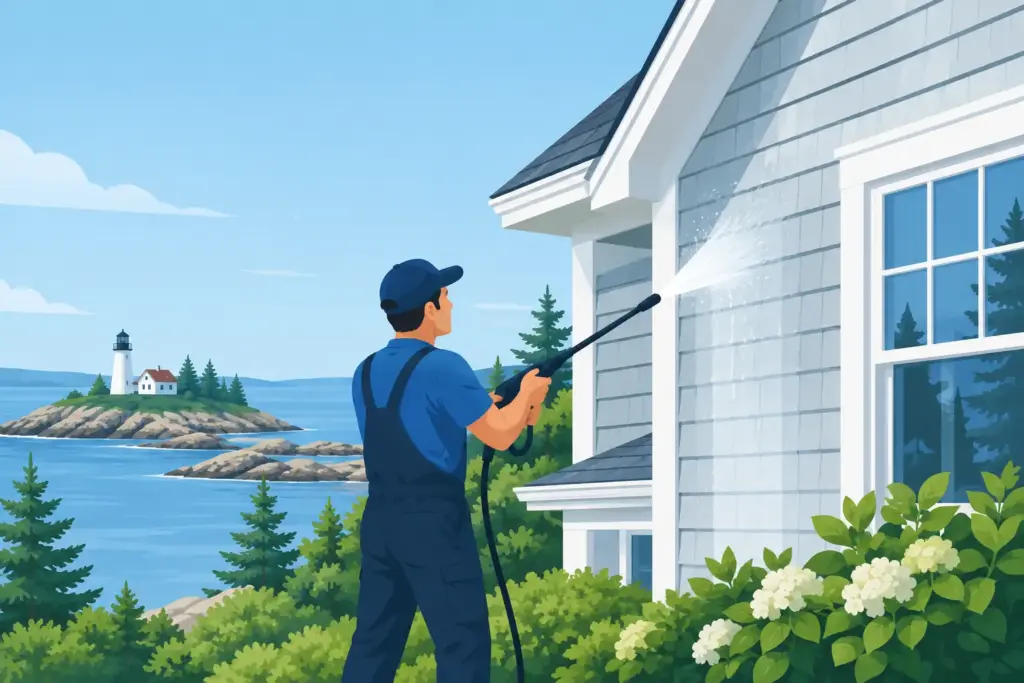

A clean exterior does more than make a home look cared for. In Maine and nearby New Hampshire, wet springs, shaded lots, pollen, road grime, and winter runoff can leave siding streaked, decks slippery, gutters clogged, and roofs covered in dark growth. This homeowner guide to exterior washing explains what to watch for, what can wait, and when a professional cleaning is the safer choice for your property.
Why Exterior Washing Is Part of Property Care
Dirt is usually the least concerning thing on an exterior. The stains homeowners notice most often are caused by algae, mildew, mold, lichen, moss, mineral deposits, or organic material that has stayed wet too long. These issues can make a house look neglected, but they can also hold moisture against surfaces and create slippery walking areas.
Exterior washing is not about blasting everything with the highest pressure possible. Different materials need different methods. Vinyl siding, painted trim, composite decking, asphalt shingles, wood, concrete, and windows all respond differently to water pressure and cleaning solutions. The right approach removes buildup without forcing water behind siding, stripping paint, damaging wood fibers, or harming a roof.
For homeowners, the goal is simple: keep the property clean enough to protect its condition, preserve curb appeal, and catch small maintenance concerns before they become bigger repairs.
Start With a Walk Around the Property
A seasonal walk around your home is one of the best ways to decide what needs attention. Pick a dry day and look closely at the shaded sides of the house, areas below rooflines, deck boards, steps, gutters, and the lower portions of siding where splashing rain and soil collect.
Green or black streaks on siding often point to algae or mildew. Dark roof staining may be algae growth, while thicker patches of moss or lichen need more careful treatment. Black lines on gutters can be oxidation or runoff staining. A deck that looks gray, slick, or blotchy may need cleaning before it is sealed or used heavily for the season.
Do not assume every stain has the same cause. Rust, irrigation stains, tree sap, paint oxidation, and algae each require a different cleaning plan. A quick visual inspection helps, but a professional assessment can prevent the wrong product or pressure setting from causing damage.
Check These Areas First
The most common trouble spots are north-facing walls, shaded sections beneath trees, areas around downspouts, porch steps, driveways, and decks. These places tend to dry slowly and collect organic debris.
Also look for clogged gutters, overflowing downspouts, and water marks on siding. Exterior washing works best when drainage problems are addressed too. Cleaning a wall that is constantly being hit by overflowing gutter water will only provide a short-term improvement.
House Washing: Clean Siding Without Causing Damage
House washing is one of the most effective ways to refresh a property, especially when siding has visible mildew, algae, pollen, spider webs, and general grime. But it needs to be done with the surface in mind.
Vinyl and painted siding generally do not need aggressive pressure. A low-pressure wash with the right cleaning solution can break down organic growth and lift surface dirt without driving water into seams or damaging caulk and trim. Higher pressure is not better when the material is softer or the surface has aging paint.
Before any house wash, windows should be closed, exterior outlets protected, and delicate plants rinsed or covered as needed. Homeowners should also point out loose siding, damaged trim, open cracks, or areas with failing paint. Cleaning can reveal existing problems more clearly, but it should not be used to hide them.
If you are considering a do-it-yourself wash, be honest about ladder safety and control of the equipment. A pressure washer wand can kick back, and wet surfaces become slick quickly. For a one-story home with light buildup, careful DIY work may be reasonable. For steep grades, multiple stories, heavy growth, or hard-to-reach areas, professional service is usually the better call.
Roof Cleaning Requires a Different Method
A roof is not a driveway. This is where many homeowners make an expensive mistake.
Dark streaks, moss, and lichen can make shingles look old before their time. However, high-pressure washing can remove protective granules, loosen shingles, and shorten the roof’s service life. Roof cleaning should use a low-pressure approach designed to treat and remove growth safely.
The right timing depends on the amount of growth and the roof’s overall condition. Light staining can often be addressed before it spreads. Thick moss, lifted shingles, or signs of roof damage may require a roofing professional’s input before cleaning begins. No cleaning service should replace needed roof repair.
Keep branches trimmed back where practical and make sure gutters are moving water away from the roofline. These small steps reduce shade and trapped moisture, which are two of the biggest contributors to recurring roof growth.
Decks, Walkways, and Driveways Need Practical Attention
Outdoor surfaces take a beating in Western Maine. Sand, salt, leaves, mud, and moisture settle into wood grain and concrete pores. On a deck or set of steps, that buildup can become a real slip hazard.
Wood decks need a careful touch. Too much pressure can scar the surface, raise the grain, and leave visible wand marks. Cleaning should remove dirt, mildew, and old surface buildup while preserving the wood. If you plan to stain or seal the deck afterward, allow adequate drying time and follow the product’s instructions.
Concrete and pavers can generally handle more pressure than siding or wood, but stains still vary. Oil, rust, tire marks, algae, and efflorescence are not all cleaned the same way. A clean driveway can improve curb appeal, but safe, clean walkways and entry areas are often the more practical priority.
Do Not Forget Gutters and Windows
Gutters are easy to ignore until water spills over the sides. Leaves, pine needles, roof grit, and nesting material can block the flow and send water where it does not belong. That can lead to staining, saturated soil near the foundation, damaged landscaping, and ice concerns when temperatures drop.
Gutter cleaning should include removing debris and checking that downspouts are clear. If water does not move through the system, the job is not finished. Homeowners with tall homes, steep rooflines, or unstable ground should leave this work to properly equipped professionals rather than risk a ladder fall.
Windows often look cleaner after house washing, but they may still need dedicated attention. Exterior glass can collect pollen, hard-water spots, and streaks that a general wash will not fully remove. Clean windows make a noticeable difference, particularly on homes with views, sunrooms, or large front-facing glass.
A Seasonal Exterior Washing Plan
Most homes do not need every surface cleaned at the same time. A smart maintenance plan follows the weather, the property’s exposure, and visible buildup.
Spring is a natural time for house washing, gutter cleaning, deck cleaning, and driveway care after winter. It clears away grime and helps you see any damage that developed during freeze-thaw cycles. Summer is useful for maintaining decks, patios, and windows before outdoor gatherings. Fall is the time to keep gutters clear and remove leaves before snow and ice arrive.
Roof cleaning is less about a calendar date and more about conditions. If roof growth is visible, do not wait years just because the roof was cleaned recently. Likewise, a sunny, open property may need service less often than a heavily wooded lot with long periods of shade.
When It Makes Sense to Hire a Professional
Professional exterior cleaning is especially worthwhile when you have roof growth, heavy algae, a multi-story home, difficult access, fragile surfaces, or more than one project to coordinate. One company that can handle house washing, deck cleaning, gutter cleaning, windows, roof cleaning, and general pressure washing can save time and help keep the work consistent.
Western Maine Pressure Washing provides straightforward exterior cleaning for homeowners who want the job done right without guessing at pressures, products, or safety risks. Local. Trusted. Family Owned. A free quote lets you discuss the surfaces that need attention and choose services that fit the property rather than paying for work you do not need.
A well-kept exterior is easier to enjoy, easier to show, and easier to maintain. Walk the property before buildup becomes a bigger problem, take slippery or water-related issues seriously, and choose the cleaning method that protects the surface for the long haul.