
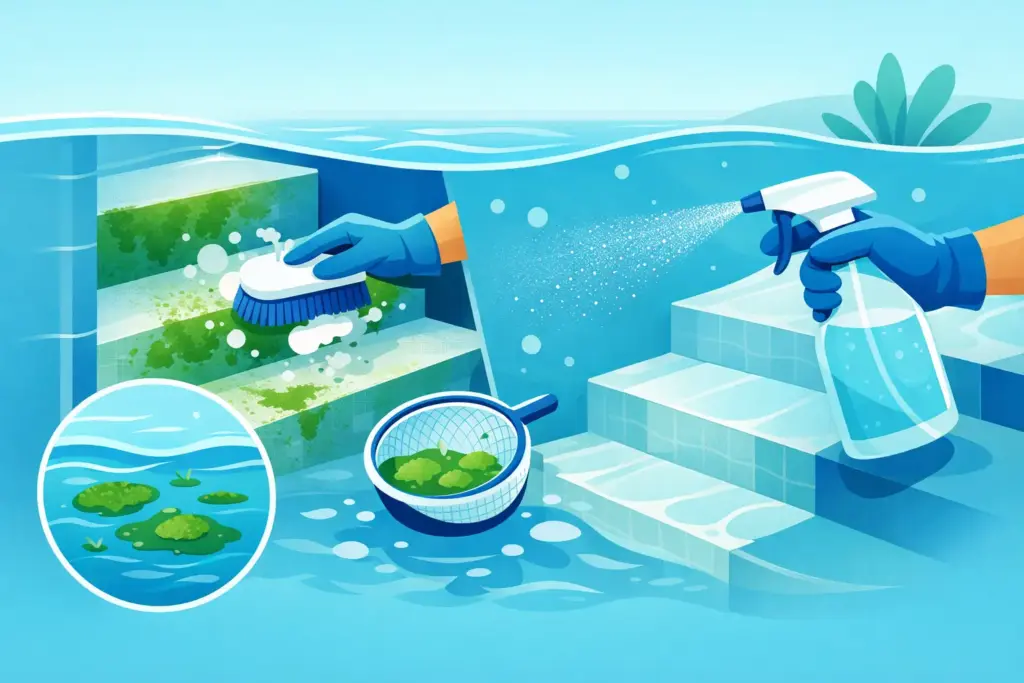

A green film on front steps can turn an ordinary trip to the mailbox into a slip hazard, especially after Maine rain, snowmelt, or a humid stretch of summer weather. Learning how to remove algae from steps helps restore the appearance of your entry, but the cleaning method matters just as much as the result. Concrete, wood, brick, and natural stone each need a different level of pressure and cleaning solution.
Algae does not simply make steps look neglected. It holds moisture against the surface, creates slick footing, and can contribute to premature wear on porous materials. The right approach removes the growth at the source without gouging wood, loosening mortar, or leaving streaks across the surface.
Why Algae Builds Up on Outdoor Steps
Algae needs moisture, shade, and a surface where it can hold on. Steps under trees, near gutters that overflow, beside garden beds, or on the north side of a house are common problem areas. Fallen leaves, pollen, dirt, and mildew give algae something to feed on and help it settle into small pores and cracks.
In Western Maine and nearby New Hampshire communities, the problem often shows up in spring after a long thaw, then returns through the wetter parts of summer and fall. A staircase may look fine when dry but become noticeably slippery after rain. That is a good sign the growth is more than surface-level dirt.
Before cleaning, look for the condition causing the repeat buildup. A dripping gutter, poor drainage, heavy shade, or nearby vegetation can keep the steps damp long after a storm. Removing the algae will improve the surface now. Correcting the moisture issue helps keep it from returning as quickly.
Identify the Step Material Before You Clean
There is no single setting or cleaner that is right for every staircase. The wrong approach can cause more damage than the algae itself.
Concrete steps are durable, but older concrete can still be etched by aggressive pressure or harsh chemicals. Brick steps need extra care around mortar joints, which may be loose or worn. Natural stone, including bluestone and slate, can discolor or flake if it is cleaned too aggressively. Wood steps are the most vulnerable to excessive pressure, which can leave raised grain, splinters, and uneven marks.
Painted or stained steps require another level of caution. Strong cleaning solutions and close-range pressure washing can strip the finish. If you are unsure what material you have or whether the surface has a protective sealer, test a small, hidden spot first.
How to Remove Algae From Steps Safely
Start on a dry day when temperatures are above freezing and the steps will have time to dry completely. Sweep away leaves, grit, and loose debris first. Cleaning over a layer of dirt makes it harder for the solution to reach the algae and can turn the work into a muddy mess.
Wet nearby plants and cover delicate landscaping if you are using a cleaning product. Move welcome mats, planters, and outdoor furniture away from the work area. Keep children and pets indoors until the steps are rinsed and dry.
For light algae on concrete or masonry, a purpose-made exterior cleaner or oxygen-based cleaner is often a sensible first choice. Apply it according to the product directions, give it time to work, then scrub with a stiff nylon-bristle brush. Work from the top step down so dirty water does not run across an area you have already cleaned.
Rinse thoroughly with a garden hose. If the green color remains in textured concrete or deep pores, repeat the cleaner-and-brush process before reaching for more pressure. A second gentle treatment is usually safer than one overly aggressive cleaning.
Wood steps need a softer touch. Use a wood-safe exterior cleaner, a soft or medium nylon brush, and low-pressure rinsing. Scrub in the direction of the wood grain. Do not use a wire brush, and do not blast the boards with a narrow pressure-washer tip. Those shortcuts can leave permanent lines and make the wood more likely to hold moisture and algae later.
For brick and stone, use a cleaner approved for masonry or natural stone. Avoid acidic cleaners unless you know the material can handle them. Acid can damage certain stone surfaces, weaken mortar, and create uneven color. A brush and controlled rinse are often all that is needed for routine algae growth.
When Pressure Washing Is Helpful – and When It Is Not
Pressure washing can be an effective way to clean durable concrete steps when used with the correct equipment, angle, and pressure. It is especially useful when algae is mixed with ground-in dirt, winter sand, and dark organic staining. But pressure alone does not always address the growth beneath the visible green layer. Without the right cleaning treatment, algae may return sooner than expected.
High pressure is not automatically better. A tight spray pattern held too close can scar concrete, strip paint, blow out mortar, and damage wood fibers. It can also force water into cracks, joints, or the area beneath stair treads.
Professional exterior cleaning is often the better choice when steps are old, heavily stained, made from delicate stone, or connected to a deck or entryway with different materials. The job may call for low pressure, a surface-specific solution, or a combination of washing and hand treatment. The goal is clean, safe steps – not a surface that looks rougher after it dries.
Avoid These Common Algae-Cleaning Mistakes
Bleach is often the first product homeowners think of, but it is not always the best answer. Chlorine bleach can harm plants, fade painted surfaces, irritate skin and eyes, and create runoff concerns. It may brighten a surface quickly while doing little to remove the dirt and organic material that allows algae to take hold. Never mix bleach with other cleaners, especially products containing ammonia or acids.
Another common mistake is cleaning only the center of each tread. Algae often collects along step edges, beside railings, in corners, and between pavers where moisture lingers. Treat the entire walking surface and the vertical risers, then rinse away residue rather than pushing it into cracks.
Do not try to solve a recurring algae problem by applying more and more cleaner. If growth comes back within a few weeks, look at the source of moisture. A gutter that spills onto the entry, soil piled against a stair base, or branches blocking sunlight may be the real issue.
Keep Steps Cleaner Between Washings
Regular upkeep makes the next cleaning easier and helps protect the surface. Sweep steps after storms and clear wet leaves before they break down into a dark, slippery layer. Trim back shrubs and low branches that trap moisture near the entry. If gutters empty near the staircase, make sure downspouts and extensions direct water away from the steps.
For wood stairs, keep up with sealing or staining on the schedule recommended for the product and local conditions. A sound finish helps limit water absorption, though it does not eliminate the need for routine cleaning. For concrete and masonry, a properly selected sealer may help reduce water penetration and make future algae easier to wash away. Sealing should only be done after the surface is fully clean and dry.
Commercial properties and multi-unit buildings deserve the same attention. A slippery entrance affects visitors, tenants, employees, and delivery drivers, while stained steps can make an otherwise well-kept property look uncared for. Scheduled exterior cleaning is often easier to manage than waiting until the buildup becomes obvious or someone nearly falls.
Know When It Is Time to Call a Professional
A small patch of algae on newer concrete may be a manageable weekend task. Heavily shaded steps, large staircases, old masonry, and surfaces with black staining or embedded growth are different. They may need equipment and cleaning methods that protect the material while producing an even result.
Western Maine Pressure Washing provides practical exterior cleaning for homeowners and property managers who want a safer, better-looking entry without guessing at pressure settings or chemical choices. A free quote makes it easy to get a clear recommendation for the steps, walkways, siding, gutters, deck, or other exterior surfaces that need attention.
Clean steps are one of the simplest ways to make a property feel cared for before anyone reaches the front door. Address algae early, keep water moving away from the entry, and choose a cleaning method that protects the surface you plan to use for years.