
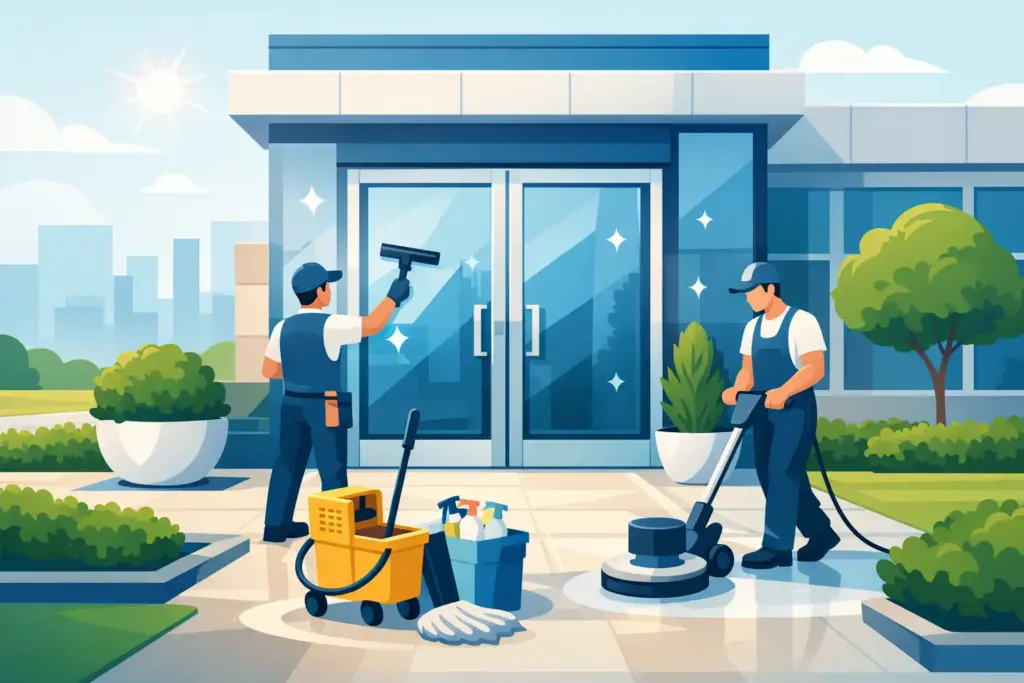

A customer may never notice a clean entryway, but they will notice one that looks neglected. Commercial entryway cleaning removes the dark grime, tracked-in dirt, salt residue, gum, mildew, and stains that build up where customers, tenants, employees, and deliveries meet your building. It is a straightforward part of property care that has a real effect on first impressions, safety, and the life of the surfaces around your doors.
For Maine businesses, entryways take a beating through every season. Spring mud, summer pollen, fall leaves, winter sand, and road salt can all leave concrete, pavers, walkways, steps, and storefront areas looking worn down. A professional cleaning plan keeps that buildup from becoming the first thing people see when they arrive.
Why a Clean Commercial Entryway Matters
Your entry is one of the hardest-working areas of the property. Foot traffic carries dirt, moisture, de-icing material, and oils across it every day. Over time, those materials settle into porous concrete and textured surfaces, creating discoloration that routine sweeping cannot fully remove.
Appearance matters, especially for restaurants, retail stores, offices, apartment communities, medical offices, and lodging properties. A clean entrance helps customers feel that the business is organized and cared for before they ever walk inside. For multi-unit properties, it gives tenants and visitors a better impression of the building they call home.
There is also a practical side. Algae, mildew, wet leaves, and greasy residue can make exterior walking surfaces slick. Cleaning does not replace good drainage, ice control, snow removal, or needed repairs, but it removes the buildup that can contribute to slippery conditions. Keeping steps, ramps, and sidewalks clear of grime also makes it easier to spot cracked concrete, loose pavers, failing caulk, or other maintenance issues that need attention.
What Builds Up Around Business Entrances
Most entryway staining does not come from one dramatic event. It is usually the result of daily traffic and changing weather. Rubber marks from shoes and carts, vehicle exhaust near pickup areas, beverage spills, gum, mulch stains, and dirty rainwater can all leave their mark. In shaded locations, moisture can encourage algae and mildew growth along the edges of walkways, stairs, and building foundations.
Winter is especially tough on commercial entrances in Western Maine and nearby New Hampshire communities. Sand and salt are necessary for managing icy conditions, but they can leave white residue and gritty buildup behind. As snow melts and refreezes, that material gets worked deeper into concrete and carried through entry doors.
A quick rinse may improve the surface for a day, but it often does not address embedded dirt or organic growth. The right cleaning approach depends on the material, the type of stain, water runoff, and how close the work is to doors, landscaping, and customer traffic.
Different Surfaces Need Different Methods
Concrete can handle a thorough cleaning, but that does not mean every area should receive the same pressure or treatment. Older concrete, decorative finishes, pavers, brick, stone, and coated walkways each require a careful approach. Too much pressure in the wrong place can leave visible lines, damage joints, disturb sand between pavers, or worsen an already worn surface.
That is why professional exterior cleaning starts with looking at the entryway rather than treating every stain the same way. Some areas need targeted pretreatment for algae or organic buildup. Others need surface cleaning to create a more even result across open concrete. Gum and heavy marks may require extra attention. The goal is a clean, consistent appearance without causing avoidable damage.
A Practical Schedule for Commercial Entryway Cleaning
How often an entryway needs cleaning depends on traffic, shade, nearby roads, landscaping, and the type of business. A busy storefront on a main road may need more frequent service than a small professional office with limited daily visitors. A shaded apartment entrance may develop algae faster than a sunny concrete walkway.
For many properties, a thorough cleaning once or twice a year is a good starting point. Spring service removes the residue left behind by winter. A second cleaning in late summer or fall can clear organic buildup before wet leaves, snow, and freezing temperatures arrive.
High-traffic properties may benefit from more regular touch-ups. Restaurants, hotels, retail centers, medical facilities, and multi-unit communities often have entrances that show dirt quickly. In those cases, cleaning can be scheduled around the property’s busiest times, rather than waiting until the buildup becomes obvious.
The best schedule is the one that matches the condition of the property. If the entrance starts to look dark around the edges, feels slick after rain, or has visible salt staining, it is probably time to arrange service. Waiting too long can make stains more difficult to remove and leaves the property looking less cared for in the meantime.
Planning Cleaning With Minimal Disruption
Commercial properties cannot always close an entrance for cleaning in the middle of the day. That is why timing matters. Early mornings, slower business hours, or planned maintenance windows can make the work easier on customers and staff.
Before service, building managers should identify which entrances receive the most traffic and whether there are special access needs for tenants, deliveries, or customers. A main entrance may need to remain open while work is completed in sections. Side doors, loading areas, and secondary walkways should not be overlooked either. They often collect the heaviest buildup because they receive regular use but less attention.
It also helps to think beyond the doorway itself. The best-looking results usually include the steps or ramp, sidewalk approach, curbs, storefront pad, and the wall area where splashback has left dirt or algae. Cleaning these connected surfaces together prevents a freshly washed strip from standing out next to a stained walkway.
When Pressure Washing Is Not the Whole Answer
Pressure washing is effective for many concrete and hardscape surfaces, but it is only one part of proper entryway care. Stubborn oil stains may not disappear completely, particularly if they have sat for a long time. Rust stains, paint, worn coatings, and deep etching can also require a different solution or separate repair work.
Drainage problems should be addressed at the source. If water regularly pools by the entrance, cleaning will improve the appearance, but standing water can continue to bring back algae and grime. Likewise, a cracked step or uneven paver needs repair, not just cleaning.
Honest recommendations matter here. A professional should explain what cleaning can improve, where stains may remain, and whether the surface has a maintenance issue that should be handled separately. That approach helps property owners make decisions based on the condition of the entrance, not a one-size-fits-all promise.
Pair Entryway Service With Exterior Maintenance
Commercial entryway cleaning works especially well as part of a broader exterior maintenance plan. Dirty storefront windows, stained siding, clogged gutters, and algae-covered walkways can all weaken the appearance of an otherwise well-run property. Taking care of several exterior needs at once can be more convenient than coordinating multiple vendors throughout the year.
For a property manager, this can mean having sidewalks, building exteriors, windows, and common areas cleaned on a schedule that fits tenant needs. For a business owner, it can mean preparing the property for a busy season, a grand opening, an inspection, or simply a better everyday customer experience.
Western Maine Pressure Washing provides commercial exterior cleaning with the same focus every property owner wants: clear communication, careful work, and results that make the building look cared for. A free quote makes it easier to assess the entryway, discuss the condition of the surfaces, and choose the right level of service.
A clean entrance will not solve every property maintenance concern, but it is one of the most visible places to start. When customers and tenants walk up to a clean, well-kept doorway, they get a clear message that the property is being looked after.