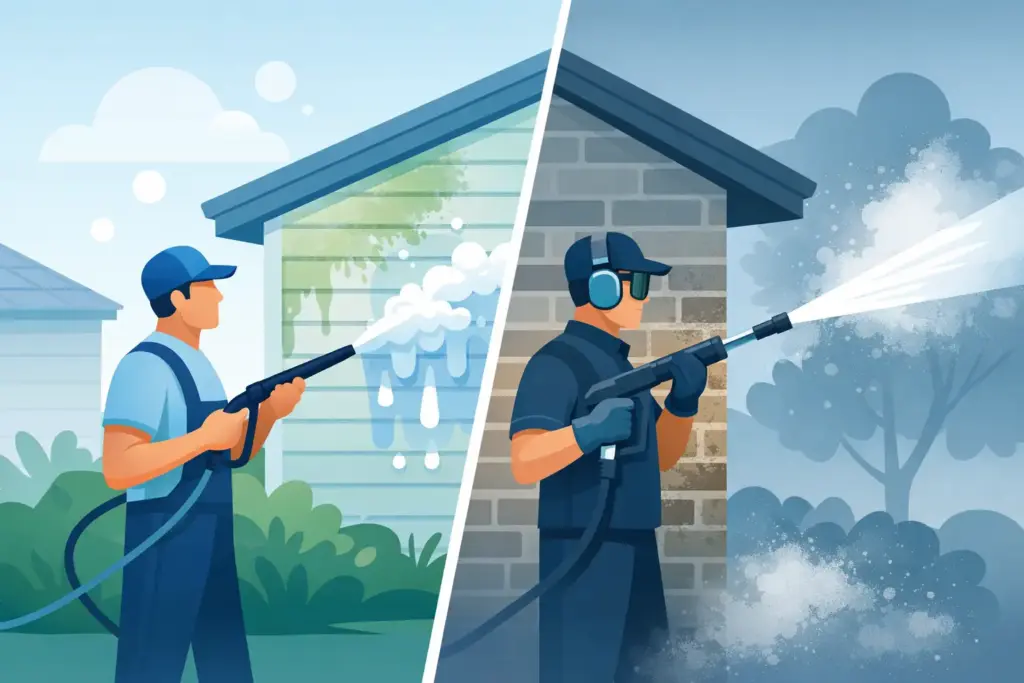

A black streak on the roof, green algae on vinyl siding, and a grimy driveway may all look like the same problem. They are not. In the choice between soft washing vs pressure washing, the right method depends on the surface, the type of buildup, and how to get a clean result without causing damage.
A professional exterior cleaning job is not about using the most pressure possible. It is about using the right amount of pressure, the proper cleaning solution, and a careful process that protects your property. For homes and businesses across Western Maine, Greater Portland, and nearby New Hampshire communities, that distinction can make a real difference in curb appeal and long-term maintenance.
Soft Washing vs Pressure Washing: The Main Difference
Pressure washing uses a strong stream of water to break up and rinse away surface dirt, mud, loose paint, salt residue, and other heavy buildup. It is especially useful for durable materials that can handle force, such as concrete, pavers, certain stone surfaces, and properly prepared commercial walkways.
Soft washing uses low water pressure along with cleaning solutions designed to treat organic growth. It is made for surfaces where high pressure could cause damage or force water where it does not belong. Rather than blasting algae, mold, mildew, and roof growth away, soft washing treats the source of the discoloration and then gently rinses it off.
The visible result may look similar at first – a cleaner exterior – but the process is different. High pressure removes buildup through force. Soft washing removes organic growth through treatment and low-pressure rinsing.
When Soft Washing Is the Better Choice
Soft washing is usually the right approach for delicate exterior surfaces and areas affected by organic growth. If your home has green or black staining on siding, dark roof streaks, mildew around shaded areas, or buildup on painted trim, low-pressure cleaning is often the safer answer.
House Siding
Vinyl, painted wood, stucco, and many types of composite siding can be damaged by excessive pressure. Too much force can leave marks, strip paint, crack siding, drive water behind panels, or disturb seals around windows and doors. Soft washing reaches the algae and mildew that make siding look tired while reducing the risk of surface damage.
This matters in Maine and New Hampshire, where moisture, tree cover, and seasonal weather can create ideal conditions for algae and mildew. A north-facing wall or a shaded section of the home may turn green again and again if it is only rinsed on the surface. Treating the growth helps provide a more thorough clean.
Roofs
Roofs should not be pressure washed. Asphalt shingles are designed to shed water, but high-pressure cleaning can remove protective granules, loosen shingles, and shorten the roof’s useful life. A low-pressure roof cleaning process is the appropriate way to address black streaks, moss, algae, and other roof growths.
Roof staining is more than a curb appeal issue. Growth can hold moisture against roofing materials, and neglected buildup can make it harder to see the actual condition of the roof. A careful soft wash improves appearance without putting unnecessary stress on the shingles.
Painted Surfaces, Trim, and Screens
Exterior paint, older wood, decorative trim, and window screens all need a gentler touch. Soft washing can clean these areas without peeling sound paint or bending fragile materials. That does not mean every painted surface can be cleaned the same way. Age, condition, and prior damage all matter, which is why a professional should assess the surface before starting.
When Pressure Washing Makes Sense
Pressure washing is the practical choice when a hard, durable surface has compacted dirt or heavy staining that needs mechanical cleaning. Concrete driveways, sidewalks, patios, retaining walls, and some masonry can benefit from controlled pressure washing.
Driveways, Walkways, and Concrete
Concrete collects tire marks, mud, road salt, spilled oil, mildew, and everyday foot traffic. Because it is durable, pressure washing can remove stubborn surface grime and restore a brighter, more even appearance. A clean walkway also makes a better first impression for visitors, customers, tenants, and delivery drivers.
Still, concrete is not indestructible. Older concrete, cracked surfaces, and areas with loose material need careful handling. The wrong nozzle, too much pressure, or working too close to the surface can leave visible lines or expose aggregate. Good pressure washing is controlled, even, and matched to the condition of the concrete.
Decks and Outdoor Living Areas
Deck cleaning depends on the decking material. Composite decking, painted surfaces, and weathered wood often require lower pressure and appropriate cleaning solutions. Wood can easily be scarred or raised by aggressive washing, leaving a fuzzy surface that looks worse after it dries.
For a durable patio or hardscape area, pressure washing may be the best way to remove dirt and embedded grime. The key is not assuming that every outdoor surface needs the same treatment. A deck, a stone patio, and a concrete pool surround may sit side by side, but they can require different methods.
Commercial Properties
Businesses and multi-unit properties often have high-traffic surfaces that benefit from professional pressure washing. Entryways, sidewalks, dumpster pads, parking areas, loading zones, and exterior masonry can collect dirt quickly. A well-maintained exterior helps a property look cared for and gives customers, tenants, and employees a cleaner place to arrive each day.
Commercial cleaning also calls for planning. The work may need to be scheduled around customer traffic, building access, or tenant needs. The right cleaning method should improve the property without disrupting normal operations.
Why the Wrong Method Can Cost You
The biggest mistake is treating pressure as the answer to every exterior cleaning problem. A pressure washer in inexperienced hands can gouge wood, damage siding, crack window seals, strip paint, scar concrete, and harm roof shingles. It can also push water into places that are meant to stay dry.
Soft washing has trade-offs too. It requires the right cleaning solutions, proper dilution, careful application, and responsible protection of surrounding plants and landscaping. A rushed job can leave uneven results or fail to fully address the buildup. The method is gentler on the surface, but it still needs experienced handling.
That is why surface inspection matters. Before cleaning begins, consider what the material is, how old it is, whether it has existing damage, and what is causing the stain. Rust, oxidation, algae, mold, oil, irrigation stains, and dirt do not all respond to the same treatment.
How Professionals Choose the Right Approach
A reliable exterior cleaning company starts with the problem, not the machine. Green siding stains point to organic growth. Dark roof streaks call for low-pressure roof cleaning. Muddy concrete and ground-in driveway grime may require controlled pressure washing. Each situation has a different solution.
The cleaning process should also account for landscaping, nearby windows, electrical fixtures, and drainage. Plants may need to be protected and rinsed, delicate areas may need special care, and runoff should be managed responsibly. These details are part of pressure washing done right.
At Western Maine Pressure Washing, the goal is simple: choose the cleaning method that gets the property looking its best while respecting the materials that protect it. A free estimate gives homeowners, property managers, and business owners a clear starting point without guesswork.
A Cleaner Property Starts With the Right Call
If you are looking at stained siding, a streaked roof, a slippery walkway, or a deck that has lost its color, do not assume the answer is more pressure. The right cleaning method can improve the look of your property, help protect exterior materials, and make routine maintenance easier going forward.
A quick professional assessment is often the best next step. It gives you a clear recommendation based on your actual surfaces, not a one-size-fits-all approach.