
A green film on the north side of a home can make clean siding look old fast. It is natural to want it gone, but can pressure washing damage siding? Yes, it can – when the wrong pressure, nozzle, cleaning method, or angle is used. The good news is that siding can usually be cleaned safely and effectively when the approach matches the material and the condition of the home.
For Maine and New Hampshire homeowners, algae, mildew, pollen, road dust, and winter grime are common exterior problems. Cleaning them off protects curb appeal and helps you see the true condition of your siding. The key is not blasting away buildup. It is using the right amount of water pressure, proper detergents, and careful technique.
Can Pressure Washing Damage Siding?
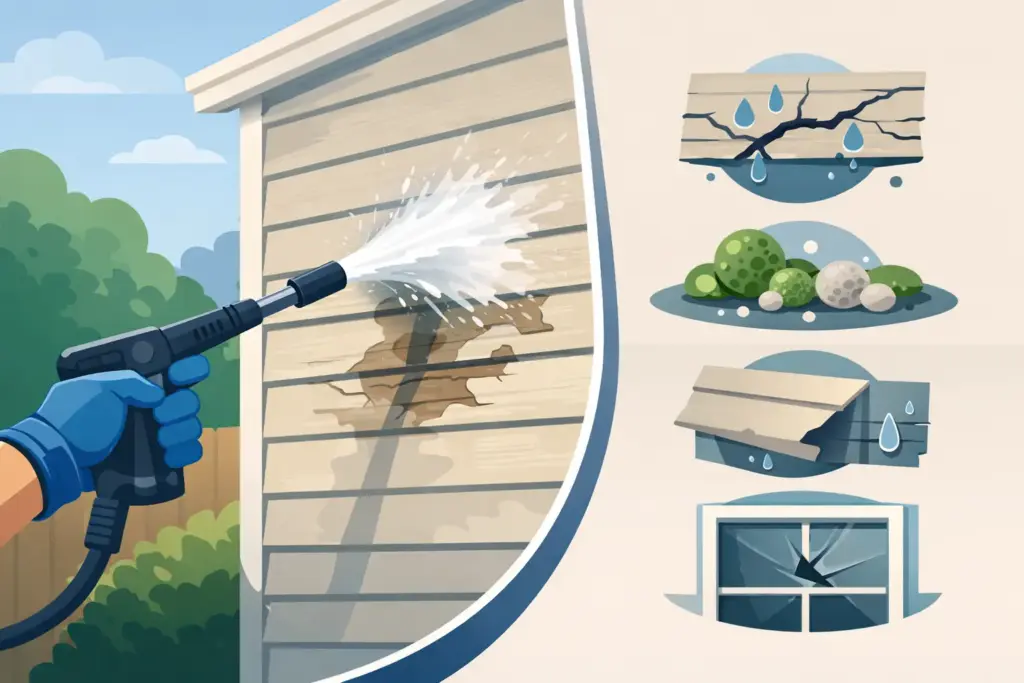
Pressure washing can damage siding when water is forced where it does not belong or when the surface itself is hit too hard. A powerful stream may loosen panels, chip paint, scar soft materials, strip caulk, or drive water behind the siding. That hidden moisture can create larger problems, including mold, damaged insulation, stained interior walls, and wood rot.
Damage is not always obvious right away. A siding panel may look clean after an aggressive wash but have a weakened seam or lifted edge. Water can then enter during the next hard rain or snowmelt. That is why exterior cleaning should be treated as property maintenance, not just a quick cosmetic job.
The safest cleaning method depends on the siding material, the age of the home, the type of staining, and whether there are existing cracks, loose panels, failing paint, or gaps around windows and doors.
What Causes Siding Damage During Washing?
The pressure number on a machine is only one part of the equation. The nozzle tip, distance from the surface, water flow, cleaning solution, and operator control all affect the outcome. Even a lower-pressure machine can cause problems if it is held too close to a vulnerable area.
Water Forced Behind Panels
Most lap siding is designed to shed rain downward. Spraying upward at seams, vents, trim joints, or window edges works against that design. Water can be pushed behind vinyl, wood, engineered wood, or fiber cement siding. The risk is especially high around older caulk, loose trim, utility penetrations, and damaged flashing.
A trained cleaner works from a safe angle and pays attention to how the siding overlaps. The goal is to rinse contaminants away without turning the exterior into a path for water intrusion.
Too Much Pressure on Soft or Weathered Materials
Vinyl siding can crack, warp, or become dislodged under excessive pressure. Wood siding is even more sensitive. High pressure can gouge the grain, leave fuzzy fibers behind, strip paint unevenly, and expose bare wood to moisture.
Fiber cement is durable, but it is not a reason to use maximum force. Strong pressure can damage paint, disturb caulked joints, and affect areas where the material has already been chipped or cracked. Older painted siding may also reveal failing paint during cleaning. Washing did not necessarily cause every loose paint spot, but an aggressive method can make a weak surface worse.
Using the Wrong Cleaner
Water alone does not always remove algae, mildew, or deep organic staining. Trying to compensate by turning up the pressure is a common mistake. A properly selected exterior cleaner can break down growth so it releases with a gentle rinse.
Cleaning solutions still need to be used carefully. Too strong a mix or poor rinsing can affect plants, leave streaks, or discolor certain surfaces. Nearby landscaping, painted trim, decks, metal fixtures, and windows all need attention before and during a house wash.
Skipping the Inspection
Pressure washing cannot repair siding that is already loose, cracked, rotted, or improperly installed. In fact, cleaning may expose issues that dirt and algae were hiding. Before washing, look for open seams, missing pieces, failing caulk, damaged screens, loose shutters, and peeling paint.
If a section is compromised, it may need repair before cleaning. This is not an unnecessary delay. It is how a careful exterior cleaning job protects the home instead of creating avoidable risk.
Why Soft Washing Is Often the Better Choice
For most house washing, low-pressure soft washing is the safer and more effective method. Instead of relying on force, it uses an appropriate cleaning solution to treat algae, mold, mildew, dirt, and discoloration. The home is then rinsed at low pressure, closer to the force of a strong garden hose than a high-powered pressure washer.
Soft washing is particularly well suited to vinyl siding, painted wood, delicate trim, soffits, and areas around windows and doors. It cleans the source of organic growth rather than only knocking off the visible layer. That often produces a more even result and can help the exterior stay cleaner longer.
There are situations where controlled pressure is useful, such as concrete, certain masonry surfaces, or durable hardscape areas. But the method that works for a driveway is not automatically right for a house. Exterior surfaces should never all be cleaned the same way.
Siding Materials Need Different Care
Vinyl siding is one of the most common materials around Western Maine and Greater Portland. It responds well to low-pressure cleaning, but it can be damaged by heat, harsh angles, or concentrated pressure. A careful wash removes green algae and grime without loosening the panels.
Wood siding needs a lighter touch. The surface may have aging paint, natural grain, knots, or areas that have absorbed moisture over time. Proper cleaning can prepare wood for maintenance, but too much pressure can create more work by stripping paint or roughening the boards.
Fiber cement and composite siding are generally durable, yet their coatings, seams, and trim details still require care. Stucco, manufactured stone, and brick also have their own concerns. Mortar joints, soft stone, and textured finishes can be damaged or retain moisture if cleaned improperly.
If you are unsure what your siding is made of, do not guess with a rental machine. A quick assessment can prevent an expensive repair.
Signs Your Siding Should Not Be Washed Yet
A home does not have to be perfect before exterior cleaning, but clear signs of damage should be addressed first. Hold off on washing if you see loose or missing siding, visible rot, cracked panels, open gaps around windows, peeling caulk, deteriorated paint, or water stains inside the home near exterior walls.
Also be cautious with older homes that may have lead-based paint. Disturbing deteriorated paint requires appropriate safety practices. A professional can help identify whether cleaning is appropriate now or whether repairs and paint preparation should come first.
Why Professional House Washing Is Worth It
A professional house wash is not simply about having a stronger machine. It is about knowing when not to use strong pressure. A careful crew evaluates the siding, identifies vulnerable spots, protects plants and surrounding surfaces, uses the right cleaning mix, and rinses with a method suited to the home.
That experience matters when algae is heavy, the siding is older, or the property has multiple materials. It also saves homeowners from spending a weekend moving ladders, managing hoses, and hoping the nozzle setting is correct.
Western Maine Pressure Washing provides house washing with property care at the center of the job. Local. Trusted. Family Owned. Whether your home is in Fryeburg, the Greater Portland area, or nearby Conway, New Hampshire, a free quote gives you a straightforward way to find the right cleaning approach for your exterior.
A Cleaner Home Should Not Come With a Repair Bill
Dirty siding does not need to stay dirty, and cleaning it should not put your home at risk. The best result comes from matching the method to the material, treating organic growth instead of attacking it with force, and taking time to inspect the exterior first.
When you notice algae, mildew, or years of built-up grime, choose careful cleaning over maximum pressure. Your siding, trim, landscaping, and peace of mind will all benefit from doing the job right.