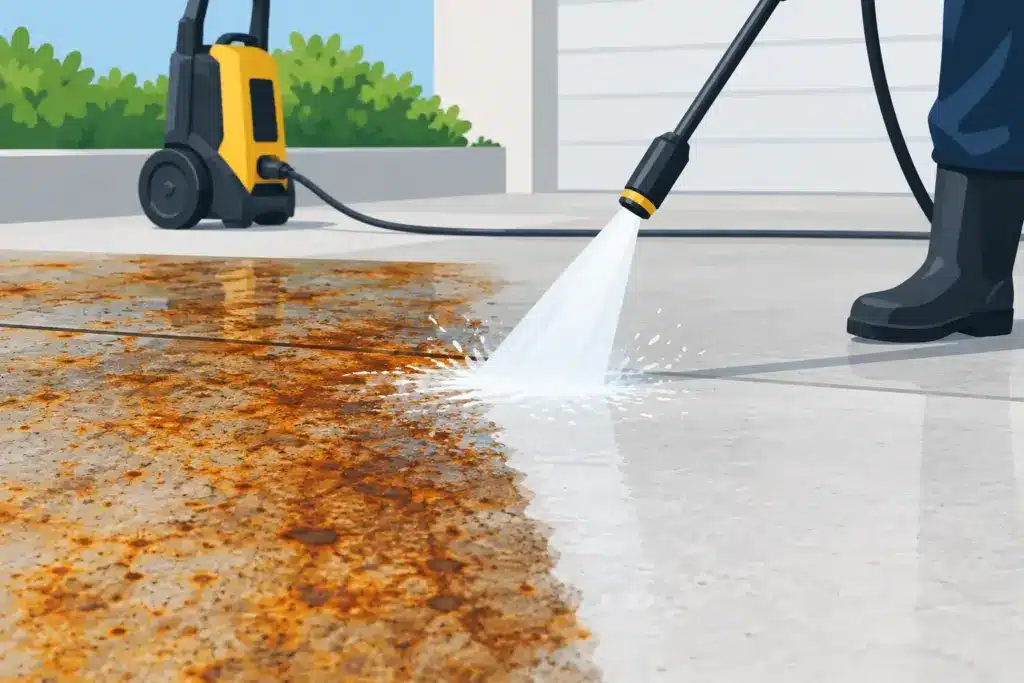

A rusty patio chair, fertilizer spill, or leaking metal fixture can leave a bright orange stain that makes an otherwise clean property look neglected. So, can pressure washing remove rust? Sometimes it can improve the appearance of a rust-stained surface, but pressure alone usually will not remove the stain completely. Rust bonds to porous materials such as concrete, and the best results often require the right rust-removal treatment before a careful rinse.
For homeowners and property managers in Western Maine, knowing the difference can prevent damage, wasted effort, and disappointing results. The goal is not simply to blast away the orange color. It is to treat the source of the stain, clean the affected surface safely, and keep the rust from coming back.
Can Pressure Washing Remove Rust Completely?
Pressure washing can remove loose rust flakes, dirt, and surface buildup around a stain. On a hard, durable surface, it may make light staining look less noticeable. But a pressure washer is not a rust dissolver. Water pressure works by force, while rust stains usually need a chemical reaction to release from concrete, masonry, vinyl, or painted surfaces.
That distinction matters. If rust has settled into the pores of a concrete walkway or driveway, increasing the pressure may do little more than clean around the stain. Pushing the machine harder can also leave visible cleaning lines, roughen older concrete, or force water into cracks and joints.
A professional rust removal job commonly uses a surface-appropriate rust treatment first. Once the product has had time to work, low to moderate pressure can rinse away the loosened residue and restore a more even appearance. The exact method depends on what is stained, how long the rust has been present, and what caused it.
What Causes Rust Stains Around a Property?
Rust stains do not always come from an item that looks rusty. In many cases, the source is nearby or hidden. A metal chair left on a wet patio can stain concrete. A corroded downspout, fastener, railing, sprinkler component, or HVAC unit can leave orange streaks below it. Well water with high iron content may also create rust-colored stains on siding, foundations, walkways, and exterior fixtures.
Fertilizer is another common cause. Some lawn and garden products contain iron, and overspray or spilled granules can leave stubborn orange marks on concrete. This is especially common near front walks, garage aprons, and landscaped beds.
Before cleaning begins, the source should be addressed whenever possible. Otherwise, a freshly cleaned surface may stain again after the next rain, watering cycle, or season of outdoor use.
Why High Pressure Is Not Always the Answer
Pressure washers are valuable tools, but they need to be matched to the surface and the problem. A concrete pad can usually handle more pressure than vinyl siding, painted trim, wood decking, or a roof. Rust stains on these more delicate surfaces should never be treated by simply turning up the pressure.
On siding, aggressive pressure can drive water behind panels, strip oxidation unevenly, or damage paint. On a deck, it can raise wood grain and create a rough surface that holds dirt and moisture. On metal, pressure can remove loose paint or expose bare areas that are more likely to rust again.
The right cleaning approach is controlled, not aggressive. Professionals adjust pressure, water flow, cleaning products, and rinse technique based on the material. That is how a cleaning service protects the property while working toward a better result.
Rust Removal by Surface Type
Concrete, Pavers, and Masonry
Concrete is one of the most common places to find rust stains because it is porous and frequently exposed to metal furniture, vehicles, tools, and fertilizer. Pressure washing is useful here as part of the process, but a rust-specific cleaner is often what does the real stain removal.
The treatment must be used carefully. Strong acidic products can affect surrounding grass, landscaping, painted surfaces, or nearby metal if they are not properly protected. Older concrete may also have uneven color after stain removal because the rusted area was shielded from normal weathering. In those cases, cleaning the broader area can help the surface look more consistent.
Vinyl Siding and Painted Surfaces
Rust streaks on siding often come from nails, gutters, metal fixtures, or irrigation water. These surfaces call for a gentler approach. A suitable cleaning solution can be applied to the affected area, allowed to work briefly, then rinsed with low pressure.
Do not scrub aggressively with a wire brush or use a harsh cleaner without testing it first. Both can damage the finish, remove paint, or create a light spot that stands out more than the original stain.
Metal Furniture, Railings, and Fixtures
If the metal itself is rusting, pressure washing may remove dirt and loose flakes, but it will not repair the damaged metal. Active rust needs to be removed or stabilized, and the metal may need sanding, priming, repainting, or replacement depending on its condition.
For a decorative chair or small fixture, cleaning can be a good first step. For a rusted handrail, structural fastener, or commercial metal component, safety should come first. If corrosion has weakened the material, cleaning alone is not a solution.
When to Call a Professional for Rust Stain Removal
A small, fresh stain from a patio chair may be manageable with a surface-safe rust cleaner and careful rinsing. Larger stains, recurring staining, or rust on multiple exterior materials are different. Those jobs benefit from an experienced eye and the right equipment.
Professional help is especially worthwhile when the stain is near landscaping, on painted siding, across a large concrete area, or connected to irrigation and well-water issues. Commercial sidewalks, entryways, and multi-unit properties also need a consistent result. Patchy cleaning can affect curb appeal just as much as the rust stain itself.
Western Maine Pressure Washing evaluates the surface before selecting a cleaning method. That means using pressure where it helps and using a lower-pressure or treatment-based approach where that is the safer choice. A free quote gives property owners a clear path forward without guessing which product or setting might cause damage.
How to Prevent Rust Stains From Returning
Removing a stain is only half the job. Look for the item or condition that caused it. Replace badly rusted furniture feet, repair dripping metal fixtures, and keep fertilizer off hard surfaces. If iron-rich water is creating repeated staining, a water-treatment or irrigation adjustment may be needed.
It also helps to move metal furniture occasionally and use protective caps or pads beneath legs on patios and decks. Clean up fertilizer spills promptly, especially before rain or irrigation carries them across concrete. For painted metal railings and fixtures, touch up chipped paint before bare metal has a chance to corrode.
A clean exterior is easier to maintain when stains are handled early. If orange marks are spreading across your walkway, siding, or commercial entrance, do not assume more pressure is the answer. The right treatment can protect the surface and help your property look cared for again.