
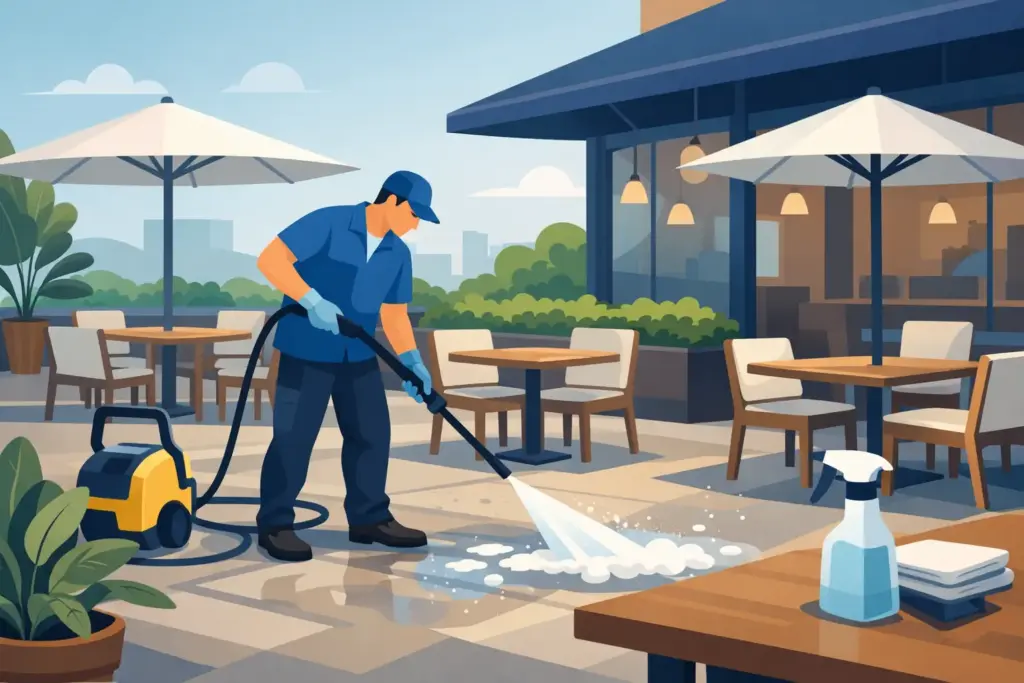

A busy patio can look fine at opening time and still create problems by the dinner rush. Spilled drinks dry sticky, food grease settles into concrete, tables leave dark marks, and Maine weather adds pollen, algae, mud, and leaf stains. Restaurant patio cleaning gives outdoor dining areas the clean, well-kept appearance guests expect while helping reduce slippery buildup underfoot.
For restaurant owners and property managers, this is not just a cosmetic job. A clean patio supports better first impressions, safer walking areas, and a more comfortable place for guests to sit down and stay awhile. The right cleaning method also protects the surface itself, whether the patio is concrete, pavers, brick, composite decking, or natural stone.
Why Restaurant Patio Cleaning Matters
Guests notice the outdoor dining space before they settle into a chair. Darkened walkways, gum spots, greasy corners, and green growth along the edges can make an otherwise well-run restaurant feel neglected. That can affect how people view the food, service, and overall care put into the business.
The bigger concern is traction. Rain, drink spills, fryer grease tracked outside, and algae growth can combine to create a slick surface. This is especially common in shaded patio areas, around trash enclosures, near outdoor bars, and along entrances where water tends to collect. Regular cleaning removes the buildup that ordinary sweeping cannot handle.
Patio maintenance can also help protect your investment. Dirt and grit wear on surfaces over time, while organic growth can hold moisture against pavers, concrete, and wood. Cleaning does not fix cracked concrete, loose pavers, or failing drainage, but it makes those issues easier to spot before they become larger repairs.
What Builds Up on a Restaurant Patio
A restaurant patio deals with a different kind of dirt than a residential walkway. Foot traffic is heavier, spills happen more often, and the surface may be exposed to food service, landscaping, and weather all in the same day.
Grease is one of the most stubborn problems. Even if no cooking is done outside, grease can be tracked from kitchen entrances, waste areas, staff shoes, and takeout traffic. It binds to dust and turns into a dark film that can be difficult to remove with a hose or store-bought cleaner.
Food and beverage stains are another regular challenge. Coffee, wine, sauces, and soft drinks leave behind discoloration, especially on porous concrete and unsealed pavers. Gum may seem minor, but a few pieces can quickly make an entrance or patio look uncared for.
Then there is the seasonal buildup familiar to business owners across Western Maine, Greater Portland, and nearby New Hampshire. Spring pollen, summer algae, fall leaves, winter sand, and road grime all find their way onto exterior surfaces. If the patio sits beneath trees or stays damp after rain, green or black organic growth may return faster than expected.
The Right Cleaning Method Depends on the Surface
Pressure washing is highly effective for many commercial patios, but more pressure is not always better. The surface, the type of staining, drainage, surrounding landscaping, and nearby dining areas all affect the best approach.
Concrete and stamped concrete
Concrete patios often respond well to professional pressure washing, especially when paired with the right cleaning solution for grease and organic staining. A consistent cleaning pattern matters. It helps avoid obvious stripes or uneven color, which can happen when equipment is used too aggressively or inconsistently.
Stamped concrete needs more care. Its decorative finish and sealer can be damaged by excessive pressure or harsh products. A professional should assess the condition of the surface before starting, particularly if the patio has older sealant, flaking areas, or visible wear.
Pavers, brick, and natural stone
Pavers and brick have joints that can lose sand if cleaned too aggressively. Natural stone can vary widely in hardness and porosity, so a method that works on one material may not be right for another. The goal is to remove grime and growth without blasting away joint material, damaging edges, or leaving the patio uneven in appearance.
If weeds are growing between pavers or sections have shifted, cleaning may reveal the need for repairs. That is useful information for a property owner, but cleaning should not be treated as a replacement for proper paver maintenance.
Wood and composite decking
Outdoor dining decks need a lower-pressure approach than concrete. Too much pressure can scar wood, raise the grain, and shorten the life of the surface. Composite decking can also be marked or damaged if the wrong technique is used. A careful wash removes dirt, mildew, and food residue while keeping the deck ready for guests.
When to Schedule Patio Cleaning
For many restaurants, a thorough patio cleaning before the outdoor dining season is the best place to start. It clears away winter sand, salt residue, leaves, and stains before tables, umbrellas, planters, and guests return. A second cleaning during the season may be worthwhile for high-traffic patios, especially those with outdoor bars, frequent food service, or heavy shade.
There is no single schedule that fits every business. A small café patio used a few mornings a week may only need seasonal service plus routine spot cleaning. A busy restaurant with lunch, dinner, and weekend crowds may benefit from more frequent professional cleaning to keep entrances and dining areas presentable.
Watch for signs that the patio is due: dark walking paths, slick spots after rain, visible gum, green growth, lingering food odors, or stains that do not come up during normal staff cleaning. Waiting until the patio looks severely dirty can make the work harder and may leave a poor impression during your busiest weeks.
Prepare the Patio for a Better Result
A little preparation helps the cleaning process go smoothly. Move tables, chairs, rugs, signs, and portable heaters when possible so the entire surface can be cleaned evenly. Remove loose trash and sweep away leaves, gravel, and food debris first.
It also helps to identify areas that need special attention. Point out grease near a service door, a recurring algae patch by a downspout, or a stain beneath an outdoor bar. These details allow the cleaning team to choose the proper treatment rather than applying the same approach across every part of the patio.
Restaurant managers should also consider timing. Cleaning is best scheduled during closed hours or a slower service window, with enough time for the surface to dry before guests arrive. The exact drying time depends on weather, shade, humidity, and the patio material. On a damp Maine morning, a shaded stone patio may take longer than sun-exposed concrete on a breezy afternoon.
Do Not Forget the Areas Around the Tables
The patio itself is only part of the guest experience. Dirty storefront sidewalks, entryways, railings, exterior windows, and dumpster pads can take attention away from a clean dining space. When these areas are maintained together, the property feels cared for from the parking lot to the table.
That is one advantage of working with an exterior cleaning company that handles more than one task. Western Maine Pressure Washing provides commercial exterior cleaning services that can help restaurants address patio buildup along with surrounding walkways, windows, and other exterior surfaces without coordinating several different vendors.
Keep the Patio Cleaner Between Services
Professional cleaning handles the deep buildup, but daily habits make a real difference. Staff should sweep after service, wipe up spills promptly, and keep drains and downspouts clear so water is not left standing on the patio. Check shaded corners and areas near planters regularly, since algae often begins there before it spreads across the main seating area.
Avoid using harsh degreasers or high-pressure rental equipment without knowing how they will affect the surface. A product that removes one stain can discolor pavers or harm nearby landscaping. Rental pressure washers can also leave visible lines, damage wood, or force water into joints when used incorrectly.
A clean patio tells guests that the same care extends behind the scenes. Schedule restaurant patio cleaning before buildup becomes the first thing people notice, and give your outdoor space the dependable, welcoming finish it deserves.