
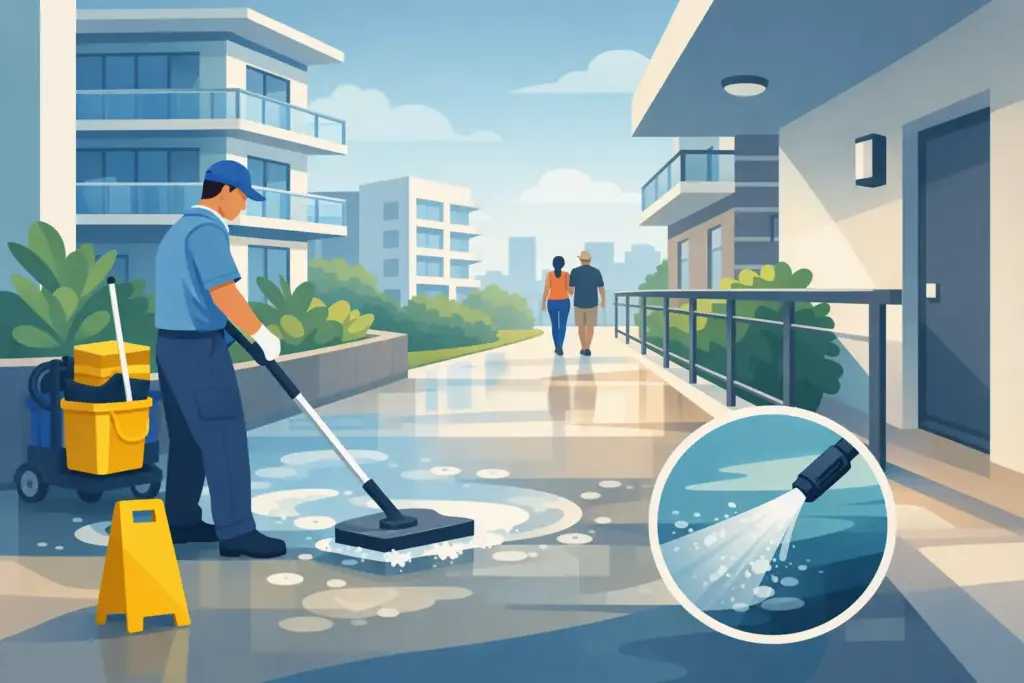

A clean walkway does more than make a condo property look cared for. It helps residents, guests, delivery drivers, and maintenance crews get from one place to another with fewer slip hazards underfoot. In Maine and nearby New Hampshire, condo walkway cleaning is especially valuable after long, wet stretches that leave concrete and pavers darkened by algae, mildew, dirt, and winter residue.
For condo boards and property managers, these surfaces are easy to overlook until the buildup becomes obvious. By then, paths may look worn down, entrance areas can make a poor first impression, and shaded sections may feel slick when wet. Regular professional cleaning keeps common areas presentable while helping protect the hard surfaces your community relies on every day.
Why Condo Walkways Get Dirty So Quickly
Walkways collect more than ordinary foot traffic. Rain carries dirt across the surface, landscaping beds shed soil and mulch, and vehicles bring in road grime. In spring and fall, leaves can trap moisture against concrete or pavers. During winter, sand, salt, and de-icing products leave behind a dull film that can linger well after the snow is gone.
Moisture is often the bigger issue. Areas under trees, along north-facing buildings, near downspouts, and beside dense landscaping may not get enough sun to dry fully. That creates the right conditions for algae, mildew, and organic growth. What begins as a faint green or black discoloration can spread across the walking path and become slippery after rain.
The problem is not always uniform across a property. A sunny sidewalk may only need light cleaning, while a shaded route from the parking area to the building entrance may need more focused treatment. That is why the right approach starts with looking at the material, the amount of buildup, drainage conditions, and the areas residents use most.
Condo Walkway Cleaning Supports Safety and Curb Appeal
A clean walkway sends a clear message that the property is being looked after. Residents notice it when they come home. Prospective buyers and renters notice it before they step inside. For multi-unit properties, those first few feet from the parking lot to the entrance matter more than many owners realize.
Safety is just as practical a reason to stay ahead of buildup. Professional cleaning removes slippery organic growth, tracked-in grime, and residue that can reduce traction when surfaces are wet. It cannot eliminate every weather-related risk, especially during icy Maine winters, but it removes a preventable layer of slickness from common walking areas.
Routine cleaning can also help property managers spot maintenance concerns. Cracking, failing joint material, poor drainage, and areas where water repeatedly pools become easier to see once the surface is clean. Cleaning is not a replacement for repairs, but it gives a clearer view of where repairs may be needed.
The Right Method Depends on the Walkway Material
Not every condominium walkway should be cleaned the same way. Concrete, pavers, stamped concrete, brick, and stone each respond differently to pressure, cleaning solutions, and rinsing. A one-setting approach can leave uneven results or cause unnecessary wear, particularly on older surfaces with loose joints or existing damage.
Concrete is durable, but it can still be marked by improper pressure washing. Professionals use the appropriate pressure, cleaning solution, and surface-cleaning equipment to lift embedded dirt without leaving visible striping. The goal is an even, clean appearance rather than a patchy walkway with obvious wand marks.
Paver and brick walkways need extra attention around joints. Too much pressure can dislodge sand or loosen material between the pavers. Some cleanup of joint sand is normal depending on the condition of the walkway, but the cleaning plan should account for it. If a paver surface is already shifting or has missing joint material, the condo association may want to schedule repairs after cleaning.
Natural stone and decorative surfaces can require a gentler touch. The wrong cleaner may affect the color or finish, while excessive pressure can damage softer stone. A knowledgeable exterior cleaning team evaluates the surface before beginning work instead of treating every path like a standard concrete driveway.
What a Professional Walkway Cleaning Visit Should Address
A thorough service is more than spraying the visible center of the path. The edges, corners, entry pads, stairs, ramps, curbs, and transitions between the parking lot and building often hold the heaviest buildup. These details make a major difference in both appearance and day-to-day use.
For larger communities, it also helps to plan the work around resident access. Cleaning may be scheduled in sections so people can continue entering their homes safely. A professional crew should clearly mark wet work areas, keep hoses organized, and communicate when a walkway needs time to dry.
Depending on the property, service may include cleaning:
- Main sidewalks and building approach paths
- Entry pads, stoops, stairs, and handrail areas
- Walkways around mailboxes, dumpsters, and community spaces
- Pool decks, patios, ramps, and connecting paths
- Curbs and heavily soiled edges near parking areas
Walkway cleaning also works well alongside other exterior maintenance. Dirty siding above an entry, clogged gutters spilling onto a path, and stained windows can all make an otherwise clean common area look neglected. Coordinating services can save time for property managers and create a more consistent result across the property.
How Often Should Condo Walkways Be Cleaned?
Most condo communities benefit from professional walkway cleaning once a year, often in spring after snow, sand, and winter grime have cleared. A spring cleaning gives the property a fresh start before the busy summer season and makes it easier to manage organic growth before it becomes heavy.
Some properties need service more often. Communities with mature trees, heavy shade, steep grades, poor drainage, frequent foot traffic, or nearby wooded areas may benefit from a second cleaning later in the season. Walkways around pools, clubhouses, dumpsters, and high-traffic entrances often need extra attention as well.
There is no reason to clean solely by the calendar if the surface still looks good and has solid traction. On the other hand, waiting until algae is thick and staining is deeply set can make the job harder. A practical property walk-through in spring and again in late summer helps boards decide when cleaning will deliver the most value.
A Few Steps That Help Walkways Stay Cleaner
Professional cleaning handles the buildup already on the surface, but simple maintenance can slow its return. Keep downspouts directing water away from walkways whenever possible. Trim back vegetation that blocks airflow and sunlight. Remove leaves and pine needles before they sit wet against the concrete for weeks.
Property managers should also watch for irrigation overspray and recurring puddles. Those conditions feed algae growth and can point to a drainage issue that cleaning alone will not solve. If one section turns green much faster than the rest, the cause is usually moisture, shade, or both.
Avoid using harsh chemicals or high-pressure equipment without understanding the surface. Store-bought cleaners may not address the source of the staining, and aggressive pressure can scar concrete or disturb pavers. For a multi-unit property, an uneven result is often more noticeable than the original dirt.
A Cleaner Path Starts With a Clear Plan
Condo walkway cleaning is a straightforward investment in the parts of the property everyone sees and uses. It supports safer common areas, improves the look of entrances, and helps condominium boards stay ahead of the grime that builds up through every Maine season.
Western Maine Pressure Washing provides dependable exterior cleaning for multi-unit properties throughout Western Maine, Greater Portland, and nearby New Hampshire communities. A free quote can help your board or property manager plan the right service for the walkways, entrances, and common areas that deserve attention before buildup turns into a bigger problem.