
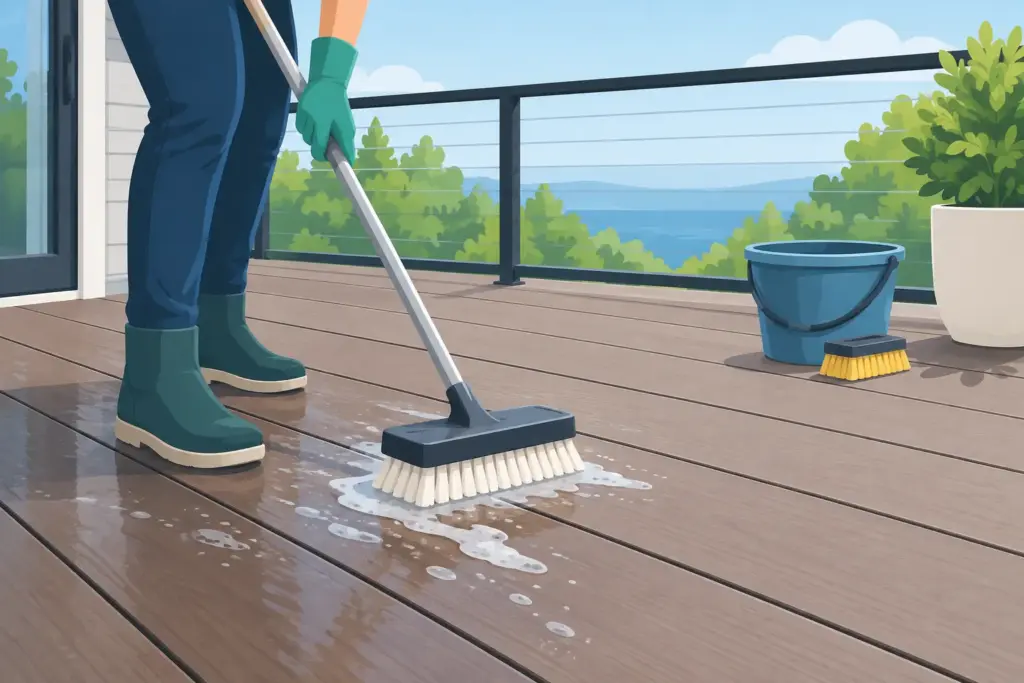

A composite deck should make outdoor maintenance easier, not leave you wondering whether one wrong cleaner or pressure washer setting will scar the boards. Knowing how to clean composite decking comes down to using a gentle approach, addressing growth before it spreads, and avoiding shortcuts that can damage the finish.
In Western Maine and nearby New Hampshire, decks take a beating from spring pollen, humid summers, falling leaves, snow, and long stretches of shade. Dirt may be mostly cosmetic, but algae, mildew, and leaf stains can make a deck slippery and give an otherwise well-kept home a neglected look. Regular cleaning helps protect curb appeal and makes the space more enjoyable when deck season arrives.
Start With the Deck Manufacturer’s Care Instructions
Composite decking is not all made the same. Some boards have a protective cap that resists staining and fading, while older or uncapped products can be more porous. Before using a cleaner, check the manufacturer’s current care instructions for your specific deck if you know the brand and product line.
This matters most when you are dealing with grease, rust, paint, hard-water deposits, or ground-in stains. A cleaner that works well on one type of composite board may not be approved for another. Manufacturer guidance should always take priority over general cleaning advice, especially if the deck is still under warranty.
For routine seasonal cleaning, a mild dish soap or a composite-deck cleaner, water, and a soft-bristle brush are usually enough. Avoid abrasive scouring pads, wire brushes, and harsh solvents. They can leave dull spots, scratches, or uneven color that is harder to fix than the original dirt.
Clear the Surface Before You Wash
Move furniture, planters, rugs, grills, and toys off the deck. Sweep the boards thoroughly, paying close attention to the gaps between them. Leaves, pine needles, mulch, and soil hold moisture against the decking and create the damp conditions algae and mildew need to grow.
Do not skip this step just because the deck looks clean from a distance. Organic debris caught between boards can slow drainage and keep the framing below wetter than it should be. Use a broom, a plastic putty knife, or a tool designed for deck gaps to loosen debris without gouging the board edges.
Once the surface is clear, rinse the deck with a garden hose. This removes loose dust and pollen and lets you see where darker staining or green growth remains. It also prevents dry boards from pulling cleaner in too quickly.
How to Clean Composite Decking Step by Step
Mix a mild cleaning solution according to the product label, or add a small amount of dish soap to a bucket of warm water. There is no benefit to making the solution overly strong. Stronger chemicals do not automatically mean a cleaner deck, and they can create problems for nearby plants, painted surfaces, or the deck itself.
Work in manageable sections, especially on a warm or sunny day. Wet the area first, apply the cleaning solution, and let it sit briefly so it can loosen surface grime. Do not let the solution dry on the boards.
Scrub with a soft-bristle brush in the direction of the board grain or pattern. Use steady pressure rather than aggressive scrubbing. Composite decking is durable, but it is not indestructible. A careful pass or two is safer than trying to force every stain out in one attempt.
Rinse each section thoroughly before moving to the next. Soap residue can leave a dull film, attract dirt, and make the deck feel slick when wet. When you finish, look over the deck from more than one angle. Rinsing often reveals missed dirt along rail posts, stair treads, board edges, and the perimeter near the house.
Removing Mold, Mildew, and Algae Safely
Green or black growth is common on shaded decks, particularly where trees keep the surface damp. It is more than an appearance issue. Algae and mildew can make steps and walking areas slippery, which is a real concern for family members, guests, tenants, and customers.
Use a cleaner approved for composite decking and follow its dilution and dwell-time directions. For light growth, gentle brushing and a thorough rinse may solve the problem. Heavier growth may need a second treatment. The right approach depends on the type of decking, how long the growth has been present, and whether moisture is being trapped by overhanging branches, rugs, planters, or poor drainage.
Be cautious with bleach. Some homeowners reach for it because it is familiar, but it may not be recommended for every composite product and can affect surrounding landscaping. Never mix bleach with other cleaners. If you are unsure what is safe for your deck, stop before experimenting with chemicals.
What About Pressure Washing Composite Decking?
Pressure washing can be useful in the right hands, but composite decking is not a surface to blast clean. Too much pressure, a narrow tip, or holding the wand too close can leave lines, fuzz the surface, or damage the protective cap. Those marks can be permanent.
If your decking manufacturer permits pressure washing, use the lowest effective pressure, a wide fan tip, and keep the nozzle moving at a safe distance. Test a hidden area first. Never concentrate the spray on one spot, and avoid spraying upward into board seams or against the house.
For many routine cleanings, a hose, appropriate cleaner, and soft brush provide better control with less risk. When a deck has widespread staining, stubborn organic growth, or years of buildup, professional exterior cleaning is often the safer choice. Western Maine Pressure Washing can assess the material and use a cleaning method suited to the condition of the deck rather than treating every surface the same way.
Treat Common Stains Promptly
The longer a spill sits, the more likely it is to leave a mark. Clean food grease, barbecue drippings, sunscreen, drinks, and pet accidents as soon as practical. Use the product-specific stain guidance from the decking manufacturer when available, then rinse the area well.
Rust stains from furniture feet, metal planters, or grill accessories need extra care. So do marks from leaf tannins, berries, and flower pots. Do not use a harsh acid-based cleaner simply because the stain looks stubborn. Start with an approved composite-deck product and test any specialty cleaner in an inconspicuous spot first.
Mold and mildew can return if the underlying conditions remain. Trim back vegetation that blocks airflow, move planters occasionally, and avoid leaving wet rugs or tarps in place for long periods. A deck that dries quickly stays cleaner longer.
A Seasonal Cleaning Schedule That Works in Maine
Most composite decks benefit from a full cleaning at least once a year, usually in spring after snow, sand, and winter debris are gone. Homes with heavy tree cover, a north-facing deck, or frequent shade may need a second cleaning in late summer or fall.
Between deep cleanings, sweep regularly and rinse away pollen, mud, and spills. After a storm, check the gaps and perimeter for leaves and branches. Before winter, remove organic debris so it does not sit wet against the boards under snow cover.
You do not need to chase a spotless deck every week. The goal is to prevent buildup from becoming staining, slippery growth, or a bigger maintenance job. Consistent, simple care is easier on the deck and easier on your schedule.
When It Is Time to Call for Help
A deck that remains dark or slippery after basic cleaning may have heavier organic growth than it appears. Stains around railings, stairs, and tight corners can also be difficult to address without the right equipment and cleaning process. Commercial properties and multi-unit buildings often need a coordinated cleaning plan to keep common outdoor areas presentable and safe.
A careful professional assessment can save time and help avoid the damage caused by overly aggressive pressure or the wrong chemical. Ask for a free quote when the deck needs more than a seasonal rinse, particularly if you are also planning house washing, gutter cleaning, window washing, or other exterior work.
A clean composite deck gives you a better place to enjoy a Maine summer, welcome guests, or show tenants and customers that the property is cared for. Start gently, keep moisture-trapping debris off the boards, and deal with growth before it takes over.