
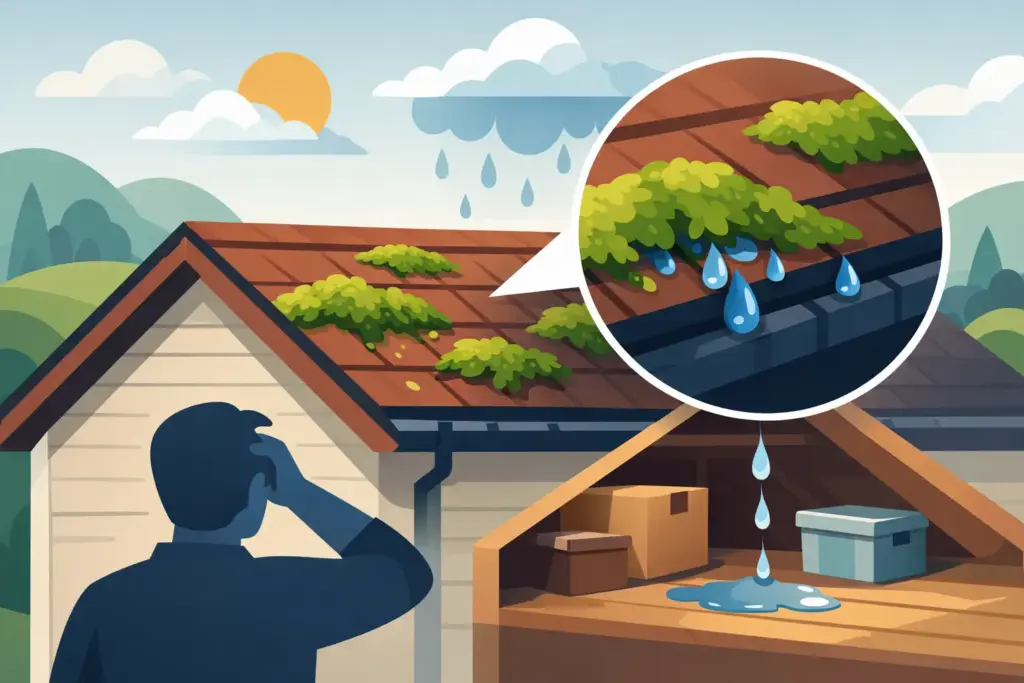

A green patch on the shaded side of a roof can look harmless from the driveway. But roof moss leaks become a real concern when moss holds moisture against shingles, works its way beneath their edges, or exposes an existing weak spot that was already close to failing. In Maine and nearby New Hampshire, long wet seasons, tree cover, snow, and freeze-thaw cycles give roof growth plenty of opportunity to cause trouble.
Moss does not usually punch a hole straight through a sound roof overnight. The problem is more gradual. It creates conditions that keep roofing materials wet longer than they should be, which can shorten shingle life and allow water to reach places it does not belong.
Why Roof Moss Can Lead to Leaks
Moss is different from the dark algae streaks many homeowners see on asphalt shingles. Algae tends to stain the surface, while moss has a thicker, sponge-like structure with small root-like attachments called rhizoids. It absorbs and retains water. After rain, morning dew, or snowmelt, a moss-covered section of roof can stay damp long after the rest of the roof has dried.
That constant moisture matters most around shingle edges. As moss grows, it can lift shingles slightly and create a path for wind-driven rain or melting snow. Water can then get under the shingle layer and reach the roof deck, underlayment, or flashing.
Winter makes the risk more serious. Water held in moss can freeze, expand, and loosen granules or shingle edges over time. A roof may look fine from the ground while the areas beneath heavy moss are aging faster than the cleaner sections.
It depends on the roof’s age and condition, of course. A newer roof with a small amount of moss may not be leaking at all. An older roof with curled shingles, worn flashing, or recurring ice dams has less room for error. Moss may be the visible warning sign, not the only cause.
Signs Moss May Be Contributing to a Roof Leak
A roof leak does not always show up as a steady drip from the ceiling. Water can travel along rafters, insulation, or framing before it becomes visible indoors. That makes early attention worthwhile, especially when moss is concentrated near roof valleys, chimneys, skylights, or dormers.
Watch for damp-looking ceiling spots, peeling paint, a musty odor in the attic, or discolored insulation. Outside, check for moss packed beneath shingle edges, loose or missing shingles, crumbling shingle granules in gutters, and dark staining around flashing. A gutter that is clogged with moss, leaves, and roof grit can also make water back up along the roof edge.
If you see a stain inside, do not assume the spot directly above it is the source. Water takes the easiest route through the roof system. A professional inspection can help separate a roof-cleaning issue from a repair issue before a small problem turns into damaged decking, insulation, or interior finishes.
Areas Where Moss Causes the Most Trouble
Moss often takes hold on north-facing roof slopes, under overhanging trees, and in spots that receive limited sun. Roof valleys deserve special attention because they carry a high volume of water during rain and snowmelt. Moss can slow that drainage and hold debris in place.
Flashing areas are another concern. Chimneys, vent pipes, skylights, and wall intersections already depend on properly installed metal and sealants to keep water out. Moss buildup around those details can trap moisture and make it harder to spot a developing failure.
Do Not Scrape or Blast Moss Off the Roof
When homeowners notice moss, the instinct is often to climb up and scrape it away or hit it with a pressure washer. That can do more harm than good. Aggressive brushing can remove protective shingle granules, while high pressure can force water under shingles and damage the roof surface.
Pulling up thick moss by hand can also lift weakened shingle edges with it. The roof may look cleaner for a day, but the cleanup can create the exact opening you were trying to prevent.
The safer approach is low-pressure roof cleaning performed with the right method for the roofing material and level of growth. The goal is to treat and remove the moss without stripping shingles, driving water under the roof covering, or damaging nearby landscaping. Some heavy growth may need time to release naturally after treatment rather than being forcibly removed in one visit.
That slower result can be frustrating if you expect an instant change, but protecting the roof comes first. A clean-looking roof is valuable. A roof that stays watertight is more valuable.
Roof Cleaning and Roof Repair Are Different Jobs
Cleaning can remove moss, algae, and debris that hold moisture on the roof. It cannot repair cracked flashing, deteriorated shingles, failed sealant, rotten roof decking, or a damaged underlayment. If water is already entering the home, cleaning should be part of a larger plan, not a substitute for repair.
A practical order of operations is to identify any active leak or visible roof damage first. If repair is needed, have that addressed by a qualified roofing professional. Once the roof is structurally sound, low-pressure cleaning can remove the growth that is keeping it wet and hiding its true condition.
For roofs without active leaks, cleaning may help prevent future trouble by restoring proper drainage and reducing the moisture that moss depends on. It also makes it easier to see shingles, flashing, and roof details clearly during routine maintenance.
How to Reduce Moss Growth After Cleaning
No roof stays spotless forever, especially in wooded parts of Western Maine. The best prevention is reducing the shade, debris, and moisture that allow moss to return.
Trim back branches that hang over the roof where practical. This improves sunlight and airflow while reducing the amount of leaves and needles that collect in valleys and gutters. Keep gutters clear so rain and snowmelt can move away from the roof edge instead of backing up under shingles.
Regular roof and gutter checks are especially useful after fall leaf drop and after a hard winter. From the ground, look for fresh green growth, dark streaks, sagging gutters, or piles of debris. You do not need to walk on the roof to keep an eye on it. In fact, staying off the roof is often the safer choice for both you and the shingles.
Homes with deep shade or heavy tree cover may need more frequent exterior maintenance than open, sunny properties. That is not a failure of the roof. It is simply part of owning a home in this climate.
When to Call for Professional Help
Call for help sooner rather than later if moss is thick enough to lift shingle edges, if it is collecting in valleys, or if you have any evidence of water indoors. The same applies when growth is close to chimneys, skylights, vents, or roof transitions. These areas are too important to treat as a weekend experiment.
Western Maine Pressure Washing provides low-pressure roof cleaning for homeowners who want to remove damaging roof growth without taking unnecessary risks with their shingles. A professional cleaning can also give you a clearer view of whether the roof needs attention from a roofer.
A roof does not need to look neglected to have a moisture problem starting beneath the surface. Deal with moss while it is still a maintenance issue, keep water moving where it should, and your roof has a better chance of protecting the home beneath it for years to come.