
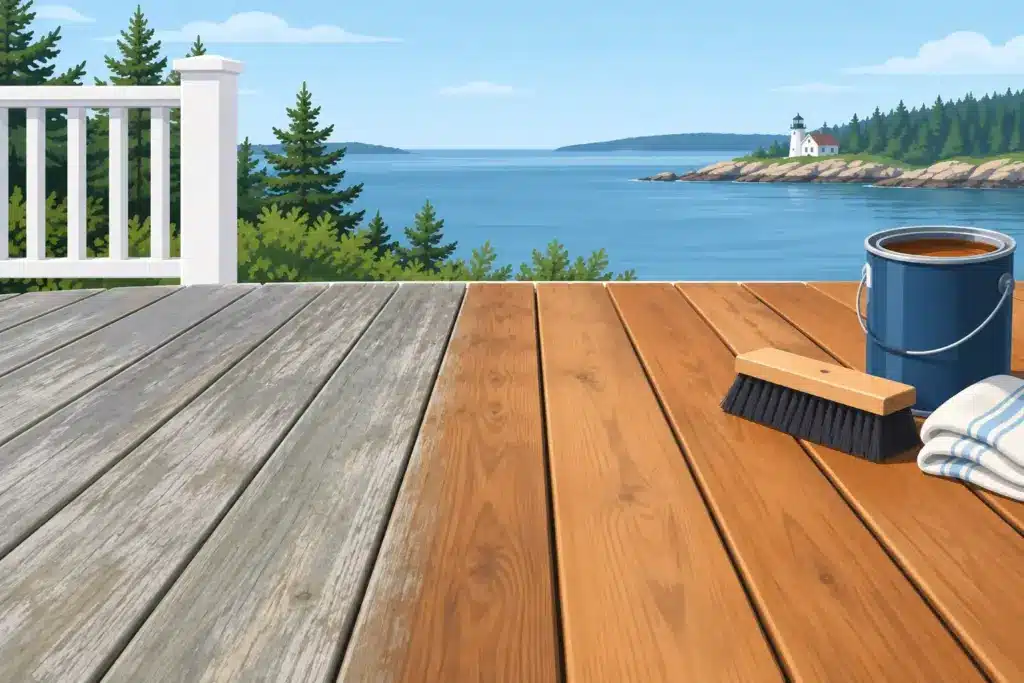

A gray, stained deck can make an otherwise well-kept home look tired. The good news is that many homeowners can restore weathered deck boards without replacing the entire deck. The right approach removes surface grime and organic growth, addresses damaged boards, and gives the wood the protection it needs for another season of Maine weather.
Deck restoration is not always a matter of blasting the surface with high pressure. Wood can be damaged by too much force, and the wrong cleaner can leave uneven color or harm nearby landscaping. A careful inspection comes first, followed by cleaning methods that match the age, condition, and material of the deck.
Start by Checking What the Deck Needs
Before cleaning anything, walk the deck slowly and look for more than discoloration. Weathered wood often has a mix of dirt, pollen, mildew, algae, leaf stains, and sun fading. Those issues can usually be cleaned and improved. Structural damage is different.
Pay attention to boards that feel soft underfoot, flex more than surrounding boards, or show deep cracks along the grain. Check fasteners for raised nail heads, loose screws, and rust stains. Inspect the areas closest to the house, stairs, railings, planters, and shaded corners. These spots often hold moisture longer and are more likely to develop algae or rot.
A few rough or split boards do not necessarily mean the deck is beyond saving. Individual boards can often be replaced before cleaning and refinishing the rest. But if decay is widespread, joists are compromised, or railings are loose, make repairs a priority before anyone uses the deck regularly.
Know the Difference Between Dirty and Failing Wood
A weathered deck does not always need a major overhaul. Sun exposure turns natural wood gray as its surface fibers dry out. Rain can carry dirt into the grain, while damp shade encourages mildew and algae. These are appearance and maintenance problems, and they often respond well to proper cleaning.
Failing wood looks different. It may be spongy, crumbling, deeply checked, or darkened in patches that remain soft after dry weather. If a screwdriver easily sinks into the board, that section may be rotted. Cleaning can improve color, but it cannot restore wood that has lost its strength.
Composite decking deserves a separate approach. It does not need staining like wood, and aggressive pressure can scar its surface. Always identify the decking material before choosing cleaners, pressure settings, or finishing products.
Clear the Deck and Make Needed Repairs First
Move furniture, rugs, grills, planters, and storage items off the deck. Sweep away leaves, pine needles, soil, and loose debris from the boards and gaps. Material trapped between boards holds moisture against the wood, which is especially hard on decks through wet springs, humid summers, and snowy winters.
Make simple repairs before washing. Set or replace protruding fasteners, replace boards with serious splits or rot, and tighten railings. If you are replacing only a few boards, remember that new wood may take stain differently than older boards. That is normal, but choosing compatible lumber and allowing new treated wood to dry properly can reduce the contrast.
Cover delicate plants near the deck if you plan to use a cleaning solution. Rinse landscaping before and after the job, and keep runoff in mind. A clean deck should not come at the expense of your shrubs, lawn, or garden beds.
How to Restore Weathered Deck Boards Without Damaging Them
For most wood decks, the safest process begins with a deck-specific cleaning solution and a controlled rinse. The cleaner loosens dirt, organic staining, and weathered surface fibers so they can be removed without relying on excessive pressure alone.
Apply the cleaner according to its directions and let it work for the recommended time. Do not allow it to dry on the wood. Stubborn shaded areas may need light agitation with a stiff synthetic-bristle brush. Work in manageable sections so you can keep the surface wet and see where the cleaner has been applied.
Pressure washing can be useful, but it needs a careful hand. Too much pressure, a narrow spray tip, or holding the wand too close can cut grooves into the boards and raise the grain. Once that happens, the deck may require extra sanding before it can be stained or sealed. A professional exterior cleaner selects the right method for the wood rather than treating every surface like concrete.
Rinse thoroughly from one end of the deck to the other, following the direction of the boards. Consistent passes help prevent striping. If the deck still has a dull gray cast after cleaning, a wood brightener may help restore a more even, natural tone. Brighteners are especially useful when old stain residue, mineral deposits, or uneven weathering leave the deck looking patchy.
Let the Wood Dry Before Sanding or Sealing
A freshly cleaned deck often looks better immediately, but the work is not finished. Wood needs time to dry before sanding or applying a protective finish. Drying time depends on the weather, shade, recent rainfall, and the condition of the boards. A deck that looks dry on top may still hold moisture deeper in the wood.
Choose a stretch of dry weather whenever possible. Rushing a stain or sealer onto damp boards can lead to poor absorption, uneven color, peeling, or early failure. In Western Maine and nearby New Hampshire, timing matters. Cool nights, frequent rain, and heavy morning dew can change the schedule quickly.
Once dry, run your hand over the boards. If the surface feels rough or has raised fibers, light sanding can make it more comfortable under bare feet and help the finish look more even. Focus on splinters, rough traffic areas, and edges where cleaning has lifted the grain. Do not over-sand the wood into a polished surface, because finishes need a little texture to penetrate properly.
Choose Protection That Fits Your Deck
The best finish depends on the look you want and how much maintenance you are willing to take on. A clear water-repellent sealer preserves a more natural appearance but offers limited protection from UV fading. A semi-transparent stain adds color while showing much of the wood grain. Solid stains provide the most coverage for uneven, heavily weathered boards, though they can peel if surface preparation is poor.
There is no single right choice. A sunny deck may benefit from more UV protection, while a shaded deck may need regular cleaning to control algae and moisture buildup. If the boards have varied color from repairs, old coatings, or long-term weathering, a more opaque finish can create a more uniform appearance.
Apply the product in thin, even coats and avoid working in direct hot sun when the finish can dry too fast. Wipe up puddles and drips, especially between boards and around railings. More product is not always better. Overapplication can leave a sticky surface that attracts dirt and wears unevenly.
Keep the Restored Deck Looking Good
A deck stays in better condition when maintenance is handled before buildup becomes heavy. Sweep it regularly, especially under trees and after storms. Move furniture and planters occasionally so moisture and debris do not collect in one place. Trim back branches that keep the deck in constant shade or drop leaves across the boards.
Watch for slippery green or black growth, particularly on north-facing areas and steps. Early cleaning is easier on the wood than waiting until algae, mildew, and stains have worked deep into the grain. If the deck is part of a larger exterior cleanup, it can also make sense to coordinate house washing, gutter cleaning, or nearby hardscape cleaning at the same time.
When Professional Deck Cleaning Makes Sense
Some deck projects are straightforward. Others involve stubborn staining, extensive mildew, fragile older wood, or a finish that has failed unevenly. Those are situations where professional help can prevent costly mistakes. A trained crew can clean the deck at an appropriate pressure, protect surrounding surfaces, and help you start with a cleaner, more even surface before refinishing.
Western Maine Pressure Washing helps homeowners protect the exterior surfaces they rely on, from decks and siding to roofs, gutters, and walkways. A free quote gives you a clear place to start if your deck has reached the point where a broom and garden hose are no longer enough.
A weathered deck does not have to stay the part of the property you avoid showing guests. Address the damage, clean it with care, let it dry fully, and protect it before the next stretch of rough weather arrives.