
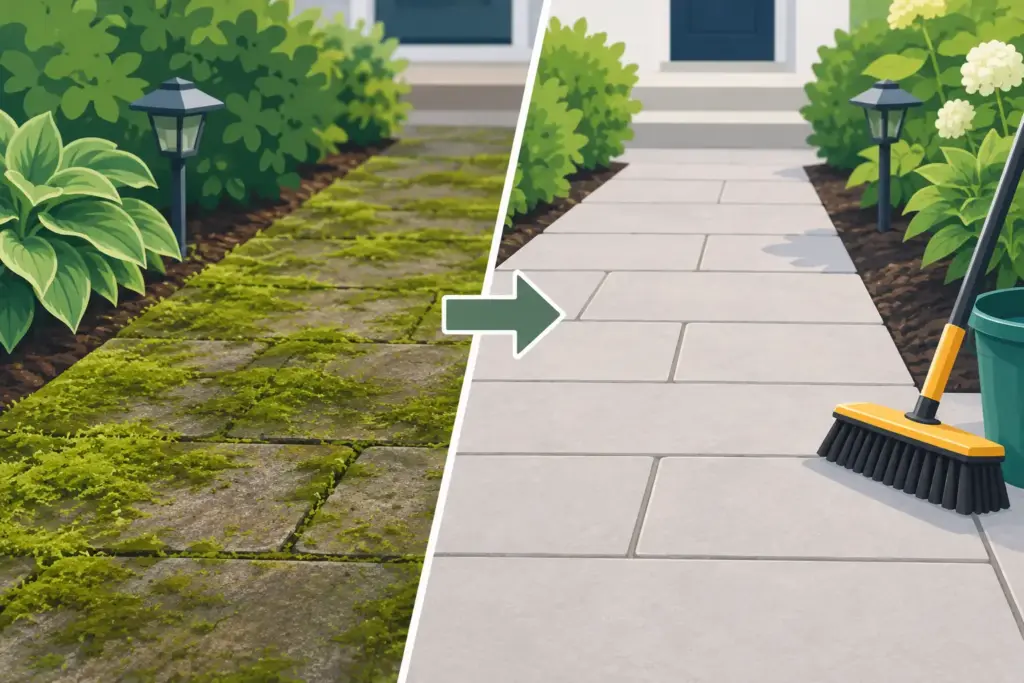

A green walkway can make a well-kept property look neglected fast. More importantly, moss holds moisture and creates a slick surface underfoot, especially after rain, morning dew, or a thaw. Knowing how to eliminate mossy walkways is about more than improving curb appeal. It is a practical way to make the route to your door, garage, business, or rental units safer.
In Western Maine and nearby New Hampshire, shaded walkways often stay damp long enough for moss, algae, mildew, and organic buildup to take hold. The right cleaning method can remove that growth without needlessly damaging concrete, pavers, brick, or nearby landscaping. The key is treating both the visible green buildup and the conditions that allow it to return.
Why moss grows on walkways
Moss does not need soil to spread. It settles into pores, joints, cracks, and rough surfaces where moisture lingers. A walkway under trees, beside a north-facing wall, or near a downspout is especially likely to develop moss because it receives less sun and stays wet longer.
Leaves, pine needles, dirt, and pollen make the problem worse. That organic debris traps moisture against the surface and gives moss a place to establish itself. On paver walkways, sand or soil in the joints can also hold water and encourage growth.
Moss is not always the only issue. What looks like moss may include algae or mildew, which can make a walkway slippery even before it becomes visibly green. A surface that feels slick, looks black in spots, or stays damp long after a rain needs attention.
How to eliminate mossy walkways safely
Start by clearing the surface. Sweep away leaves, needles, loose dirt, and other debris so the cleaning solution and water can reach the growth underneath. Pay attention to the edges of the walkway and the joints between pavers, where buildup tends to collect.
For a small, lightly affected area, a stiff outdoor brush and a cleaner suited to the walkway material may be enough. Follow the product directions, protect nearby plants, and rinse thoroughly. Avoid relying on plain water alone. Brushing can remove the top layer of moss, but spores and staining may remain in the surface pores.
For established growth, professional exterior cleaning is often the better option. The correct approach depends on the material, its age, the depth of staining, and whether the surface has loose mortar, chipped edges, or unstable pavers. Concrete may handle a different cleaning process than brick or natural stone. There is no one-pressure-setting answer that fits every walkway.
A trained pressure washing professional can remove moss, algae, dirt, and discoloration while adjusting the method for the surface. Too much pressure can scar concrete, strip joint sand from pavers, loosen older mortar, or leave visible cleaning lines. Too little pressure may leave the growth behind. Pressure Washing Done Right means choosing the method that cleans thoroughly without creating a new repair problem.
Do not use harsh shortcuts
It is tempting to pour bleach, vinegar, or a heavy-duty chemical over a green walkway and call it done. Those shortcuts can create trouble. Strong cleaners may harm grass and shrubs, discolor certain surfaces, or run into drains. Vinegar is also not a dependable answer for heavy moss, and repeated use can affect nearby soil and plants.
Wire brushes, metal scrapers, and excessive pressure can be equally damaging. They may remove the green color quickly, but they can roughen the surface or damage paver joints. A roughened walkway can actually collect more dirt and moisture over time.
If you choose to use a cleaning product yourself, use one labeled for your specific walkway material and take runoff seriously. Keep children and pets away until the surface is fully rinsed and dry. When the walkway is broad, heavily stained, or close to landscaping, hiring a professional is usually the safer and more efficient choice.
Clean the cause, not just the surface
A clean walkway can turn green again within months if drainage and shade problems are left alone. After the moss is removed, look for the reason that area stays wet.
Downspouts should carry water away from the walkway rather than emptying beside it. Gutters that overflow can repeatedly soak the same path and feed moss below. Clearing gutters and correcting drainage can make a noticeable difference in how long the cleaning lasts.
Trim back low branches or dense shrubs where practical. You do not need to turn a shaded yard into a sunny one, but increasing airflow and allowing more light onto the walkway helps it dry sooner. Rake leaves and pine needles regularly during the fall and after storms. This simple maintenance step prevents a damp layer of debris from sitting on the surface all season.
For paver walkways, check the joints after cleaning. If joint material has washed out over time, it may need to be replaced to keep pavers stable and reduce places where moss can settle. A sunken or uneven paver can also hold water, so it is worth addressing before it becomes a trip hazard.
When pressure washing is the right choice
Pressure washing is a strong option when moss has spread across a concrete path, built up around entryways, or left dark stains after the green growth is gone. It can restore a cleaner, more uniform appearance and remove slippery buildup that a quick scrub will not reach.
That said, pressure washing is not automatically the best method for every walkway. Older brick, soft stone, cracked concrete, and loose pavers require more care. In some cases, a lower-pressure treatment combined with the right cleaning solution is the better approach. A professional should assess the surface before starting, rather than using the same equipment setting on every material.
Commercial properties and multi-unit buildings should be especially proactive. Mossy sidewalks near entrances, parking areas, mailboxes, and common spaces can affect first impressions and create an avoidable slip risk for customers, tenants, and visitors. Routine exterior cleaning helps keep those high-traffic areas presentable and easier to maintain.
How often should you clean a mossy walkway?
It depends on the location. A sunny concrete walkway with good drainage may only need a thorough cleaning every year or two. A shaded path beneath trees, near a roof runoff area, or beside a damp foundation may need attention once or twice a year.
The best time to schedule cleaning is before moss becomes thick and slippery. In Maine, spring is a common time to address winter grime and moisture buildup. A fall cleaning can also help remove leaves, needles, and organic stains before snow and ice arrive. Keeping up with smaller maintenance needs is easier than waiting until the entire walkway turns green.
Watch for early warning signs: dark patches that do not dry out, a green haze along edges, weeds or moss in paver joints, and a surface that feels slick when wet. Acting at that stage can reduce the amount of cleaning needed later.
Protect your walkway after cleaning
Once the walkway is clean, keep it that way with a few practical habits. Sweep debris often, keep downspouts directed away from the path, and remove leaves before they become a wet mat. If you have a heavily shaded area, a simple seasonal inspection after long wet periods can prevent moss from getting established.
Sealing may be worth considering for certain concrete or paver surfaces, but it is not a cure-all. The right sealer can help limit moisture penetration and make future cleaning easier. The wrong product, or an application over a dirty or damp surface, can leave an uneven finish or trap problems underneath. Surface type and condition matter, so it is wise to get advice before sealing.
A walkway should welcome people to your property, not make them watch every step. If moss keeps returning or the surface needs more than a quick scrub, Western Maine Pressure Washing can provide a straightforward assessment and a free estimate. A properly cleaned path, paired with better drainage and regular upkeep, gives your home or business a safer, cleaner entrance through every season.