
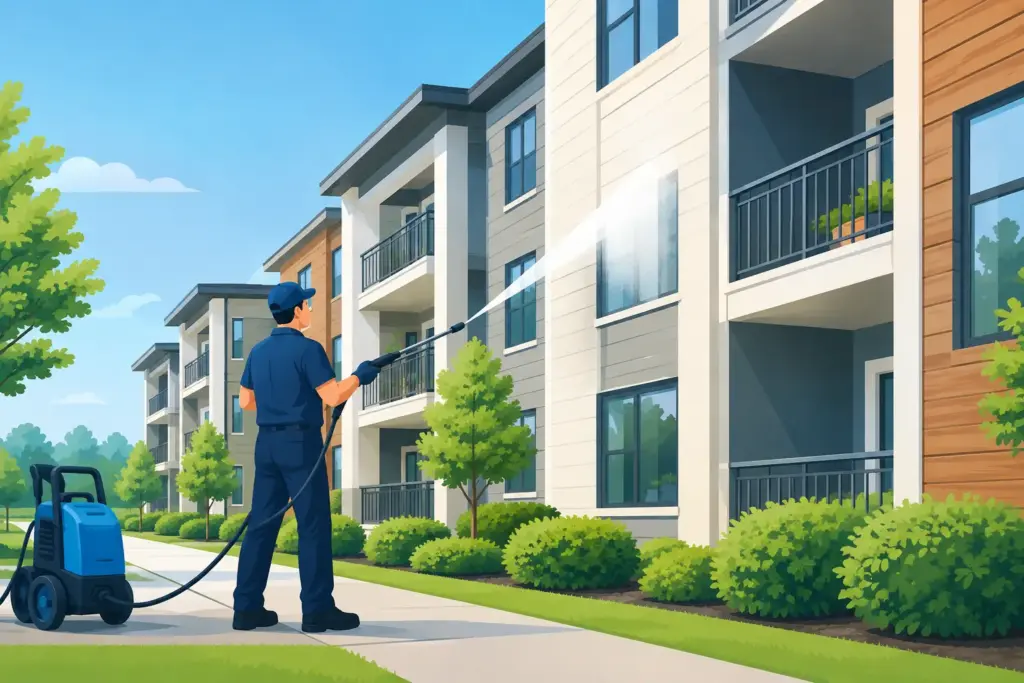

A multi-unit property can look neglected long before there is a major repair issue. Green algae on siding, dark roof streaks, stained walkways, dirty windows, and overflowing gutters all affect how tenants, visitors, and prospective renters see the property. This multi unit exterior cleaning guide gives owners and managers a practical way to plan the work, protect building materials, and keep the property looking like it is cared for.
Start With the Full Property, Not One Dirty Spot
Cleaning one visibly stained wall may improve the immediate problem, but multi-unit maintenance works best when the entire property is assessed first. A building’s exterior systems affect one another. Clogged gutters can leave dirty runoff on siding. Shade and poor drainage can encourage algae along lower walls and walkways. A roof with moss or dark growth may need attention before runoff carries debris into gutters and downspouts.
Walk the property with a simple goal: identify what is affecting appearance, safety, drainage, or material condition. Look at each side of every building, common areas, entrances, decks, stairways, parking edges, dumpster areas, and utility-access paths. The dirtiest areas often tell you where water, shade, traffic, or landscaping is creating a repeat problem.
For a useful service estimate, document the number of buildings, stories, units, exterior materials, access limitations, and areas that require special care. Photos are helpful, especially when you manage the property from off-site. Good planning makes it easier to schedule the right scope of work rather than calling for a quick cleanup that misses half the property.
Prioritize Safety, Drainage, and First Impressions
Not every exterior cleaning task has the same urgency. Property owners should address safety concerns and moisture-related buildup before focusing only on cosmetic stains. Slippery green growth on walkways, stairs, ramps, and pool-side surfaces deserves quick attention. So do gutters that are overflowing, downspouts that discharge too close to foundations, and roofs with visible organic growth.
Once those concerns are handled, focus on the places people see and use every day. Entrances, sidewalks, first-floor siding, railings, windows, and shared decks have an outsized effect on curb appeal. Clean common areas signal that management is attentive. That can help tenant satisfaction, support leasing efforts, and make the property more presentable for inspections or showings.
A practical order of priority is:
- Slippery walkways, steps, ramps, and heavily used common areas
- Clogged gutters, downspouts, and drainage trouble spots
- Roof growth, algae-stained siding, and exterior mold or mildew
- Entryways, windows, decks, railings, and other high-visibility surfaces
The right order can vary. A small complex preparing for new tenants may put entrances and windows first. An older property surrounded by trees may need gutter and roof cleaning at the top of the list.
Use the Right Cleaning Method for Each Surface
“Pressure washing” is often used as a catch-all term, but a professional exterior cleaning plan should match the method to the surface. More pressure is not always better. Vinyl siding, painted wood, roof shingles, window trim, and certain composite materials can be damaged by an aggressive approach. The goal is to remove dirt, algae, mold, mildew, and staining without creating a new maintenance issue.
House washing commonly uses a lower-pressure approach designed for siding and trim. This allows cleaning solutions and controlled rinsing to do the work rather than blasting the surface. It is especially useful where algae and discoloration have built up on vinyl, painted surfaces, or shaded exterior walls.
Concrete walks, curbs, patios, and durable masonry can often handle more direct cleaning. Even then, results depend on the condition of the surface, the type of stain, and whether loose material, cracked concrete, or failing sealant is present. A professional should adjust the process around those conditions.
Roofs require their own approach. Roof cleaning should not involve high pressure on shingles. Low-pressure roof cleaning targets the organic growth that creates dark streaks and holds moisture, helping restore appearance without stripping granules or damaging roofing materials. For multi-unit buildings, that distinction matters. A roof mistake can become an expensive problem quickly.
Plan Around Tenants and Daily Operations
Exterior cleaning is easier when residents know what to expect. A few clear notices can prevent avoidable complaints, blocked access, or missed preparation. Let tenants know which buildings and areas will be cleaned, the expected date and work hours, whether vehicles need to be moved, and whether patios or balconies should be cleared.
Think through the routine of the property. If a walkway serves a busy entrance, schedule it when foot traffic is lower or arrange a safe alternate route. If cleaning is needed near a daycare, office, restaurant, or retail tenant, coordination becomes even more important. Water, hoses, equipment, and temporary access restrictions should not surprise people as they arrive for work or return home.
Good communication also protects the cleaning result. Residents can bring in cushions, rugs, decorations, and other belongings before exterior work begins. Property staff can unlock gates, identify water access, and point out known drainage issues. These small steps keep the project moving and reduce the chance of delays.
Do Not Treat Gutters, Roofs, and Siding as Separate Problems
On a multi-unit property, exterior cleaning is most effective when related services are planned together. For example, cleaning dirty siding while leaving overflowing gutters above it may only provide a short-lived improvement. The next heavy rain can send dark runoff back down the wall.
The same is true around decks and common-area stairs. If nearby trees drop leaves, needles, or seed pods, a clean deck can quickly look dirty again unless the surrounding gutters, roof valleys, and drainage paths are maintained. This does not mean every service must happen on the same day. It means the owner or manager should understand how one neglected area affects another.
An all-in-one exterior cleaning visit can often reduce coordination headaches. Instead of calling separate vendors for house washing, gutter cleaning, deck cleaning, windows, roof treatment, and common-area pressure washing, property managers can build a coordinated plan around the property’s actual needs.
Build a Schedule Based on Conditions, Not Guesswork
Maine and nearby New Hampshire communities deal with long winters, spring thaw, tree debris, humidity, and shaded areas that stay damp. That means a one-size-fits-all schedule rarely works. A sunny building with minimal tree cover may need less frequent washing than a complex bordered by woods or located near water.
For many properties, a spring inspection is a sensible starting point. Winter can leave sand, salt residue, branches, gutter debris, and staining behind. Spring cleaning prepares the property for the busy season and gives management time to identify repairs before they grow.
Midseason touch-ups may be needed for high-traffic walkways, entrances, dumpster pads, or buildings with persistent algae. Fall is often the right time to clear gutters after leaves drop, especially where trees overhang roofs. Roof growth, siding discoloration, and dirty windows should be evaluated based on what is visible, not simply a calendar reminder.
Keeping brief maintenance notes helps over time. Record which buildings develop algae first, where gutters clog, which walkways stay slippery, and where water pools after rain. After a year or two, those records make budgeting and scheduling much more accurate.
Choose a Contractor Who Can Handle the Scope
Multi-unit work requires more than cleaning equipment. It requires planning, safe site practices, reliable communication, and a clear understanding of what different exterior materials need. Before scheduling service, make sure the contractor has enough detail to quote the property accurately. A vague price without a walkthrough or clear scope can lead to surprises later.
Ask how the crew will protect landscaping, manage runoff, work around residents, and select the right process for siding, decks, roofs, and walkways. Confirm what areas are included and whether windows, gutters, common spaces, or detached structures are part of the estimate. The cheapest option is not always the best value if it leaves problem areas untouched or uses the wrong method on sensitive surfaces.
Western Maine Pressure Washing helps property owners and managers keep exterior maintenance straightforward with professional cleaning options for multi-unit buildings, shared spaces, roofs, gutters, decks, windows, and more. Local, dependable service matters when the condition of the whole property is on the line.
A clean exterior is not just a finishing touch for a multi-unit property. It is a visible sign that the building is being watched, maintained, and respected. Start with the areas creating the biggest safety or drainage concern, then build a practical cleaning plan that keeps the entire property looking cared for through every season.