

Painted siding can look tired long before the paint has actually failed. In Maine and nearby New Hampshire, pollen, road dust, mildew, algae, and damp-weather staining can cling to a home through the seasons. Knowing how to wash painted siding correctly helps restore a clean appearance without stripping paint, forcing water behind the siding, or leaving streaks behind.
The key is not more pressure. It is using the right cleaner, the right amount of water pressure, and a careful process that matches the condition of the paint and the type of siding on your home.
Check the Paint Before You Start
Washing is a good maintenance step for sound painted siding. It is not a fix for peeling paint, widespread cracking, chalking, or soft, rotted wood. Walk around the house first and look closely at the siding, trim, caulking, and window frames.
If paint flakes off when you rub it with a dry hand, use caution. Light chalking is common on older painted surfaces, but heavy chalking means the finish is breaking down. Aggressive scrubbing or high water pressure can make that problem worse. In that case, cleaning may still be needed before repainting, but the work should be planned as surface preparation rather than routine house washing.
Also check for loose boards, open seams, damaged caulk, and missing siding pieces. Water should never be sprayed directly into gaps, upward beneath lap siding, or into vents and electrical fixtures.
What You Need to Wash Painted Siding
For most homeowners, a garden hose, a soft-bristle brush, a bucket, and a siding-safe cleaning solution are enough for small areas. A pump sprayer can make it easier to apply cleaner evenly without soaking the ground or nearby landscaping.
Choose a cleaner made for exterior siding or use a mild soap solution. When algae, mildew, or dark organic staining is present, a properly diluted exterior cleaner designed for that growth can work better than soap alone. Always follow the product label, and test the solution on a small, less-visible area first.
Protect what is around the house before you begin. Wet shrubs, flowers, and grass thoroughly with plain water, and cover delicate plants if needed. Close windows and doors, move outdoor furniture, and turn off exterior power where appropriate. If you have a wood deck, natural stone, or unfinished surfaces below the siding, rinse them often so cleaner does not sit on them.
How to Wash Painted Siding Safely
Start on a cloudy day if possible. Direct summer sun can dry cleaning solution too quickly, which may leave marks or make rinsing harder. Avoid washing when freezing temperatures are expected, since trapped moisture can cause problems overnight.
Work in manageable sections, usually no wider than you can clean and rinse before the solution dries. Begin by wetting the siding from the bottom up. This may feel backward, but it helps prevent dirty runoff from creating streaks on dry siding.
Apply your cleaning solution according to its directions and allow it to sit briefly. Do not let it dry on the surface. For stubborn grime, lightly brush the siding with a soft brush using gentle, overlapping strokes. The goal is to loosen buildup, not scrub through the paint.
Rinse thoroughly from the top down. This carries the dirty water away cleanly and helps you spot any missed areas. Keep the hose stream angled downward, especially around lap siding, trim, window casings, and door frames. A slow, complete rinse matters just as much as the cleaning step.
Pay Extra Attention to Shaded Sides
North-facing walls, areas behind trees, and siding near gutters or downspouts often hold moisture longer. Those areas are more likely to develop green algae, black mildew, or general discoloration.
If the staining returns quickly after cleaning, look for the cause. Overhanging branches, poor drainage, overflowing gutters, and blocked downspouts can keep siding wet and encourage growth. Trimming vegetation back and keeping gutters clear can help the clean finish last longer.
Can You Pressure Wash Painted Siding?
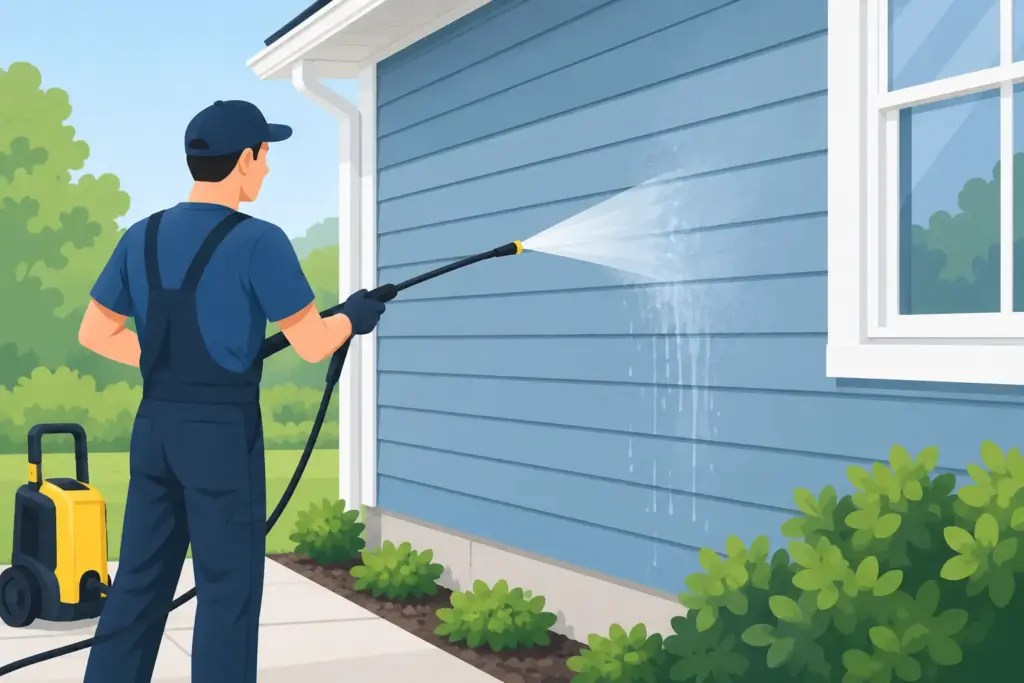
You can, but this is where many homes get damaged. A pressure washer can remove surface dirt quickly, yet too much pressure can strip paint, dent softer siding, damage window seals, and drive water behind the exterior. The risk is especially high on older wood siding, fiber cement with worn paint, or homes with loose caulking and trim.
For painted siding, low pressure and the correct cleaning solution are usually safer than trying to blast stains away. Professional house washing commonly relies on a low-pressure application and rinse process. The cleaner does the work on algae and grime, while the water gently carries it away.
If you choose to use a pressure washer yourself, keep the pressure low, use a wide fan tip, and stay well back from the siding. Never concentrate the stream in one spot. Do not spray upward under horizontal siding, and do not aim directly at windows, vents, light fixtures, or damaged areas.
A small test patch can tell you a lot. If paint begins to lift, the surface looks fuzzy, or water pushes into seams, stop. That is a sign the home needs a gentler method or a closer inspection before proceeding.
Common Mistakes That Damage Painted Siding
The most common mistake is assuming that a dirtier wall needs more pressure. In reality, stains often need more dwell time from the right cleaner, not a harder blast of water. Strong pressure may make a wall look clean for a moment while creating costly paint and moisture problems underneath.
Another mistake is using a stiff brush, abrasive pad, or harsh household cleaner. These can scratch the finish, leave uneven dull spots, or discolor painted surfaces. Bleach-heavy mixtures can also harm landscaping, metal fixtures, and surrounding materials when used incorrectly.
Homeowners also sometimes skip the rinse. Any cleaner left behind can attract dirt, create residue, or affect the look of the paint as it dries. Rinse until the runoff is clear, then check the wall from a few steps back after it has dried.
Finally, do not wash a home when paint is already failing. Cleaning does not cause worn paint to fail, but it can reveal how much of the finish has already lost its bond. That information is useful, especially if repainting is coming soon.
When Professional House Washing Makes Sense
A do-it-yourself wash can work well for a small, lightly soiled section of siding. A professional is often the better choice when the home has extensive algae, multiple stories, delicate painted surfaces, stubborn staining, or hard-to-reach areas around rooflines and dormers.
Professional cleaning also makes sense when you are not sure what kind of stain you are dealing with. Black streaks may be mildew or runoff staining. Green growth may be algae. Rust, oxidation, spider webs, and airborne pollution each respond differently to cleaning. Using the wrong product or method can waste time and leave a patchy result.
Western Maine Pressure Washing uses an exterior cleaning approach chosen for the material and condition of each property. For painted siding, that means focusing on a safe, thorough wash that removes buildup without treating your home like a concrete driveway. Local. Trusted. Family Owned.
Keep Siding Cleaner Between Washes
Most painted siding benefits from a yearly inspection and cleaning as needed. Homes surrounded by trees, located near busy roads, or exposed to persistent shade may need attention more often. A quick rinse of low areas during pollen season can reduce buildup, but routine maintenance should never replace a proper wash when organic growth is present.
Keep shrubs and tree limbs from resting against the house. Make sure gutters move water away from the siding, and correct downspout leaks promptly. These small jobs reduce the moisture and debris that make painted exteriors look neglected.
A clean exterior does more than improve curb appeal. It lets you see the actual condition of your paint, caulk, trim, and siding before minor issues turn into larger repairs. When the job feels too big, the staining is persistent, or the paint needs a gentler touch, getting a free professional estimate is a practical way to protect the home you have worked hard to maintain.