
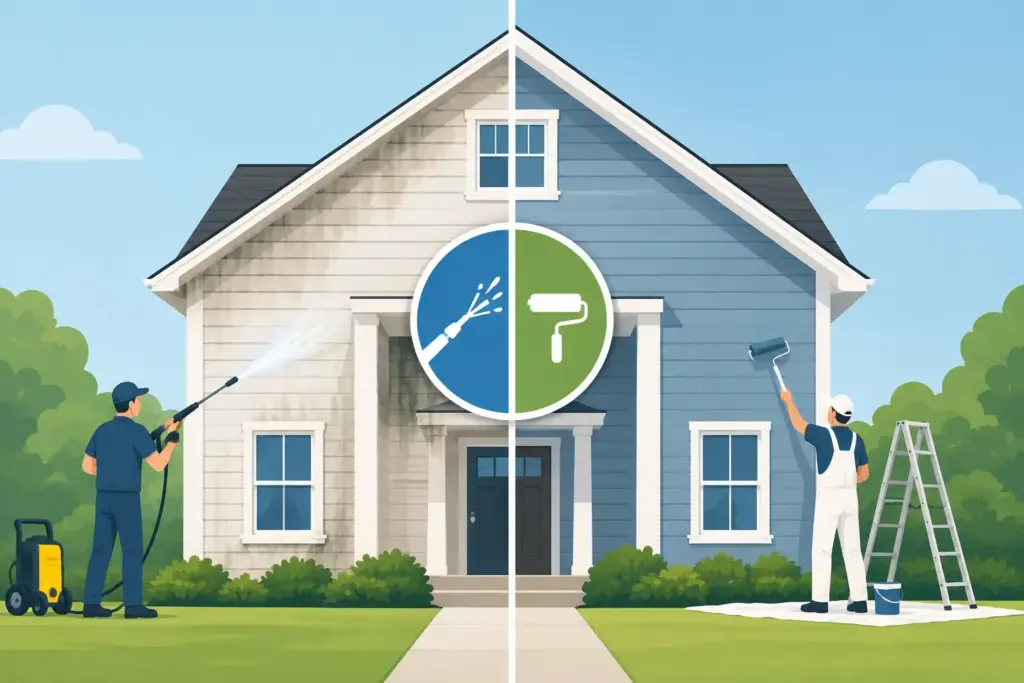

A green film on vinyl siding or black streaks across painted trim can make a house look ready for a paint job long before it actually is. The real question in house washing versus repainting is whether you are looking at surface buildup or a failing paint system. Those are two very different problems, and choosing the right fix can save a homeowner a substantial amount of money.
In Maine and nearby New Hampshire, homes deal with long damp seasons, tree cover, pollen, road dust, and winter grime. Algae, mildew, and staining can build up quickly, especially on shaded sides of the house. A professional wash often brings back the clean color hiding underneath. But when paint has lost its bond with the siding, cleaning is not a substitute for repainting.
House Washing Versus Repainting: Start With the Cause
Before committing to paint, look closely at what is on the surface. Dirt, algae, mold, mildew, cobwebs, and oxidation can all dull a home’s appearance. On light-colored siding, green or black growth may look like permanent discoloration. On painted wood, grime can make a sound paint job look chalky and tired.
House washing removes buildup from the exterior so you can see the true condition of the siding and trim. This is why cleaning is often the smart first step. It gives you a clearer answer before you spend money on paint, preparation, and labor.
Repainting is the better answer when the coating itself has failed. Peeling, cracking, blistering, bare wood, widespread fading, and areas where paint rubs off easily are signs that the house needs more than cleaning. A wash may improve the appearance temporarily, but it cannot restore paint that no longer protects the surface underneath.
When discoloration is really just buildup
If the color looks uneven but the surface is intact, washing may be all you need. Algae is especially common on north-facing walls, under rooflines, near shrubs, and in areas that stay damp after rain. Pollen and dust can settle into textured vinyl or painted clapboards, leaving the exterior gray or yellowed.
A proper house wash is designed to remove that buildup without treating every material the same way. Delicate siding, painted surfaces, and trim need a controlled approach. More pressure is not always better. The goal is a clean exterior, not damaged siding, forced water, or stripped paint.
After cleaning, many homeowners are surprised by how much color returns. The siding may not be new, but it can look dramatically brighter and better cared for.
When the paint has reached the end of its life
Paint does more than add color. On wood surfaces, it helps protect against moisture, sun exposure, and general weathering. Once it begins to peel or crack, water can reach the material below. That can lead to rot, soft wood, and more costly repairs if it is ignored.
Repainting should move to the top of the list when you see bare areas, lifted edges, bubbling paint, deep cracks, or soft spots in trim. If a painted surface looks clean after washing but still appears patchy because the coating has faded unevenly or worn away, paint is likely the next step.
Cleaning can still be part of that process. A painter needs a clean surface before preparation and painting begin. Washing first removes dirt, organic growth, and loose debris that can interfere with paint adhesion. Just allow enough drying time before any paint work starts.
The Cost Difference Is Bigger Than It Looks
Repainting a home is a major maintenance project. It may involve washing, scraping, sanding, repairs, primer, paint, ladders, and several days of labor. It is worthwhile when the exterior coating has failed, but it is not something to schedule simply because the house looks dirty.
House washing is generally a more affordable maintenance service and can extend the time between paint jobs. Removing algae, mildew, and grime helps keep a painted exterior looking cared for. It also lets you catch developing problems early, before a small peeling area becomes a larger repair.
That does not mean washing can replace every paint project. Think of it as regular exterior maintenance, much like cleaning gutters or clearing debris from a roof. It protects appearance and helps you make better repair decisions, but it cannot reverse material damage.
For property owners preparing to sell, wash first whenever the paint is still sound. A clean exterior can make a strong first impression without taking on an unnecessary repainting expense. The same is true for rental properties, multi-unit buildings, and storefronts where curb appeal affects how tenants, customers, and visitors view the property.
How to Tell What Your Home Needs
A quick visual check can point you in the right direction. Look at the siding on a dry day, not right after rain when moisture can hide problems. Pay special attention to shaded walls, window trim, porch rails, fascia boards, and the lower sections of siding where splashback collects.
If you see a film that appears to sit on top of the surface, or stains that follow damp and shaded areas, cleaning is a good place to start. If the paint is physically separating from the surface, exposing wood, or showing cracking throughout, plan for repairs and repainting.
Chalking can be less obvious. Run a dark cloth or finger across a painted area. A light powder on the surface may indicate that the paint is breaking down from age and sun exposure. A gentle professional wash may remove some chalking, but heavy or recurring chalk is often a sign the coating is nearing the end of its service life.
Vinyl siding requires a slightly different evaluation. Vinyl is not painted in the same way as wood trim, but it can collect organic growth and stains that make it look old. If the panels are intact and the color returns after washing, repainting is usually unnecessary. If vinyl is warped, cracked, or severely faded, cleaning may improve it but will not correct the underlying material issue.
Why DIY Washing Can Create More Work
Homeowners often reach for a pressure washer when siding looks dirty. The concern is not the desire to clean – it is using too much pressure, the wrong angle, or the wrong cleaning method. Water forced behind siding can cause moisture problems. High pressure can damage wood fibers, scar vinyl, loosen trim, or remove already weakened paint.
A professional exterior cleaner assesses the material and buildup before choosing the method. Low-pressure cleaning and appropriate solutions can remove algae and grime effectively while treating the home with care. Roofs, painted surfaces, decks, and siding each call for a different approach.
Western Maine Pressure Washing helps homeowners and property managers make that call without turning a cleaning project into a repair project. The right service should leave the exterior cleaner, clearer, and easier to evaluate.
A Simple Maintenance Plan That Makes Sense
For many homes, an annual or routine house wash is enough to stay ahead of visible growth and seasonal dirt. Homes surrounded by trees, located near busy roads, or shaded for much of the day may need attention more often. Waiting until the siding is deeply stained can make the job harder and can leave the home looking neglected in the meantime.
Pair house washing with other exterior care when needed. Gutter cleaning helps water move away from the house. Low-pressure roof cleaning addresses roof growths without harsh treatment. Deck cleaning can improve the appearance and condition of outdoor living spaces. Taken together, these services help protect the exterior surfaces you have already invested in.
If repainting is on your list, schedule washing as part of the preparation plan. If repainting is not yet necessary, washing can help keep it off the list a little longer. A free exterior cleaning quote is a practical place to start when you are unsure which path your home needs.