
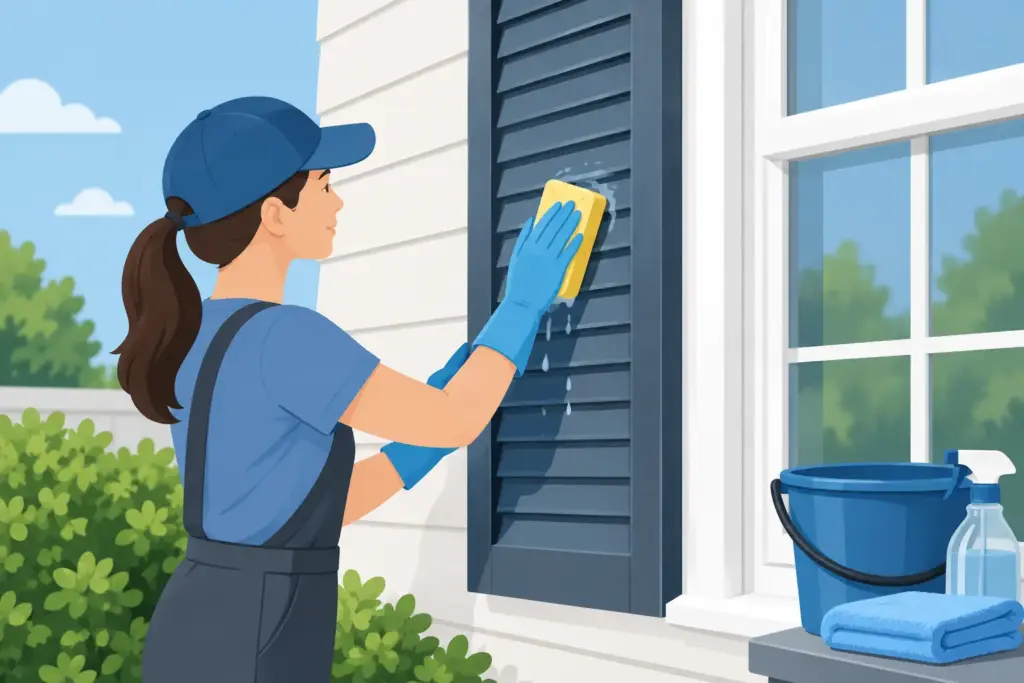

Green streaks around shutter louvers can make otherwise clean siding look neglected fast. Knowing how to wash vinyl shutters the right way helps remove dirt, pollen, mildew, and algae without fading the color, forcing water behind the siding, or damaging older plastic. The good news is that most vinyl shutters clean up well with a gentle approach.
Start With the Right Cleaning Method
Vinyl shutters are made to handle weather, but they are not built for aggressive scrubbing or close-range pressure washing. Sun exposure can make older shutters brittle, especially on the south and west sides of a home. A stiff brush, harsh solvent, or concentrated pressure stream can leave scratches, strip the finish, or crack thin louvers.
For routine cleaning, a garden hose, mild soap, soft brush, and rinse water are usually enough. If you are dealing with heavier green or black growth, use a cleaner made for exterior surfaces and follow its directions carefully. The goal is to let the cleaning solution do the work rather than trying to blast the buildup away.
A cloudy day is ideal. Direct, hot sun can dry soap or cleaning solution before you have time to rinse it, leaving streaks or residue on dark shutters. If a sunny day is your only option, clean one small section at a time and keep it wet.
What You Need to Wash Vinyl Shutters
Gather your supplies before you begin so you are not leaving cleaning solution on the shutters while you search for a hose attachment. You will need a hose with a gentle spray nozzle, a bucket, mild dish soap or an exterior-safe cleaner, a soft-bristle brush, and a microfiber cloth or soft sponge.
For mildew or algae, choose a product labeled for vinyl siding or exterior surfaces. Avoid abrasive powders, strong degreasers, paint thinner, acetone, and cleaners that are not intended for exterior vinyl. Bleach may seem like the fastest answer to green growth, but it can discolor surrounding materials, harm landscaping, and leave an uneven finish if it is mixed or applied incorrectly.
Protect nearby plants by wetting them with plain water before you apply any cleaning solution. Cover delicate flowers if needed, but do not wrap plants so tightly that they overheat. A quick rinse after cleaning gives them another layer of protection.
How to Wash Vinyl Shutters Step by Step
Rinse Loose Dirt First
Start at the top of the shutters and rinse downward with a regular garden-hose setting. This removes loose dust, cobwebs, pollen, and grit that could scratch the surface when you brush. Do not aim water up under the shutter or directly into gaps around the mounting hardware.
Pay attention to the louvers, outer edges, and the area where the shutter meets the siding. Those spots hold moisture and organic buildup longer than the broad, exposed face of the shutter.
Apply a Mild Cleaning Solution
Mix a small amount of mild soap with water in a bucket, or apply your exterior-safe cleaning product as directed on the label. Work on one shutter or one pair at a time. Applying solution to the entire house at once creates unnecessary drying and makes rinsing harder to manage.
Let the solution sit briefly so it can loosen grime. It should not dry on the surface. If you see it beginning to dry, lightly mist it with water or move directly to brushing and rinsing.
Brush Gently Along the Louvers
Use a soft brush or sponge to clean from top to bottom. Brush in the direction of the louvers and use light, steady pressure. The corners and recessed areas may need a second pass, but hard scrubbing is rarely necessary when the cleaner has had time to work.
If dark spotting remains after the first wash, it may be mildew, algae, or staining that has settled into the textured vinyl. Reapply cleaner and give it another gentle scrub. Repeated mild cleaning is safer than escalating immediately to a stronger chemical.
Rinse Completely
Rinse each shutter thoroughly from the top down. Soap residue can attract dirt, create dull-looking patches, and leave streaking on darker colors. Check the lower louvers and bottom edge closely, since they are easy to miss.
Let the shutters air dry, then inspect them from a few steps back. Some dirt becomes more visible once the surface is dry. A final wipe with a microfiber cloth can help remove any remaining water spots, particularly on black, charcoal, or dark green shutters.
Can You Pressure Wash Vinyl Shutters?
You can, but it takes care and is not always the best choice for a homeowner. High pressure used too close to vinyl shutters can crack brittle material, bend louvers, strip paint from nearby trim, or drive water behind siding. The risk is higher on older shutters, shutters that already feel loose, and homes with visible gaps around mounting points.
Professional exterior cleaners often use a low-pressure washing method with the right detergent rather than relying on force. That approach is especially useful when shutters are part of a larger house washing project and have widespread algae, mildew, or dirt buildup.
If you use a pressure washer yourself, keep the pressure low, stand well back, and use a wide fan tip. Never concentrate the spray in one spot, and do not spray upward into louvers or siding seams. Test an inconspicuous area first. If the shutters flex, the finish looks uneven, or water is getting behind them, stop and switch to a hose-and-brush method.
Remove Mildew and Algae Without Creating a Bigger Problem
In Maine and nearby New Hampshire communities, damp weather, tree cover, and shaded sides of a home can create ideal conditions for algae and mildew. Shutters beneath rooflines, near gutters, or beside dense landscaping tend to show growth first. Cleaning the shutters improves curb appeal, but it also helps you spot the moisture conditions causing the recurring problem.
Look for overflowing gutters, downspouts that discharge too close to the house, branches blocking sunlight, or areas where the siding stays damp after rain. Addressing those issues can slow down future growth. It will not eliminate seasonal pollen or road dust, but it can reduce the green staining that returns every year.
Be careful with homemade cleaning mixtures. A solution that works on a small piece of patio furniture may not be appropriate around painted trim, window screens, gardens, or a large section of siding. When mildew is heavy across multiple exterior surfaces, a professional wash is often more consistent and safer for the property.
Common Mistakes to Avoid
The biggest mistake is treating vinyl shutters like concrete or a dirty driveway. More pressure is not better. Vinyl is a lighter material, and cleaning it too aggressively can turn a maintenance job into a replacement job.
Avoid using wire brushes, scouring pads, or gritty cleaners. Do not use hot water, which can distort vinyl in certain conditions. Skip oil-based products and solvent cleaners that can leave permanent marks or make the shutters look blotchy.
It is also wise not to ignore loose mounting hardware. If a shutter rattles, pulls away from the siding, or has visible cracks near the fasteners, clean it carefully by hand. Strong spray can worsen the problem. Washing may reveal fading or chalking that cleaning cannot fix, and that is a sign the shutter may be nearing the end of its service life.
When to Call for Professional Exterior Cleaning
A few shutters with dust and pollen are a manageable weekend task. It makes sense to call a professional when algae or mildew is spread across shutters, siding, trim, gutters, or roof edges, or when the shutters are high enough that ladder work becomes a safety concern.
Professional cleaning is also a practical choice before listing a home, after a long season of neglect, or when you want the shutters cleaned as part of a complete exterior refresh. Western Maine Pressure Washing uses the appropriate approach for the material and condition of each surface, helping homeowners clean up buildup without taking unnecessary risks with their siding, landscaping, or shutters.
Clean vinyl shutters may be a small detail, but they frame windows, front entries, and the overall look of a home. A gentle wash once or twice a year keeps that detail working in your favor and makes the rest of the exterior look better cared for.