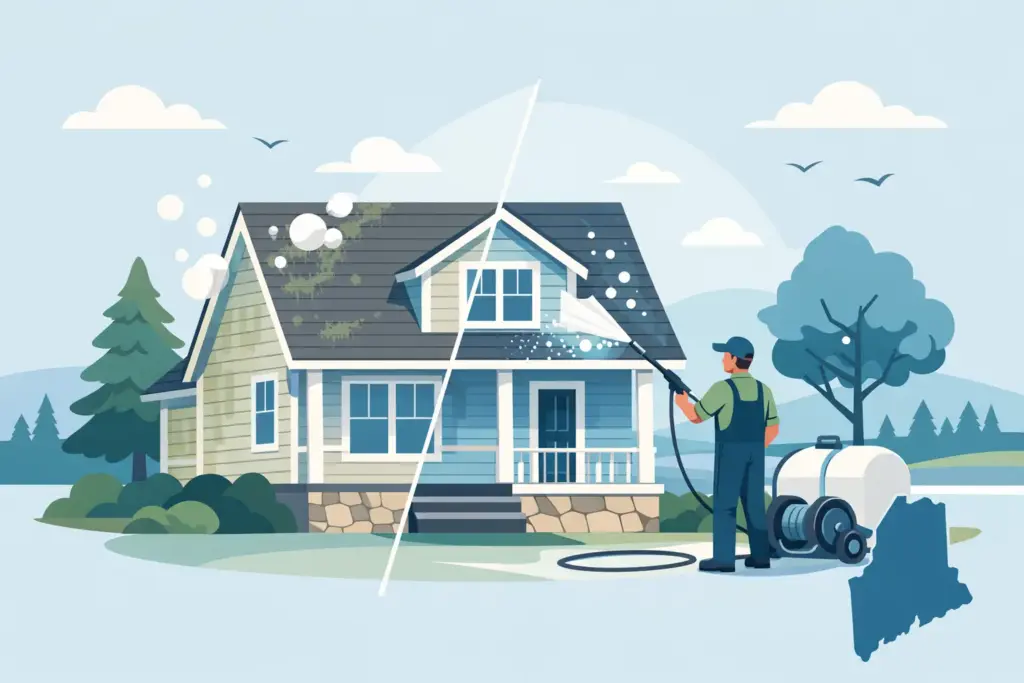

Green streaks on siding, black roof stains, and slippery growth on a deck can make a well-kept Maine property look neglected fast. Homeowners often ask, is soft washing safe before approving a cleaning service, especially when landscaping, pets, painted surfaces, and roofing are involved. The short answer is yes, when it is handled correctly by a trained exterior-cleaning professional who uses the right solution, dilution, application method, and rinse process for the surface.
Soft washing is not simply pressure washing at a lower setting. It is a cleaning method designed to remove organic growth such as algae, mold, mildew, moss, and lichen without relying on force that can damage delicate exterior materials. That makes it a practical choice for many homes, roofs, and commercial properties across Western Maine, Greater Portland, and nearby New Hampshire communities.
Is Soft Washing Safe for Siding and Roofs?
Soft washing can be safe for siding and roofs because it lets the cleaning solution do most of the work. Instead of blasting away stains with high water pressure, a technician applies a properly mixed cleaning solution at low pressure. The solution breaks down the algae, mold, mildew, and other growth causing the discoloration. The surface is then rinsed as needed, leaving it cleaner without the risk that aggressive pressure can create.
That difference matters. High pressure can force water behind vinyl siding, strip paint from wood, loosen mortar, damage window seals, and remove protective granules from asphalt shingles. A roof with dark streaks may look like it needs a powerful wash, but it usually needs the opposite. Low-pressure roof cleaning is the appropriate approach for treating roof growth while protecting the shingles underneath.
Still, safe does not mean every property gets the same treatment. The right method depends on the material, its age, its condition, the type of staining, and the surrounding landscape. A heavily weathered cedar surface, for example, requires a different process than vinyl siding. A roof with loose shingles or existing damage should be inspected carefully before cleaning. Professional judgment is what turns soft washing from a simple chemical application into responsible property care.
What Makes a Soft Wash Process Safe?
A safe job starts before any solution touches the building. The cleaning crew should identify the surface being cleaned, locate nearby plantings, check for open windows or exterior electrical concerns, and understand where runoff will go. Preparation is not an extra step. It is part of the work.
Most professional soft washing uses a cleaning solution that may include sodium hypochlorite, the active ingredient commonly found in bleach, along with surfactants that help the solution cling to and clean a surface. Used at the wrong strength or left on too long, that solution can harm plants, affect certain finishes, or create uneven results. Used at the correct dilution and managed carefully, it is highly effective against the biological growth that ordinary water alone often cannot remove.
Plant protection is one of the clearest signs of a careful contractor. Landscaping should be thoroughly wet before cleaning, monitored throughout the project, and rinsed again afterward. Fresh water dilutes any overspray and helps protect shrubs, grass, flowers, and foundation plantings. Crews should also control application to limit unnecessary mist and avoid applying solution on windy days when drift is harder to manage.
Windows, doors, fixtures, outlets, and other sensitive areas deserve attention as well. A professional will make sure windows are shut, protect or avoid delicate surfaces when necessary, and rinse exterior areas thoroughly. The goal is not just a bright-looking house. It is a clean house with its surrounding property treated with care.
Soft Washing Is Not the Right Choice for Every Surface
Soft washing is a useful tool, but no reputable company should claim it is the answer to every exterior-cleaning problem. Concrete, heavy equipment areas, thick mud, grease, and some hardscape stains may need conventional pressure washing, hot water cleaning, specialty products, or a combination of methods.
Decks are another example where the approach should be tailored. A deck covered in algae may benefit from a cleaning solution, but the wood species, existing stain, and condition of the boards all affect how it should be washed. Too much pressure can scar wood grain. Too strong a chemical mix can affect the finish. The best result comes from selecting the mildest effective method, not treating every deck like a driveway.
Some stains also need realistic expectations. Soft washing removes living growth and much of the discoloration it causes, but it cannot repair faded siding, replace missing roof granules, fix failing caulk, or erase permanent oxidation. Cleaning often reveals the true condition of a surface, which is useful for planning maintenance, but it is not a substitute for repairs.
Is Soft Washing Safe Around Children and Pets?
It can be, provided the work area is managed responsibly. Children and pets should stay indoors or away from the immediate cleaning area while the service is underway. Cleaning solution should not be handled, touched, or inhaled, and pets should not drink from puddles or wet landscaping during the job.
Once the exterior has been properly rinsed and the work is complete, normal use can resume. If you have a dog that uses a particular yard area or a child who plays near foundation plantings, mention it before work begins. Clear communication gives the crew a chance to take extra precautions around the spaces that matter most to your household.
The same common-sense approach applies to outdoor furniture, grills, play equipment, bird feeders, and vehicles. Move them when possible, or ask the contractor how they will be protected. A dependable exterior cleaner welcomes those questions because the details are what protect your property.
Why DIY Soft Washing Can Create Problems
The appeal of a do-it-yourself wash is understandable. A homeowner sees staining, buys a product, rents equipment, and hopes for a quick fix. The trouble is that soft washing involves more than spraying a cleaning mix onto a surface. Inaccurate mixing, poor application, lack of plant protection, and improper rinsing can lead to damaged vegetation, streaky siding, or surface discoloration.
Roof cleaning is where DIY work can become especially risky. Walking on a sloped roof creates a fall hazard, and using the wrong cleaner or too much pressure can shorten the life of shingles. Moss and lichen may not disappear the second they are treated either. A safe roof-cleaning process removes the growth safely and allows remaining material to release gradually, rather than scraping or blasting shingles to force an instant result.
There is also the question of diagnosing the stain. Not every dark mark is mold, and not every green patch needs the same treatment. Rust, oxidation, tree sap, irrigation stains, and embedded dirt can look similar from the ground. An experienced technician can determine whether soft washing is appropriate before applying a solution that may not address the real problem.
Choosing a Safe Soft Washing Company
Ask a few direct questions before scheduling service. Find out whether the company uses low pressure on siding and roofs, how it protects landscaping, and whether it adjusts its method for different materials. You should also ask whether the crew will inspect for existing damage and what results you can realistically expect.
Look for a local company that treats cleaning as maintenance, not just appearance work. Western Maine Pressure Washing approaches house washing and low-pressure roof cleaning with the goal of removing harmful buildup while respecting the surfaces that protect your home. A clean exterior can improve curb appeal, but it should also help you stay ahead of moisture-holding growth, clogged drainage areas, and the wear that comes from letting stains sit too long.
If your siding is streaked, your roof is showing dark growth, or your deck has become slippery, do not assume more pressure is the answer. Ask for a free estimate, point out the surfaces and landscaping you are concerned about, and choose a cleaning plan that protects the property you have worked hard to maintain.