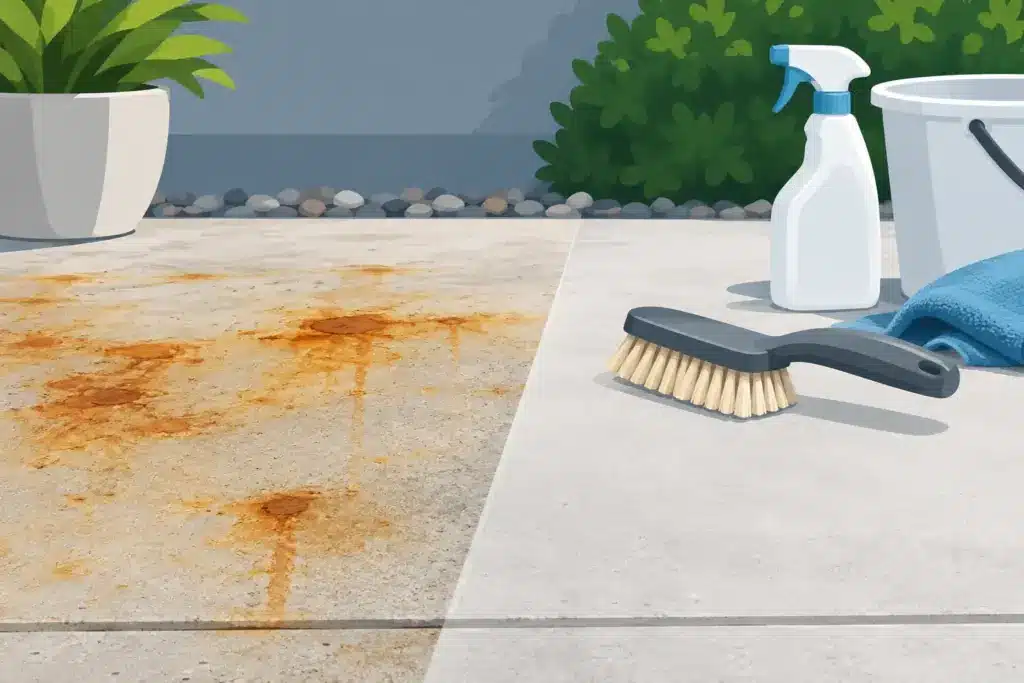

A rusty orange spot can make an otherwise clean driveway or patio look neglected fast. The good news is that you can often remove rust stains from concrete without replacing the slab or using harsh, damaging methods. The right approach depends on what caused the stain, how long it has been there, and whether the concrete is sealed, decorative, or plain gray.
Rust stains are different from ordinary dirt, mildew, or tire marks. They come from iron, and they need a cleaner designed to break down that mineral stain. Blasting the area with more pressure is rarely the answer. In some cases, it can roughen the surface, leave a noticeably cleaner patch, or damage nearby materials.
What Causes Rust Stains on Concrete?
Before treating the stain, look for the source. Rust commonly transfers to concrete from patio furniture, grill legs, metal planters, tools, old fasteners, leaking vehicles, and irrigation water with a high iron content. Fertilizer products can also leave orange-brown stains when they contain iron.
A stain caused by a rusty chair leg is usually a simple surface problem. A broad stain near a sprinkler head may return until the water issue is corrected. Rust showing through cracked or spalling concrete can be more serious. That may indicate corroding reinforcing steel or embedded metal below the surface, which calls for a concrete repair professional rather than a cleaning-only fix.
Move or protect the item creating the stain before you clean. Otherwise, the concrete may look better for a week and then develop the same orange outline all over again.
How to Remove Rust Stains From Concrete
Start with the least aggressive method that fits the stain. Fresh, light rust staining is easier to remove than years of buildup, so it is worth dealing with it as soon as you notice it.
Clean the area first
Sweep away grit, leaves, and loose dirt. Then rinse the concrete with a garden hose. This step will not remove the rust, but it gives you a clear view of the stain and keeps surface dirt from interfering with the cleaner.
Avoid applying rust remover to hot, sun-baked concrete if you can. A cool, shaded surface gives the product more even working time and reduces the chance of it drying before you can rinse it away.
Use a concrete-safe rust remover
For most homeowner jobs, use a rust remover specifically labeled for concrete, masonry, or pavers. Many effective products use oxalic acid or another acid-based formula that reacts with iron stains. Read the label carefully. A product safe for concrete may not be safe for natural stone, painted surfaces, aluminum, plants, or certain decorative finishes.
Wear gloves and eye protection, and keep children and pets out of the work area. Wet nearby landscaping first and rinse it again after cleaning to reduce the risk of plant damage. If the stain is close to siding, a garage door, or painted trim, protect those surfaces from overspray and runoff.
Apply the product only to the stained area as directed. Some cleaners are ready to use, while others need to be mixed with water. Let it dwell for the time listed on the label. Do not assume that leaving it longer will work better. Strong cleaners that dry on concrete can create uneven results.
Lightly agitate the stain with a nylon-bristle brush if the product instructions allow it. Skip wire brushes and aggressive abrasive pads. They can leave metal fragments behind, scratch the surface, and create another rust problem later.
Rinse thoroughly with clean water. Look at the concrete once it is wet and again after it dries. Rust stains sometimes lighten dramatically after one treatment but need a second application for an even finish.
Test a small spot first
A test area is especially important on stamped concrete, colored concrete, exposed aggregate, older concrete, and sealed surfaces. Rust removers can change the appearance of some finishes, even when the cleaner is marketed for masonry.
Choose an out-of-the-way spot, use the product exactly as planned, and let it dry completely before treating the visible stain. If the test area changes color or loses sheen, stop and get advice from a cleaning professional or the installer of the surface.
What Not to Use on Concrete Rust Stains
Household shortcuts can be tempting, but several common methods create more work than they save. Bleach is useful for certain organic growths, but it does not remove iron rust stains. It may brighten surrounding concrete while leaving the orange discoloration behind.
Vinegar can help with very light mineral staining, but it is not the best choice for established rust on concrete. It is acidic, unpredictable on different surfaces, and often too weak to produce a good result without repeated applications. Mixing cleaning chemicals is never a good idea. Combining acids, bleach, ammonia, or unknown products can create dangerous fumes or damage the concrete.
High-pressure washing by itself also has limits. Pressure can remove loose surface contamination, but it does not chemically dissolve rust. Used too aggressively, it can etch the concrete, expose aggregate, scar decorative surfaces, and leave zebra-striping across a driveway or walkway.
When Pressure Washing Helps
Professional pressure washing can be useful as part of a complete cleaning process. A technician can remove dirt, algae, road film, and surface buildup around the rust stain so the treated area blends more naturally with the rest of the concrete. They can also use the right water flow and cleaning method for the age and condition of the slab.
The trade-off is that pressure washing should follow the needs of the surface, not the idea that more force is always better. Older concrete, cracked concrete, soft mortar, and decorative finishes need careful handling. For a small rust ring under a planter, a targeted rust treatment may be all that is needed. For a stained driveway with years of dirt and discoloration, a larger cleaning plan often gives the better-looking result.
When to Call a Professional
It makes sense to bring in help when the stain covers a large area, returns repeatedly, sits near delicate landscaping, or affects a high-visibility surface such as a front walk or business entrance. Commercial properties and multi-unit buildings also benefit from a consistent approach, since patchy cleaning can make entrances and sidewalks look worse instead of better.
Call for professional help if you see flaking concrete, cracks with orange staining, rust bleeding from within the slab, or staining near structural metal. Those conditions may be signs of a repair issue, not just a cleaning issue.
Western Maine Pressure Washing can assess exterior concrete staining as part of a broader property cleaning plan and recommend a practical approach for your driveway, patio, sidewalks, or commercial entry area. A free quote gives you a clear next step without guessing which cleaner or pressure setting will do the job.
Keep Rust From Coming Back
Prevention is usually simple once you identify the source. Replace badly rusted furniture feet or add non-staining protective caps. Put metal planters on risers or trays instead of directly on the patio. Keep tools, fuel cans, and metal equipment off concrete when they are wet.
If irrigation water is leaving orange marks, have the system evaluated for iron content or adjust where the spray lands. Clean fertilizer spills right away, especially near garage doors, walkways, and landscape edges. On sound, fully cured concrete, a suitable sealer can make future stains easier to clean, though it will not stop rust from forming on a metal object.
A rust stain does not have to become a permanent part of your property. Treat it carefully, fix the source, and give the whole surface the level of cleaning it needs to look cared for again.