
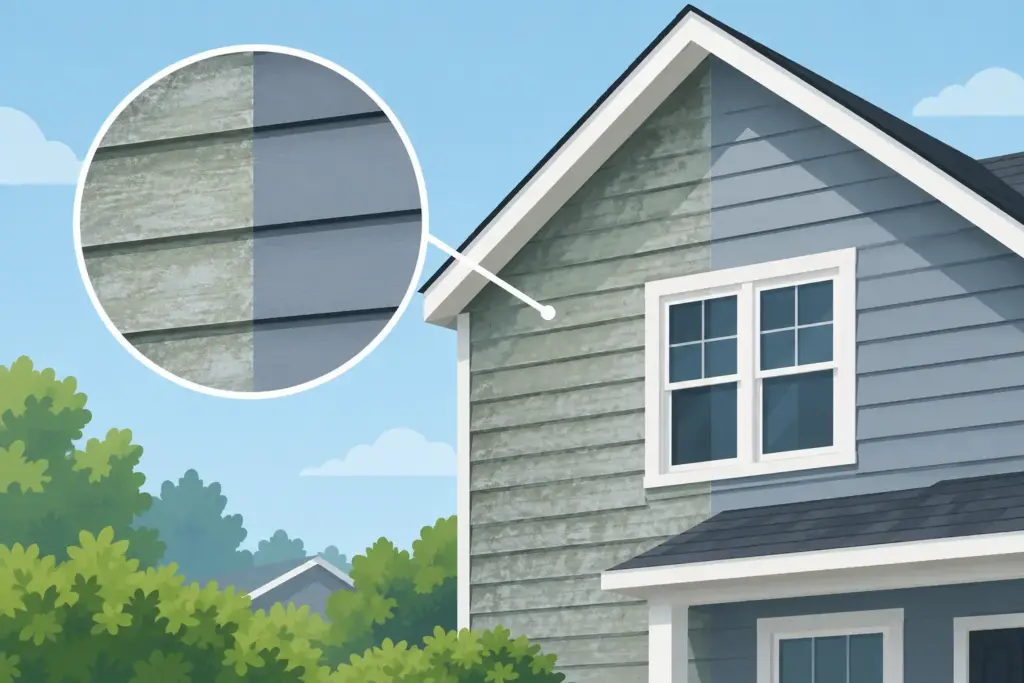

A house can look dirty even after the pollen, mildew, and road dust are gone. If your siding has a faded, chalky, uneven finish that rubs off on your hand or leaves pale streaks after rain, siding oxidation may be part of the problem. It is common on older vinyl and painted metal exteriors, especially on the sides of a home that receive the most sun and weather.
The good news is that a careful cleaning can often improve the appearance of affected siding. The catch is that oxidation is not the same as ordinary dirt. Cleaning it the wrong way, particularly with too much pressure or the wrong detergent, can leave visible lines, remove more of the weathered surface, or create an uneven finish. Knowing what you are looking at helps you make the right call for your home.
What Is Siding Oxidation?
Oxidation is the gradual breakdown of a siding surface after years of exposure to sunlight, oxygen, moisture, temperature changes, and airborne contaminants. On vinyl siding, it usually appears as a dull, powdery layer often called chalking. The color may look lighter in some areas, and a white or colored residue may come off when you wipe the siding with a dark cloth.
On painted aluminum or steel siding, oxidation can show up as chalking, fading, bubbling paint, or, in more serious cases, corrosion. The exterior coating is designed to protect the material underneath. Once that coating becomes worn or damaged, the siding can lose its even color and become harder to keep clean.
In Western Maine, Greater Portland, and nearby New Hampshire communities, a home sees more than its share of weather. Strong sun, snow, rain, freeze-and-thaw cycles, tree debris, and seasonal moisture all work on exterior surfaces over time. South- and west-facing walls often fade first because they receive more direct sunlight.
How to Tell Oxidation From Dirt, Mold, or Algae
Many exterior problems look similar from the driveway. Dirt creates a general gray or dingy film. Mold and mildew tend to show up as darker spotting in damp, shaded locations. Algae commonly leaves green staining, especially on the north side of a home or near heavy tree cover.
Oxidation has a different look. It is usually dry, dull, and powdery rather than green, black, or wet-looking. A simple wipe test can help: gently rub a small, inconspicuous section with a clean dark rag. If a chalky residue transfers to the cloth, the siding may be oxidized.
You may also notice that water does not sheet evenly across the surface. Rain can leave streaks where runoff carries loose oxidation downward. These streaks are often more noticeable on darker siding colors and near gutters, trim, and window frames.
One surface can have more than one issue. A home may have algae in shaded areas, road film near the foundation, and oxidation on the sunny side. That is why a one-size-fits-all cleaning approach is rarely the best choice.
Why High Pressure Can Make Siding Oxidation Worse
Pressure washing has its place, but siding is not a surface that should be blasted clean. High pressure can force water behind panels, damage trim, disturb loose paint, and leave wand marks. On oxidized siding, it can strip the chalky layer unevenly, creating bright patches next to faded areas.
The problem is especially noticeable when someone cleans only a few dirty spots. The cleaned area may look better for a moment, but it can stand out against the rest of the wall once it dries. Aggressive brushing can cause the same issue if the siding is already heavily weathered.
A professional house wash starts with an evaluation of the material, the age and condition of the siding, the buildup present, and the level of oxidation. The right process typically relies on appropriate cleaning solutions, controlled application, a gentle rinse, and attention to how the surface responds. The goal is to remove organic growth and surface grime without creating a new appearance problem.
Can Cleaning Remove Siding Oxidation?
It depends on how far the oxidation has progressed. Cleaning can remove loose surface residue, pollen, mildew, algae, and grime that make faded siding look worse. On mild to moderate cases, this may produce a noticeable improvement in overall color and curb appeal.
Cleaning cannot restore a factory finish that has been permanently degraded by years of ultraviolet exposure. If the protective layer has worn away significantly, the siding may still look faded after it is clean. In those cases, repainting, refinishing, or replacement may be the longer-term solution, depending on the siding material and its condition.
That is not a reason to ignore the exterior. Removing dirt and growth gives you a more accurate view of the siding’s true condition. It also helps prevent algae, mildew, and grime from hiding trouble around joints, trim, and drainage areas. A clean home is easier to inspect and easier to maintain.
When a Test Area Makes Sense
With visible oxidation, a small test area is often the smart first step. It shows how the siding reacts to the cleaning method before work continues across a larger wall. This is particularly helpful on dark vinyl, older painted metal siding, and surfaces with obvious fading or chalky streaks.
A responsible cleaner should be straightforward about what can be improved and what cannot. If the material is severely worn, the best result may be a cleaner, more even-looking surface, not a brand-new appearance. Clear expectations protect the property owner from disappointment and prevent overly aggressive cleaning decisions.
Simple Ways to Slow Future Fading
No exterior finish lasts forever, but regular maintenance can keep buildup from making oxidation look worse. Keep gutters clear so dirty overflow does not run down the siding. Trim back branches that hold moisture against the house or drop heavy debris onto walls. Address sprinklers that repeatedly spray one section of siding, since mineral deposits and constant moisture can leave staining.
A routine house wash also helps remove pollen, salt residue, road film, mildew, and algae before they become deeply established. Frequency depends on your location, tree cover, shade, siding color, and how quickly growth returns. A wooded property in Fryeburg may need more attention than a more open home, while coastal exposure around Greater Portland can bring its own mix of windblown moisture and grime.
If you are considering a homeowner cleaning project, avoid treating oxidized siding like a driveway or concrete pad. Skip harsh scrubbing, avoid high-pressure close-range spraying, and do not assume a stronger cleaner will deliver a better result. The surface condition matters more than speed.
When to Call a Professional for Oxidized Siding
It is time to bring in a professional when you see widespread chalking, uneven color, long runoff streaks, stubborn mildew, or staining that returns quickly after a basic rinse. It also makes sense if you are unsure whether you have vinyl, painted metal, fiber cement, or another exterior material. Each surface has different cleaning limits.
Western Maine Pressure Washing approaches house washing with the condition of the property in mind, not a one-pressure setting approach. A careful assessment can separate ordinary buildup from oxidation, identify areas needing extra care, and help you decide whether cleaning is the right next step before repainting or other repairs.
Your siding does not need to look perfect to deserve proper care. A thoughtful cleaning plan can remove the buildup hiding its condition, improve the way your home looks from the street, and help you make a confident decision about what comes next. Requesting a free quote is a practical place to start when the finish on your siding has you wondering whether it is dirty, oxidized, or both.