
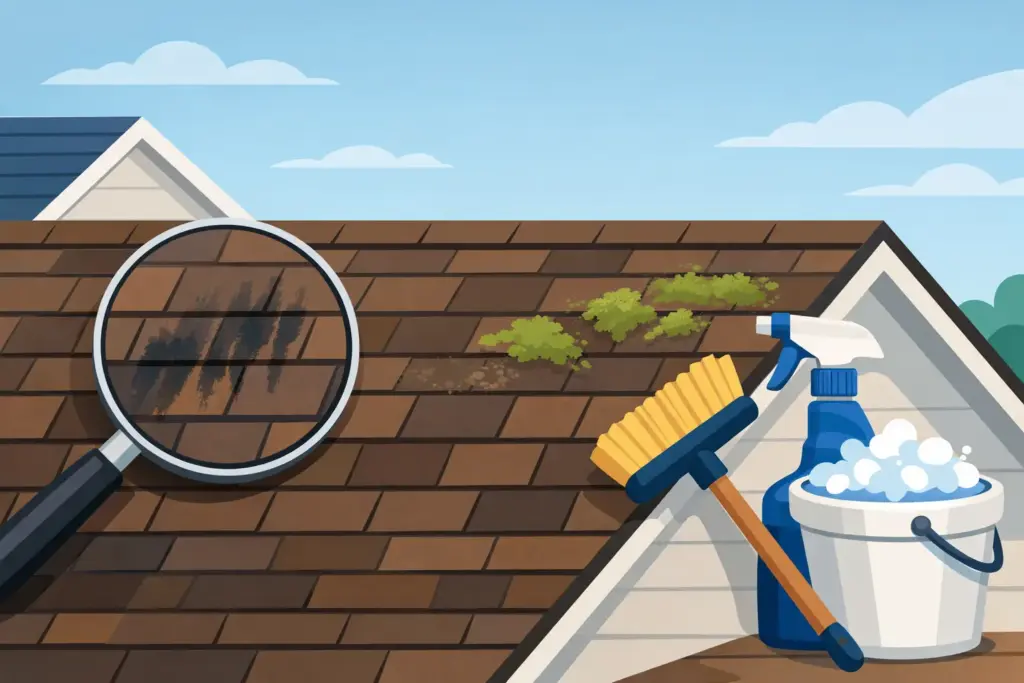

A dark streak on a roof can look like a minor cosmetic problem from the driveway. In Maine and nearby New Hampshire communities, roof stains are often a sign that algae, moss, lichen, or moisture-holding debris has started to take hold. Left alone, that growth can make a home look neglected and can create conditions that are harder on roofing materials over time.
The right answer is not to blast the roof with high pressure. Roofs need a careful cleaning method that removes the growth without damaging shingles. Knowing what you are looking at helps you decide when it is time to schedule professional roof cleaning.
What Causes Roof Stains?
Not every stain comes from the same source. The color, location, and texture of the buildup can offer useful clues, although a close professional inspection is the best way to identify the issue.
Those black or dark brown streaks that run down asphalt shingles are commonly caused by algae. In humid weather, algae feeds on the limestone filler found in many shingles. It tends to appear first on shaded roof slopes and in areas that stay damp after rain, especially beneath overhanging trees or near the north side of the home.
Green patches are often moss. Moss grows where moisture lingers and debris collects. Unlike a flat stain, it has a thicker, fuzzy appearance and can spread between shingles. Lichen is another common roof growth. It may look pale green, gray, or white, with small crusty patches attached tightly to the roof surface.
Tree pollen, leaf debris, soot, and dirt can also discolor a roof. These issues may be less serious on their own, but they trap moisture and provide a better environment for algae and moss. A roof that is shaded by trees and rarely dries fully is more likely to develop a combination of stains and organic growth.
Why Roof Stains Are More Than a Curb Appeal Issue
A stained roof can make an otherwise well-kept home look older than it is. That matters when you want to enjoy your property, welcome guests, or prepare to sell. For commercial buildings and multi-unit properties, a dirty roof can also affect the first impression tenants, customers, and visitors have of the property.
Appearance is only part of the concern. Algae itself does not usually eat through shingles, but it holds moisture on the roof and creates unsightly streaking. Moss and lichen can be more troublesome because they grow into and around the surface of shingles. As moss thickens, it can hold water against the roof and lift shingle edges. That can make shingles more vulnerable to wind, rain, and seasonal freeze-thaw cycles.
Western Maine weather makes moisture management especially important. Snow, spring rain, summer humidity, falling leaves, and shaded roof sections can all keep surfaces wet longer than they should be. If gutters are clogged or valleys are full of debris, water may not move off the roof efficiently. Cleaning the roof and maintaining the gutters work together to help protect the property.
There is a practical trade-off here. A few light stains on a newer roof may not require immediate attention, while visible moss growth, widespread streaks, or debris buildup deserve a prompt cleaning plan. Waiting until the problem is heavy usually means the roof will be harder to clean and may need more careful follow-up maintenance.
Why High-Pressure Washing Is the Wrong Choice for a Roof
Pressure washing is an excellent solution for many exterior surfaces, but a roof is different. High pressure can strip protective granules from asphalt shingles, loosen edges, force water under shingles, and shorten the life of roofing materials. It may remove visible growth quickly while causing damage that costs far more than the cleaning.
Professional low-pressure roof cleaning uses an appropriate cleaning solution and controlled application to treat algae, moss, lichen, and staining at the source. The treatment is designed to break down organic growth without aggressive pressure against the roof surface. Some staining clears right away, while heavier growth may release gradually as weather rinses away the treated material.
That slower result can be a good sign. The goal is not to scrub or blast shingles until they look new in one afternoon. The goal is to clean them safely and help preserve the roof beneath the stains.
Signs It Is Time to Schedule Roof Cleaning
Homeowners often notice roof problems from the ground, which is exactly where they should stay. Walking on shingles can cause damage and creates an unnecessary fall risk. Look for visible changes from a safe distance and let a trained exterior cleaning professional handle the inspection and cleaning approach.
It is a good time to request an estimate when you see several dark streaks across the roof, green moss along shingle edges, white or gray lichen spots, or piles of leaves in roof valleys. You should also pay attention if one side of the roof appears consistently darker than the other, or if the roof stays damp long after surrounding surfaces dry.
A roof cleaning appointment also makes sense before putting a property on the market, after a season of heavy leaf fall, or when scheduling other exterior work such as house washing, gutter cleaning, or window cleaning. Handling related maintenance together can save time and help the entire property look consistent.
How to Prevent Roof Stains From Returning Quickly
No outdoor surface stays perfectly clean forever, particularly in a wooded area. Still, a few routine habits can reduce the conditions that encourage staining and growth.
Keep gutters and downspouts clear so rainwater can move away from the roofline. Remove leaves, pine needles, and branches that collect in valleys or behind chimneys. Trim back limbs that rub the roof or create constant shade, while keeping tree work safely within the scope of a qualified professional. Better air flow and more sunlight help roof surfaces dry after wet weather.
It also helps to pay attention to nearby siding, decks, and walkways. If algae is growing heavily on several exterior surfaces, the roof may be exposed to the same moisture conditions. Regular exterior cleaning helps maintain the whole property instead of allowing each problem to build up until it becomes more difficult to address.
Do not use household bleach, harsh scrubbing tools, or rented pressure washers on shingles without knowing the correct process. Improper chemicals can harm landscaping, and excessive pressure can cause permanent roof damage. The least expensive-looking solution is not always the best value when the roof is one of the most important parts of your home.
A Safer Way to Restore a Clean Roof
Professional roof cleaning starts with the roof material, the type of staining, the amount of growth, and the surrounding property. Landscaping, gutters, siding, and outdoor surfaces all need to be considered before treatment begins. A careful crew uses the right low-pressure method for the job and takes steps to protect the areas below the roofline.
At Western Maine Pressure Washing, roof cleaning is handled as part of complete exterior property care. A clean roof pairs well with clear gutters, fresh siding, and clean windows, giving homeowners and property managers one dependable local team for the work that keeps a property looking cared for.
If dark streaks or green growth are starting to stand out, do not wait for them to become the first thing people notice about your property. A free estimate can help you understand the condition of the roof and choose a safe cleaning plan that fits your home, building, and budget.