
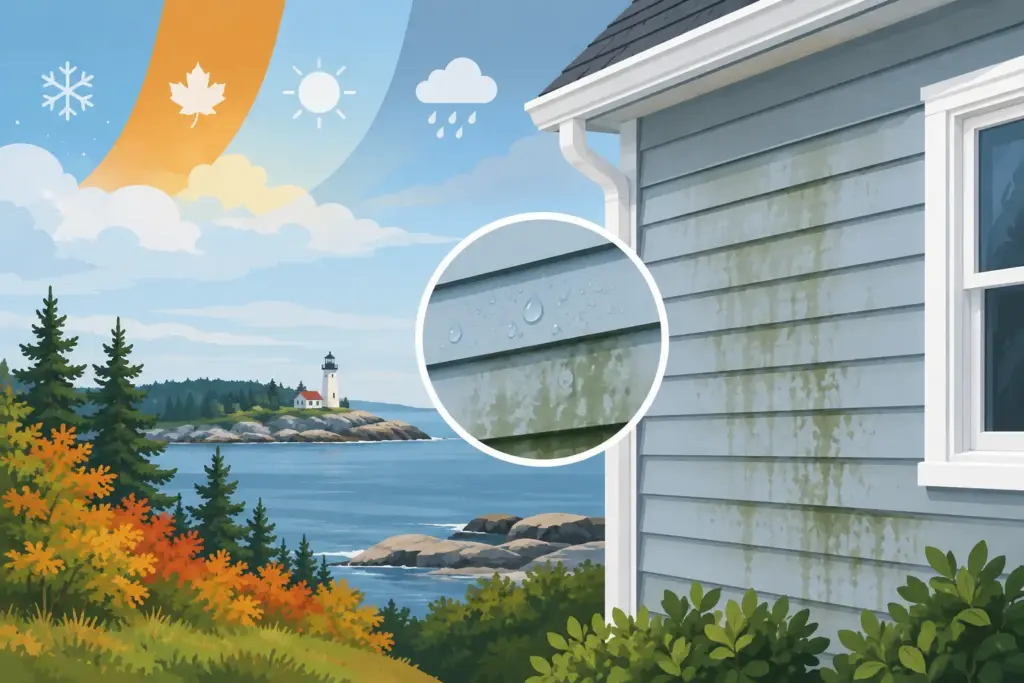

Spring rain, summer humidity, falling leaves, and long winter thaws all leave their mark on a home exterior. In Maine and nearby New Hampshire, seasonal moisture and siding stains are more than a curb appeal issue. The dark streaks, green film, and blotchy discoloration that show up on siding can point to ongoing moisture exposure, shaded conditions, or buildup that needs the right kind of cleaning.
A quick blast from a pressure washer is not always the answer. Different siding materials, stain types, and property conditions call for different cleaning methods. Knowing what you are looking at helps you act before stains become a larger maintenance headache.
Why Seasonal Moisture Leaves Stains on Siding
Siding is built to stand up to weather, but it is constantly exposed to moisture, dirt, pollen, tree debris, and changing temperatures. When surfaces stay damp for long stretches, organic growth has the conditions it needs to take hold.
North-facing walls are common trouble spots because they receive less direct sunlight and take longer to dry. Siding beneath large trees, near dense shrubs, or under roof overhangs can have the same problem. Moisture lingers there after rain, morning dew, or snowmelt, allowing algae, mildew, and other organic buildup to develop.
The stain may look green, gray, brown, or black depending on the cause. Green staining is often algae. Darker spotting may be mildew, mold, accumulated grime, or a mix of several materials. Pollen can also cling to damp siding in spring, while wet leaves and needles can leave tannin-colored streaks around gutters, trim, and lower walls.
In coastal and inland Maine alike, the seasonal cycle keeps repeating. A home can look clean after winter, develop pollen residue in spring, show algae during humid summer weather, and collect organic debris again in the fall. Waiting until stains become heavy usually means more work is needed to restore an even appearance.
Seasonal Moisture and Siding Stains: What Is Normal?
Not every mark on siding means there is a serious building problem. Light dirt near the bottom of walls, pollen residue after a heavy spring season, or a few stains beneath a downspout may simply be part of exterior exposure. Still, recurring staining in the same areas deserves attention.
Look at how the stain behaves. If it returns every year on the shaded side of the house, moisture and lack of sunlight are likely contributing factors. If it appears directly below gutters, rooflines, or window trim, drainage may be part of the issue. A stain that grows wider, darker, or more textured over time is more likely to be active organic buildup than ordinary dirt.
It also helps to check whether water is moving where it should. Overflowing gutters can run down siding and leave streaks. Downspouts that discharge too close to the foundation can splash dirt onto lower walls. Shrubs pressed against the house restrict airflow and hold dampness against the siding.
Exterior cleaning can remove the visible buildup, but prevention may involve simple property care as well. Keeping gutters clear, trimming vegetation back from the home, and correcting obvious drainage issues can help siding dry more quickly after wet weather.
Why the Wrong Cleaning Method Can Cause Trouble
Homeowners often see staining and assume high pressure will solve it. On some hard exterior surfaces, pressure washing is effective. On siding, however, too much pressure or poor technique can force water behind panels, loosen trim, damage paint, or leave visible marks.
Vinyl siding, painted wood, composite materials, and older exterior finishes all respond differently. The goal is not to use the most pressure possible. The goal is to remove the staining safely and leave the surface clean without causing damage.
Professional house washing commonly uses a low-pressure approach combined with the appropriate cleaning solution for organic growth and exterior grime. This allows the treatment to do the work rather than relying on force alone. It is especially useful for homes with widespread algae staining, delicate trim, older paint, or hard-to-reach second-story areas.
There is a trade-off worth understanding. A very cheap cleaning job may focus only on what is visible from the driveway, while a careful exterior cleaning service looks at the siding, trim, gutters, soffits, and areas where stains begin. Cleaning the symptoms without addressing heavy buildup around roof edges or clogged gutters can lead to a faster return of the same problem.
When to Schedule House Washing
For many homes in Western Maine, spring through fall is the practical window for exterior cleaning. Spring washing clears away winter grime, salt residue, and early pollen before summer humidity encourages more growth. A late-summer or fall cleaning can also remove algae, dirt, and leaf residue before winter weather sets in.
The best timing depends on your property. Homes surrounded by trees may benefit from more regular service than homes in open, sunny areas. Rental properties, multi-unit buildings, and commercial locations may need a planned maintenance schedule because exterior appearance directly affects tenant, customer, and visitor impressions.
Do not wait for every wall to look heavily stained. Early cleaning is often easier on the surface and helps maintain a more consistent appearance across the exterior. It also gives you a chance to spot loose gutters, drainage concerns, damaged caulking, or other issues that may need repair by the appropriate professional.
Simple Steps That Help Keep Siding Cleaner
Cleaning is the main solution for established staining, but a few routine habits can reduce the conditions that make moisture stains return. Keep branches and bushes from resting against the home so air can move around the siding. Clear leaves, needles, and debris from gutters so water does not overflow down exterior walls.
Pay attention after a hard rain. If one section of siding stays wet much longer than the rest of the house, find out why. It may be deep shade, a clogged gutter, a downspout issue, or landscaping that is holding moisture close to the wall.
Avoid using harsh, untested chemicals or abrasive tools on siding. Scrubbing too aggressively can dull finishes, damage paint, or leave uneven spots. Household cleaners may also harm nearby plants when rinsed off the exterior. A proper cleaning process protects the home and takes landscaping into account.
A Cleaner Exterior Starts With the Right Assessment
Siding stains rarely appear without a reason. They are often the visible result of damp shade, seasonal debris, organic growth, or water that is not draining properly. The good news is that most exterior staining can be addressed safely when the cleaning method matches the surface and the source of the buildup.
Western Maine Pressure Washing provides house washing and complete exterior cleaning for homeowners, property managers, and businesses that want a cleaner, better-kept property without guesswork. A free estimate makes it easier to understand what your siding needs and whether gutters, decks, windows, or other exterior areas should be cleaned at the same time.
If stains are starting to show after a wet season, take a look at the shaded sides of your home and the areas beneath gutters. Addressing buildup while it is still manageable can help your siding look cared for through the next stretch of Maine weather.