
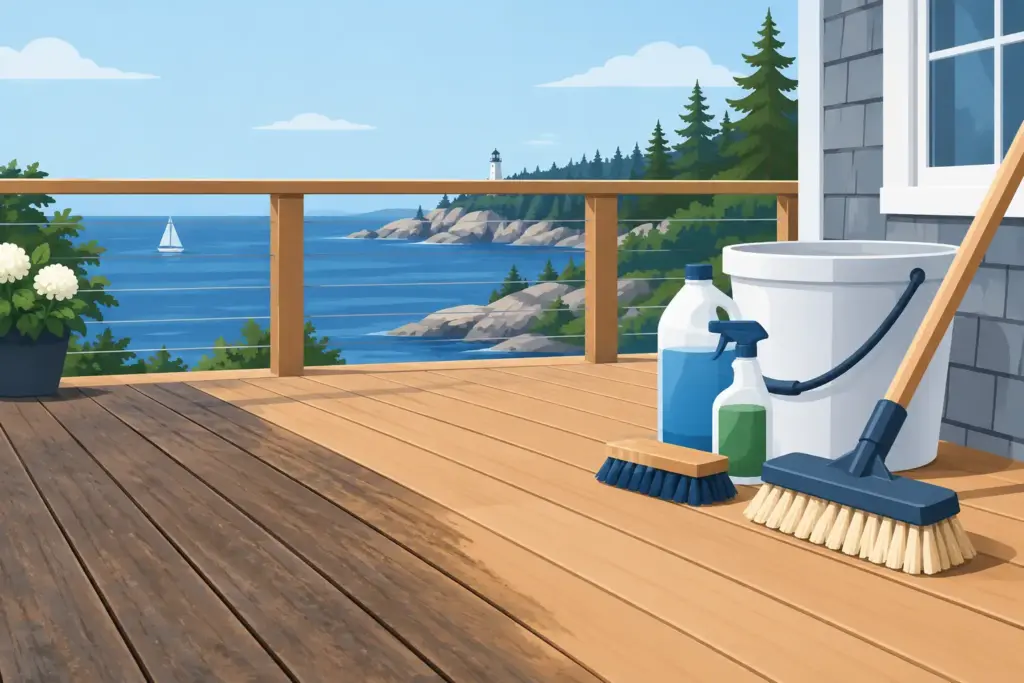

A deck can look worn out long before the boards are actually failing. In Maine and nearby New Hampshire, damp springs, shaded yards, pine debris, and winter moisture leave behind algae, mildew, dirt, and dark staining that make a deck look neglected and feel slippery. The best deck cleaners do more than brighten the surface. They remove the buildup that holds moisture against the material without creating a bigger problem for the wood, fasteners, landscaping, or nearby siding.
Choosing a cleaner is not as simple as picking the strongest product on the shelf. The right approach depends on whether your deck is pressure-treated lumber, cedar, hardwood, or composite, as well as what is causing the discoloration. A cleaner that works well on green algae may not be the best answer for gray, weathered wood or a greasy grill area.
What the Best Deck Cleaners Need to Do
A good deck cleaning product should match the job at hand. For most exterior decks, the goal is to break down organic growth, loosen embedded dirt, and rinse cleanly without leaving residue. It should also be used with the right amount of water pressure. Too much pressure can scar soft wood, raise the grain, and leave lap marks that are difficult to hide with stain.
For homeowners, the best result often comes from looking at the whole condition of the deck instead of treating one stain at a time. Green or black growth may point to algae or mildew. Dark areas beneath planters, outdoor rugs, or furniture can be trapped moisture. A dull gray surface can simply be weathering from sun and rain. Each calls for a slightly different cleaning plan.
Deck cleaning also affects safety. Algae and mildew can make steps and walking areas slick, especially after rain. Removing that growth helps restore a safer surface for family, guests, tenants, or customers.
The Best Deck Cleaners by Problem
Oxygen-based cleaners for routine wood cleaning
Oxygen-based deck cleaners are a solid choice for many routine cleaning jobs on wood decks. These products typically use sodium percarbonate, which activates in water and helps lift organic staining, dirt, and mildew residue. They are commonly a better fit for general seasonal cleanup than harsh chlorine bleach.
They work best when the deck is pre-wet as directed, the cleaner is allowed to dwell for the recommended time, and the surface is gently scrubbed where buildup is heavy. A thorough rinse matters. If cleaner dries on the boards, it can leave uneven results.
Oxygen-based products are useful for pressure-treated lumber, cedar, and many hardwood decks, but always follow the product directions and test a small hidden spot first. Wood age, existing stain, and moisture level can all change the outcome.
Mildew and algae cleaners for slippery growth
If the deck has green patches, black spotting, or a slick film, organic growth is likely the main issue. A dedicated mildew or algae cleaner can be effective, particularly in shaded areas that stay damp after rainfall. These products are designed to treat the growth instead of merely washing off the visible dirt.
This is where homeowners need to be careful with strong chemical mixes. Chlorine bleach may whiten a surface quickly, but it can also damage surrounding plants, discolor fabrics, weaken wood fibers when overused, and leave blotchy results. It can be appropriate in carefully controlled situations, but it is not automatically the best deck cleaner for every deck.
A professional can choose the proper solution strength, protect nearby landscaping, and make sure the product is rinsed thoroughly. That is especially helpful when the deck sits close to flower beds, a pool, painted railings, or vinyl siding.
Wood brighteners for gray or darkened boards
A deck cleaner and a wood brightener are not always the same thing. Cleaning removes surface buildup. A brightener, often made with oxalic acid, can help restore a more even wood tone after cleaning and reduce the dark, gray look caused by weathering or tannin stains.
Brighteners are especially useful after a deep cleaning or when preparing a wood deck for staining. They can help neutralize certain cleaning products and bring out a more consistent color across the boards. They will not repair cracked boards, deep rot, or old stain that has failed unevenly, but they can make sound wood look much better before the next maintenance step.
Composite deck cleaners for manufactured boards
Composite decking needs a different mindset. It does not absorb cleaners like wood, and aggressive pressure can damage the surface or leave permanent marks. Use a cleaner approved for the specific composite material when possible, particularly if the deck has a capped finish.
For routine dirt and pollen, a mild cleaner, soft brush, and garden-hose rinse may be enough. Mold can grow on debris sitting on composite boards, even though the boards themselves are not wood. Clean beneath furniture, planters, and rugs where leaves and moisture collect. Avoid abrasive pads and harsh solvents unless the decking manufacturer specifically recommends them.
Degreasers for grill stains and food spills
A greasy area around the grill needs more than an algae cleaner. A deck-safe degreaser can help break down oil, food residue, and old grease marks. The key is to use it only where needed and rinse before it dries.
Degreasers can be strong, so they are not a substitute for an all-over deck wash. On stained or sealed wood, test first. Some products can dull the finish or create a clean spot that stands out from the rest of the deck.
Why Pressure Matters as Much as the Cleaner
Many decks are damaged by the cleaning method, not the cleaning solution. A high-powered pressure washer can remove dirt fast, but it can also carve lines into softwood, fuzz up the grain, and force water into joints. Once that happens, the deck may need sanding before it can be stained or sealed properly.
Professional deck cleaning is about controlled pressure, the correct spray pattern, proper distance from the boards, and the right solution for the material. For some decks, a low-pressure chemical wash and rinse is the better option. For others, carefully managed pressure is useful for stubborn buildup. It depends on the wood species, board condition, existing finish, and level of staining.
Older decks deserve extra care. If boards are splintering, cupping, loose, or soft in places, cleaning will not solve a structural problem. A close inspection before washing can prevent a bad board from becoming worse.
How to Get Better Results From Any Deck Cleaner
Start by clearing the deck completely. Move furniture, mats, planters, and grills so the entire surface can dry and be cleaned evenly. Sweep away leaves, pine needles, and loose debris from the boards and gaps. This simple step makes a major difference because organic debris traps moisture and encourages more growth.
Work on a cool, overcast day when possible. Hot sun can dry cleaning products too quickly, reducing their effectiveness and raising the risk of uneven spots. Keep nearby plants wet before, during, and after cleaning when using any chemical product. Covering delicate plants may help, but do not leave coverings in place long enough to trap heat.
Give the deck time to dry fully after cleaning. If you plan to apply stain or sealer, the wood must reach the moisture level recommended by the finish manufacturer. Rushing this step can lead to peeling, blotchy color, or a finish that does not last through another Maine winter.
When It Makes Sense to Call a Professional
A do-it-yourself cleaner can handle light seasonal buildup. A professional service is often the smarter choice when the deck has widespread algae, deep discoloration, old failed stain, delicate wood, or difficult access. The same is true for multi-level decks, large commercial patios, and properties where runoff needs to be managed carefully.
Western Maine Pressure Washing takes a practical approach to deck cleaning: identify the buildup, select a safe cleaning method for the material, and restore a cleaner, more presentable surface without treating every deck the same way. For homeowners and property managers, that means less guesswork and a better chance of protecting the deck for the long haul.
A clean deck is easier to enjoy, easier to maintain, and less likely to become a slippery eyesore after a wet season. If the growth or staining has gotten ahead of you, a free quote can be a straightforward first step toward getting the outdoor space back in shape.